Crying In The Wilderness (I Could Have Told You… or Maybe Not?)

If you enter “Bob Dylan” in the Spanish Google search engine and you accidentally add a Z, for those random questions of life, the search engine itself immediately suggests the Spanish word “zurdo (left-handed).” Out of curiosity one follows the advice modern technology makes available and, unsuspectingly, a long list of entries appears before us. All of them relating to the lefty status of Mr. Dylan or mentioning the great Columbia Recording artist as one of the most famous lefties in history. Might look inconceivable, but the “Wanted Man” of 5,61 ft height is cited as such, among others, as might be the ex-Beatle Paul McCartney, for instance, shamelessly. However, anyone who has ever seen him perform live or minimally familiar with Minnesota Minstrel figure, knows that this is kind of uncertain – at least when it comes to him as a performer. Bob Dylan is known to have been photographed signing with his left hand, so he must be ambidextrous, but he always played guitar with his right hand.  This is relevant today because I believe necessary to start the chronicle of this debate from the premise that there are false assertions that, being constantly repeated ad nauseum, they end perpetuating just as true.

But this accumulation of falsehoods about him is something that the American songwriter is used ever since. As he had already said in his sensational diatribe titled “Idiot Wind,” “They are planting stories in the press …” Another commonly accepted false judgment about Dylan is his vaunted disability to sing. Dylan himself complained about it in the speech he gave accepting his nomination as MusiCares person of the year.

720x405-462898102_MUsiCares

Bob Dylan accepts the 2015 MusiCares Person of the Year award on stage at the 2015 MusiCares Person of the Year show at the Los Angeles Convention Center on Friday, Feb. 6, 2015, in Los Angeles. (Photo by Vince Bucci/Invision/AP)

Why accuse him of having frog voice or, more recently, worn and broken by snuff abuse and not attack others like Tom Waits or Louis Armstrong? This, among other reasons, has not only led him to record an album performing old songs that Frank Sinatra made popular before, but to repeat the experience a second time and, if the rumors are confirmed, even undertake a third installment. There is no doubt that there is a clear intention to recover an old unequivocally American style with roots in the fertile ground of the purest tradition of the United States. Dylan does not conform to reassert itself as “crooner” but seems determined to show the world that he can sing the most melodic songs with that throaty voice of his, as tuned as anyone and so subtle and poignantly as the most gifted interpreters.

His work in these last 2 discs demonstrated so and it has been generally recognized by reporters and commentators. Sometimes they even came to proclaim that he had never sung so well.

Contrary to the resolution of our hero, it turns out that Bob Dylan has become 75 years old and a detractor flood that even advocates for a withdrawal time has become fashionable, as if the genius or creative will could be brought to an expiration date. Precisely because of his recent birthday a daring professional columnist devoted his thread in the New York Daily News to the famous composer with an infectious article entitled “At 75 Years Old, It’s Time For Burnt Out Bob Dylan to Retire.”

dfp0923dylanpix

Ignoring the pettiness and opportunism of shallow critics as this one of the New Yorker newspaper, I will focus on the funny heated debate I had a few weeks ago with an Italian colleague, well recognized as a huge Bob Dylan fan. My friend complained of the boredom which currently means attending a concert of his favorite artist, especially when he insists on singing those so hackneyed, oldies and to the naked eye so far from the creative restlessness the rest of his work always denoted.

This well docummented Italian fan commented that people attending Dylan recent concerts didn’t pay so much attention while he was singing the Sinatra tunes. He referred in particular to the debut of a new song the evening of the discussed concert. Many among the audience were walking around the venue, making phone calls, or eating lunch. But my collegue, commenting the video of Dylan doing for the first time ever on stage the cover “I Could Have Told You,” explained such behavior in a quite condescendent way saying “I see why this happens, this is lacking energy, charisma, interest, it doesn’t call for attention, it’s quite boring for real… even though that doesn’t mean you have to walk around the venue, make phone calls, or eat lunch.”

I had to say those were not there to see Bob Dylan. Who knows the reason why they bought tickets to attend a Dylan concert, but they didn’t show any respect for the artist themselves, anyway. Added that I didn’t know what he meant when talking about “boring” version, ’cause no doubt Dylan was singing his heart out right there and he was doing a pretty nice cover, perfectly in tune, loaded with emotion. Maybe not the most beautiful cover of his, from the batch of old Sinatra and Tin Pan Alley songs he has chosen recently, but quite a dignus performance, I believe.

An American woman entering the discussion replied, “It is a matter of taste. I don’t find this ballad boring at all, and I’m honestly mesmerized by Bob’s singing & the feeling he’s investing in the song. He sang many of these ‘Sinatra’ songs in Japan and his audience didn’t behave this way… same goes for many cities in Europe last fall. I think the problem is more an American culture / rudeness thing.” Though I don’t think it is just the Americans, it happens in some other countries here in Europe, as it happens in Spain. What is clear to me is that it has nothing to do with Dylan being boring or stirringly awesome.

Well, of course, boring is quite subjective. Though anything can be boring to you if you don’t pay the necessary attention to get into the subject the song is conveying. My partner disagreed there… as Bob’s music, voice, phrasing has always had a way to hook his attention, immediately, it’s a hook, he says, even on less interesting songs… “aburrido (boring)” was the word here, according to him, and not just he, but Dylan himself too. He said, “Obviously, I am the person who feels that way, but I just need to listen to other performances and that doesn’t happen, as it never did and never will… if I have to make an effort to get the spark, well… maybe the spark is not there…”

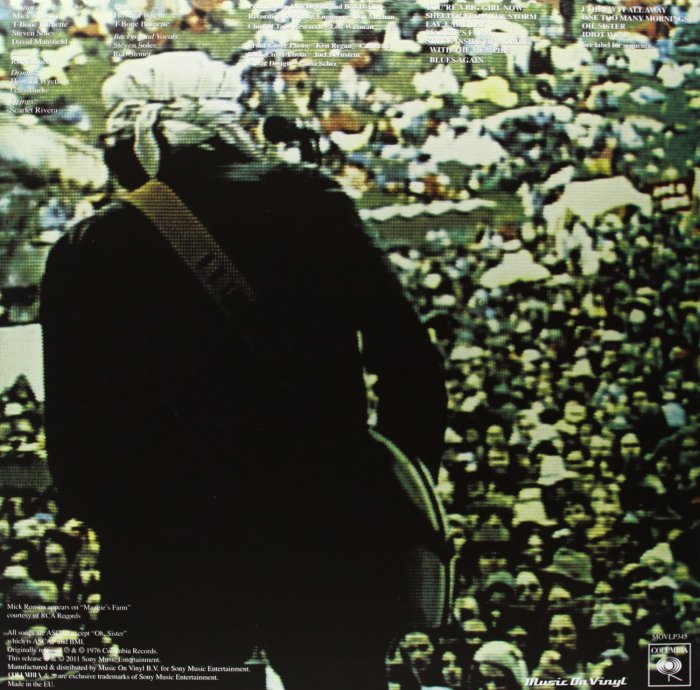
When I hear someone declare himself that he cannot get the spark on a certain performance that I loved I just have to say, “I am sorry for you, my friend.” You get it or you don’t. That’s it. As I said, to me it is never about what Dylan does, it is just the way he does it. This is the point when it comes to these covers Dylan does of the Sinatra songs. There’s to me as much energy, interest, feeling and emotion in Dylan’s heart and soul there, as it was when he was doing “Idiot Wind” in the “Hard Rain” performance. The difference is just the kind of energy, interest, feeling and emotion he displays now. He’s not anymore the one who was singing his rage out claiming for respect to his individuality. He’s already trying, as years gone by, to recover now the feelings of those days when he was a kid listening to the radio in the intimacy of his bedroom, listening to his mother singing the songs she used to sign while doing her homework back then. He’s just trying to recover the essential of his roots for all of us, because the essential in this life it is just in our memories of something like when we walked the streets holding our mother’s hand.

The critic fan would reply that it’s actually both things, what he does and how he does it, but he totally agreed with me, how he does it is super relevant. He had never been looking for the same from Bob, recognizing that evolution is a key element in his work. But he would never compare any of his recent covers to “Idiot Wind” neither. Why doing so if it’s about evolution? For him all this Sinatra galore is not historically proven anywhere, and he doesn’t know if Dylan’s mom used to sing these songs when he was young, but obviously he didn’t really care about. He would say that every time an artist throws something out he/she takes a responsibility. In fact, he thought, as many of these detractors do, that these songs are boring to him, even if they are not to Bob, in the first place, and, from his point of view, talking about this particular version of “I Could Have Told You” the performance is flat, on a flat song, and not because Bob Dylan he’s not 35 in Texas, but because it is flat, period. It is not even in, say, “Autumn Leaves'” league, or other “standards.” Then he was ending his paragraph with a kind of respectful sentence for those who still enjoyed this cover: “Glad you like it and others do too. To me it’s just an uninteresting song, sung with little interest by the man himself…”

A17LA6X4gSL._SL1500HArdRain_

91up9EOtr9L._SL1500-HR_Back_

To be honest, I was comparing the kind of energy and motivation, not the performances, when mentioning “Idiot Wind” outstanding version of 1976 live album “Hard Rain”, ’cause being different they are of similar impact to me. I have no idea if Dylan’s mother was singing or not these songs, what I really mean is that Dylan is bringing them out from the back of his memory, from the old days when he was a kid and he used to listen to these and many other songs in the radio nights. I meant they really mean so much to him and he just wanted everybody else to pay attention to these songs, ’cause they have an essential truth in them that he may have thought is missing nowadays, or at least overlooked.

There was no much to say against, so my colleague answer was short: “Maybe you’re right, I don’t debate on that view/option.”

Using some sarcasm, I replied: “Maybe you are right from your side and I’m right from mine, maybe you and Bob Dylan are now just too many mornings and a thousand miles behind.”

As any intelligent Dylan fan would have told me, he stated: “Oh well, his power still hits me (and I don’t mean AMOUNT of energy), I wish a reset, a rethink and new inspiration… or othwerwise, can we think that everything he does is never possibly to be exposed to any critic?” My friend, still being consequent with his feelings, continued arguing: “I think he still has power and intensity and voice to sing songs, but for some reason he’s picking some that are boring to me (and to many others, if that matters) and he has left his power (of phrasing and improvising,) so sublime, on some shelf, along with his cruel weapons… war is probably over, he got some peace, good for him, less for his art… resending the same 50’s postcard, night after night, on a xerox, is not exactly the best ending for the Picasso of Rock, and bear with me, I don’t wish for any jaggerish performances here… flat repetition doesn’t really work for me. I know many will disagree but it is what it is…”

Yes -I told him- I know you, and I know what you meant. Many still agree with you, but I’m so glad Dylan is still alive and still doing what he feels he should! He just told everybody out there in this world he would never work in Maggie’s Farm no more. He’s being faithful to such statement and I really respect him for that, and feel committed myself to try to understand and get into the subject he conveys, now and forever. That doesn’t mean there won’t be any criticism anymore, I could criticize him for doing the wrong things, though I have come to a conclusion, he CANNOT be wrong, cause he’s true like ice, like fire. Whatever he does, in the moment he does, is signed and sealed with the occasional fury, disdain, passion, listlessness, sharpness, laziness, indolence, bitterness, faith or any other noble and authentic sentiment he may have at the very moment he is on stage. Being from an artist with the insightful mind and deep commitment to his work Dylan ever had, that means a torrent of emotions to me.

He knew where I was being weak and, as expected, he had the right answer: “That ‘Farm’ can’t be his own body of work, right? I’m glad too he is free to do what feels he should, never wanted anything different, but then again ‘he CANNOT be wrong’? 🙂 even though I know what you mean with the words that follow, well… I think that supporting that couldn’t be useful to any artist in the world, but you know that, even without me stating the obvious…”

No, mate -I excused myself- I was being sarcastic, with those capital letters word. It was just a boutade. Of course he can be wrong, and yes, he’s wrong indeed, at least from your point of view, and there is a lot of things we could criticize, such as not changing the setlist at all anymore. As for that “Farm” I was referring to other people wanting him to do what they expect him to do… “They say ‘Sing!’ and I get bored.” And no, not every artist in this world remains faithful to its own feelings. Not everybody is so true… Many have even recognized they do it for the money or are clearly sold themselves to multinationals or any other economical interests. But once again, regarding the static setlists, nobody criticized Paul Simon, Paul McCartney or most performing artists for doing exactly the same show night after night. Why we must expect him to do what he always did? And yes, he might choose a setlist including new vibrant arrangements of the old songs, covers of amazing songs he never did before, as he did in the early 90’s, or even new songs he never performed yet, such as “Life Is Hard”, from “Together Through Life” album or some abreviated versions of “Tin Angel” or “Titanic” (I mean “Tempest” title song)… But why should he do that being 75, endlessly hitting the road since 1988 and already being the Living Legend he is in his own right?

As an example, Paul Simon declared on his last interview that he’s thinking about retirement once the present tour promoting his new album is done. Said that it is tiresome and declared that the showbusiness has no interest for him anymore. No doubt, being still on the road requires some strength and willingness at a certain age.

Album-art

But when it comes to Dylan, I think there’s still a lot he can do and what he’s doing is good for me. He can still get some stirring feelings out of my guts and he does that singing the way he did “That Lucky Old Sun” in San Sebastian, Spain, last year, or this one of “I Could Have Told You” the other day.

My good opponent threw me the following answer: “We all do say ‘Sing!’ – you too.” And more: “Everything is possible. Or not. I don’t really care to call other names, like the two Paul you mentioned, indeed we are exchanging opinions in a Bob group, not anywhere else, and why should we ask him to do what he always did, let’s say being an expeditioner? Wasn’t that what he said in ‘No Direction Home’ docummentary? Expeditioner, right? I don’t know. Why should we expect him to be what he is? We should not, if you put it that way, but we don’t really sit at his table giving him tips. We, instead, participate to a virtual roundtable, discussing art and passion. He actually caged himself in this Sinatra and xeroxing practice (not only the setlists but the phrasing, accents, stresses, nuances, colors.) So what’s the point of asking that?” (I think he refers to my question about why expect him -Bob- to do the same he always did) “What’s the point of being active in communities (online and not)? What if not speaking our minds without, though, looking for ‘alibis’ (you know what I mean) in other artists pattern? To me it is stimulating when we -passionates- exchange opinions, but I wouldn’t abandon his recorded (pun intended) history to evaluate the present.”

Then he asked himself: “Why xeroxing, which is the exact opposite of what his human/artistic/creative history tells us and the world? That, I don’t know and wonder… it has nothing to do with what he is or has been, I don’t care if there have been other phases when the setlists were stuck, I could articulate why it is different, but it’s a long story, we all know it was different… and the paradox is: HE IS doing what we expect him to do, now more than ever! …and I’m not joking unfortunately… night after night, since almost 3 years now… we could even -ironically- add ‘sing, and I get bored.’ I’m being a pain in the ass, I know…” Then he laughed out loud.

At this point I could only say: “Oh well, I think there’s no argument I could use. It is just the way it is. He does what he does… Whatever you may call it. And no, I never expected him to do 2 consecutive albums on old Sinatra stuff or any Christmas recording. I could never expect him to become the amazing crooner he has become. And I didn’t want that. But now that he did, I am grateful he did, ’cause he renewed himself in a very unexpected way and made me discover songs and emotions I never thought I could be aware of.”

Then my colleague tried to rebut my words and make me understand that this style chosen by Dylan is nothing new for him: “He was crooning already in 1961, and he was already amazing, we have tapes to proove it… not to mention the crooning in 1969-71” He smiled, and added, to be kind, though ironically, I guess: “I’m glad you find emotions you thought you could never be aware of, if that works for you, that’s all that matters.”

I had to admit: “Yes, he was crooning, but never the way Bing Crosby or Dean Martin used to do”

But he replies: “Really? what about ‘When I Got Troubles’ – 1959, I think you have it, right?”

To me it is quite clear, so I defend my point of view: “It was a different performing concept, I believe… He did never sing this way before, until he covered Dean Martin ‘Return To Me’… And it looks like he found a new mine to explore. Don’t you think he’s still being an expeditioner when doing these 2 albums, performing them in the quality he’s doing with such emotional load and carefully tuned?”

The disenchanted fan still argues: “No, I think his unique way to dig emotions is getting lost when he phrases that close to those original recordings, I think the emotions he can stir in me get lost when he’s not singing the way he can, with his unique style, which makes his the most emotional voice of the century, in line with such Billie Holiday and people of that dimension. Sinatra is empty and not interesting… I am not looking for a bel canto, it wasn’t that different, check that one, maybe you don’t remember it properly? Or maybe ‘The Two Sisters’, 1960? I’m serious, it wasn’t a different performing concept at all… it was a different voice, a different age, carrying more illusions maybe, but the approach was really that one… he could sing the irish way, folkie, bluesy, country, ballads, he could croon, yodel, already at 20. He sings at 19/20 a few songs with the very exact voice he delivers on Nashville Skyline. The Wallace Tape already proves all that.”

I absolutely disagree with him on that, though I didn’t want to make a thesis (I’m smiling right now), so I just replied: “Can’t say anything else about that, my friend. It is beyond my understanding to find the necessary arguments, if there’s any. He does it in a way that you feel boring? Nothing I could do to help you out of such conviction. You think his approach to songs like ‘Remember Me’ or ‘When I Got Troubles’ in 1959 (or to the covers he did in Nashville Skyline era) was the same as the one he’s applying now to these songs? I can’t believe you! But, anyway, I can’t help, that’s your own perception. I think he has gone a further step since he started his commitment with this old material, since he decided to do a DJ work on TTRH (Theme Time Radio Hour). He has actually changed, cause as he stated, he used to care, but Things Have Changed.”

Now my opponent defends his view: “I’m not saying it is EXACTLY the same, I’m stating that crooning is not something that was forbidden to him, he had already access to that dimension more than half of a century ago, which means he is a natural, BUT he was using his unique style back then (and up ’til recently), while now, this Sinatra stuff is really impersonal and moreover repetition, in absence of his ‘personal voice,’ and so the vital flow that improvising has always been to him won’t achieve any better… but if approach means age, if it means that now he can ‘feel’ more those standards because now that he hit that age, well… I’ll stand and say NO (smile) that doesn’t implicitely adds value to his singing (hence the 1958-60 material reference), someone has to explain me where this further step is, and not intellectually, emotionally instead… indeed the improvising in the singing is vital force, has always been to him, like a well to draw fresh water from. It’s not weird, muses and all that, it was fire running through. It’s not accidentally that no more improvising overlaps with a lack of emotions, as the mastering skills are ruling now. He can totally control his voice and sing ‘perfectly’, which critics always thought it was impossible for him. Now he’s showing them he really can, and he’s doing it every single night… but there’s a price to pay. I’m not saying anything bizarre, I think…”

No, you are not saying anything bizarre, but the answer, my friend, is blowin’ in the wind: “You have already explained yourself what I was unable to explain myself. Yes, he has a quite different approach, he’s NOT using his unique style anymore, he’s trying to apply the mastering skills others like Bing Crosby, Sinatra, Dean Martin achived, but he’s doing so in the gloom of his personal vision, making them songs his own stuff when they were once as popular as if they were public domain, and of course his personal vision has to do with his present age and the way he looks at the world now, with the wisdom and experience he has got over the years. That’s the new approach, the further step he took.”

The Italian fan answer was: “That doesn’t really work for me nor make me happy, haha”

And I wanted to clarify first: “As always, Dylan is much better performer and artist when he becomes intimate, when he talks about his own feelings, personalizing the speech.”

Then I replied to him: “Hahaha, my friend, that’s a different question.”

Adding the following end to our debate: “But you must agree with me, he’s taking away from those songs the pattern of ‘popular’ stuff, in the worse sense of the term, songs that were probably sounding too cheesy and are now getting deeper in his voice and what you call ‘xerocopied’ style.”
12142505_1758381277728925_566671802_n

I should explain here that Dylan may have always sung romantic ballads or any kind of popular melodies, he could certainly undertake any style he wanted, but the way he did, even more in the Nashville Skyline era, had nothing to do with the authority, the testimonial seriousness and insightful depth of the current performances. He treats them, the Sinatra songs, as real dramas, to the point to even become melodramatic, but still keeping them within the limits of the in-depth range of Dylan’s vision. I believe these 2 last albums are actually as relevant and committed to the heritage of the human kind as “Tempest” was.

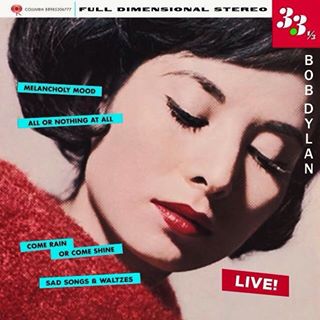
Fortunately, I am not the only one to find his live performances of this old material profound, emotional and engaging. At the Rogovoy Report (A compendium of cultural news and observations by Seth Rogovoy) in his review of the Tanglewood, Stockbridge, MA show from July 2th, 2016 which he entitled “Behind Every Beautiful Thing There’s Some Kind Of Pain,” Rogovoy wrote that the show “was a profound work of music-theatre that relied less on his setlist and more on the moods his particular song choices evoked.” And a few lines below he stated, “But those who simply opened themselves up to what was happening in the here-and-now were repaid with a concert that was as fierce and engaging as any a Dylan fan has ever likely witnessed.” Later on, talking about the pre-rock stuff, such as “The Night We Called It A Day,” “Melancholy Mood,” and “How Deep Is the Ocean?” among others, he declares “Those songs, interspersed as they were for the most part in between original songs… sung with surprising beauty and delicay, served more as a bit of lightness and relief after the devastating blows, the prophetic raging, the accounts of apocalyptic violence and the musical thunder of tunes including ‘Pay In Blood,’ and more …portraying a scarred battlefield of humanity betrayed, sung in a voice desolated and torn.”

Dylan-at-TWOOD-Lee-Everett

Bob Dylan Tanglewood, Stockbridge, MA July 2th, 2016

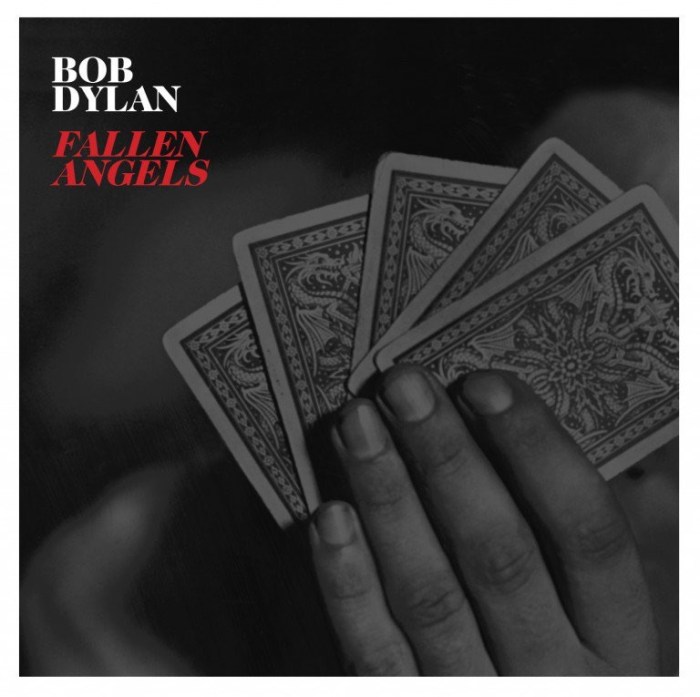
These two last Dylan albums, are then not a mere Frank Sinatra tribute but more a tribute to the men who wrote those songs, as Rogovoy says. The legendary songwriter “staking a claim for them as his own, as tunes written by men just like him who found betrayal in every promise, who behind every victory found deceit, who know that ‘behind every beautiful thing there’s some kind of pain’.” In fact, if we think about the titles of both albums, “Shadows In The Night” and “Fallen Angels,” we realize they are both about the obscure side of life, betrayal, lost souls and desolation angels. And whatever they mean for Bob Dylan himself, both of them have him crying in the wilderness.

The Hipnotist Collector

Bibliography:

Kuntzman, Gersh (May 24, 2016) At 75 Years Old, It’s Time For Burnt Out Bob Dylan to Retire. Retrieved July 2, 2016 from  http://www.nydailynews.com/entertainment/music/75-years-old-time-burnt-bob-dylan-retire-article-1.2647932

Dwyer, Jim – The New York Times (June 28, 2016) Could This Be the End of Paul Simon’s Rhymin’? Retrieved July 4, 2016 from http://www.nytimes.com/2016/06/29/nyregion/paul-simon-retirement-stranger-to-stranger.html

Rogovoy, Seth (July 2, 2016) (Concert Review) Behind Every Beautiful Thing There’s Some Kind of Pain: Bob Dylan, Tanglewood, 7.2.16. Retrieved July 4, 2016 from http://rogovoyreport.com/2016/07/04/bob-dylan-tanglewood-review-seth-rogovoy/
Yes It Is

the_beatles-ticket_to_ride_s_4

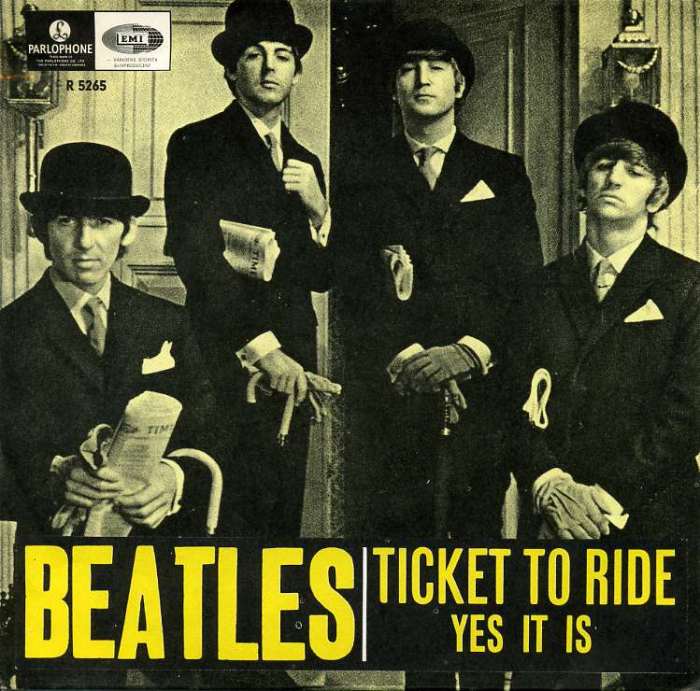
Not so long ago I ran into a version of “Yes It Is” on Facebook. You know, that Beatles song that was first released in 1965 as the B-side of the “Ticket To Ride” single, anticipating the arrival of the album “Help!” Yes, exactly, that exceptional LP containing the soundtrack of that original and funny film directed by Richard Lester, starring the “Fab Four.” The point is, that I did not expect it, but I thought I had never before heard the version available on YouTube which I was led to by the link provided. It was the track included in “Anthology 2.” Although I thought I had paid enough attention to each and every one of the cuts of the trilogy, this curious version of “Yes It Is” was to me now more innovative and shocking than it was when my collector’s zeal led me to buy the compact discs and even a couple of vinyl volumes of that collection. What happened to those unpredictable and sometimes baffling vocal harmonies, those complex chords plagued with halftones that caused me the vertigo of the senses? Was it that I was perceiving the sound abyss that these arpeggios seemed doomed to if they made a minimal mistake? Difficult to find out which road Lennon had decided to drive the vehicle of his emotions. Nevertheless the nature of the composition allows one not to have too many doubts about the depth of those feelings. Of course, the vocal harmonies were developed thanks to the creative talent of the great producer George Martin, who played his part in the final arrangements. Sad to know he passed away recently. There’s also something to say about the intimate way Lennon introduced the song, just whispering the first verses. The saddest thing was to think that this poignant Lennon creation emerged at the time as B-Side and hardly anyone payed it the attention it deserved. Probably many of us did not even turn the disk around to listen to it when a copy fell into our hands for the first time. My curiosity was evident and I had to dig a little deeper on the gestation of this cut, the recording and singular details of this particular version.

This great little song that the single “Ticket To Ride” hid on its B-Side was a composition Lennon wrote in his house in Kenwood, Surrey. Paul McCartney said later to have been there when they completed the final piece. On Barry Miles book, “Many Years From Now,” Paul commented that it was Lennon’s inspiration that he helped him finish off. He was claiming it was a remarkable ballad, something quite unusual in his colleague’s work despite having written a few ballads of unquestionable beauty. On it Lennon showed his romantic side in stark contradiction to his public image, often more scathing. In a 1980 “Playboy” magazine interview Lennon himself described it as a failed attempt to rewrite “This Boy.” Certainly there are similarities between the two issues, especially in the musical structure, 12/8 time signature, three-part vocal harmonies and the string of chords in the purest Doo-Wop style. However, when both compositions are analyzed thoroughly the comparison proves its author was going a few steps further in this work, leading us to deeper waters in the musical and emotional ground. The score, in the key of E, shows a striking originality and greater complexity in the succession of chords and changes occurring in the tune we are reviewing.

ticket-to-ride-yes-it-is-beatles45d

“Yes It Is” was recorded on February 16, 1965, in Abbey Road studios. The same day in which they finished the recording of “I Need You,” the great Harrison tune. The Beatles completed the rhythm and instrumental part, recording 14 different takes after 2 arduous hours of studio work, between 5 and 7 pm. It was much more than they had ever invested in any other song they recorded that year. Apparently John was excited about George’s use of the tone pedal of his guitar during the recording of “I Need You” and considering that it added some melancholy mood he asked him to please use it in this piece of his. After completing the basic track, Lennon, McCartney and Harrison spent three hours more perfecting their vocal harmonies while recording singing live together. The final recording features some of the more complex and dissonant three-part vocal harmonies of the Beatles.

The version to which I refer was released in the album “The Beatles Anthology 2.” The track actually consisted of two different takes conveniently mixed. The cut – I quote more or less literally Enrique Cabrera’s comment in his excellent site The Spanish Beatles Page – starts with take 2, the Beatles trying to perfect their accompaniment while John Lennon simply mutters the first lines in a startlingly intimate form, as a guide, ending at the bridge singing “die-de-de-die”. That take had been interrupted because John broke a guitar string. The song is completed with take 14 (the original master recorded live in the studio with the three-part vocal harmonies honed to perfection) which in this version has been miraculously re-edited and re-mixed by George Martin (producer) and Geoff Emerick (sound engineer). The result is more than satisfactory. It could be described as prodigious.

“Yes It Is” was released at the time, in 1965, as B-side of “Ticket to Ride” single, both in the UK and the United States. The American copies of the disc mistakenly credited this issue as belonging to the movie “Eight Arms to Hold You”, original title of the film “Help!”, in which it was never included.

s-l1600-BSide

The song then appeared in the “Beatles VI” in the United States, but Capitol Records received no copy of the stereo mix. When included in their make-shift album “Beatles VI”, they created an artificial stereo mix, a “duophonic” copy of the mono mix they had received, adding further reverb in the process.

The+Beatles+Beatles+VI+-+Purple+Label+-+La+333618

It was also included in later compilations such as “Love Songs”, the British version of the album “Rarities”, the “Past Masters Volume One” (which made its first appearance as true stereo) and “Anthology 2” (alternate mix). The original mono mix only appears in the Mono Masters CD as part of the “The Beatles In Mono” box set.

The meaning of the lyrics are dark and yet the lines, full of suggestions, penetrate into the heart, accompanied by the voices and the melancholy tone of the composition:

“Yes It Is”

If you wear red tonight
Remember what I said tonight
For red is the color, that my baby wore
And what is more, it’s true
Yes it is

Scarlet were the clothes she wore
Everybody knows I’ve sure
I could remember all the things we planned
Understand, it’s true
Yes it is, it’s true
Yes it is

I could be happy with you by my side
If I could forget her, but it’s my pride
Yes it is, yes it is
Oh, yes it is, yeah

Please do not wear red tonight
This is what I said tonight
For red is the color, that will make me blue
In spite of you, it’s true
Yes it is, it’s true
Yes it is

I could be happy with you by my side
If I could forget her, but it’s my pride
Yes it is, yes it is
Oh, yes it is, yeah

Please do not wear red tonight
This is what I said tonight
For red is the color, that will make me blue
In spite of you, it’s true
Yes it is, it’s true

Lyrics © Sony/ATV Music Publishing LLC

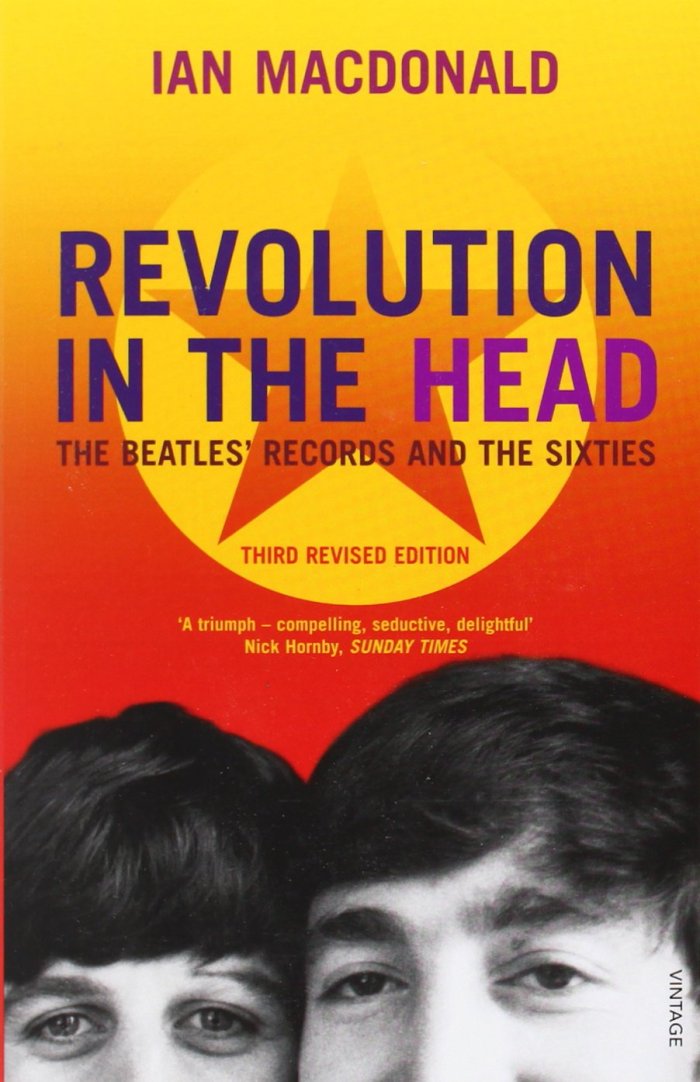
The general belief was that the lady in red was an old lost love. That is the first thing one tends to think when you hear the song without analyzing the lyrics in depth. Looks like the line saying “but it’s my pride” refers to a failed relationship, as if resentment is preventing him to forget because of wounded pride in the feeling of abandonment. However, Ian MacDonald in his book “Revolution In The Head”, published in 1997, suggests the influence of Edgar Allan Poe by invoking the scarlet color and a hint that the lost lover referred to in the lyrics is dead. In the same paragraph he speaks of romanticism and mentions the feverish and tormented tone of the composition.

RITH

MacDonald does not provide any argument, although it is not difficult to accept his theory if we think of the line saying “I could remember all the things we planned.” It seems to indicate that she will not return, that she’s no longer of this world. Forever vanished is the chance that these plans are met. Because often the greatest anguish when we suffer the untimely death of a loved one is to evoke the amount of unfinished things and incomplete plans that will never happen. We could also admit the weak insinuation that Dave Rybaczewski makes when he argues that no man in his right mind would call his former lost lover “my baby,” unless she had died. Even less a jilted man. MacDonald’s analysis goes way further when pointing out that “the fantastic figure conjured here is probably a transmutation of Lennon’s late mother, Julia redhead.” On this issue I have failed to find any verification, except an unreliable statement randomly found: Someone commented on Songfacts, one of the sites consulted, that if we were true Beatles’ fans and we had read the book “The Beatles Anthology” we would have discovered the song was referring to Julia, John’s mother. The commenter stated she was wearing a red suit when she died run over by a drunken off-duty policemen while waiting at the bus stop. I spent an afternoon rereading the “Anthology” to try to corroborate that assertion and I failed to find anything to confirm it. In his personal biographical pages Lennon chronicled everything related to his mother’s death in detail, but did not mention at all how she was dressed at the moment of the accident. The chapter on the year 1965 includes comments from the Beatles themselves, or their collaborators, about the songs on the album “Help!” And they do not speak of “Yes It Is” in any way. It does not even appear in the index. In any case, the song is so much more haunting if we give the least credit to Ian MacDonald suggestions. It is true that the way Lennon sings these two lines “I could be happy with you by my side If I could forget her, but it’s my pride…” and how he insists in the chorus repeating that “Yes, it is” emphasizing what he does not even dare to mention: “Yes it is, yes it is, Oh, yes it is, yeah,” makes one guess that the truth to which he refers hides a true drama, a tragedy which is impossible for him to escape from. Her memory will haunt him forever. One wonders why he speaks of pride then, if it is about Julia. The only explanation I can think of is that his wounded pride was caused by the neglect he may have felt during the years his mother was separated from him. And even more painful for him to understand that he had to resign himself to definitely losing her, right when he believed to have recovered her forever.

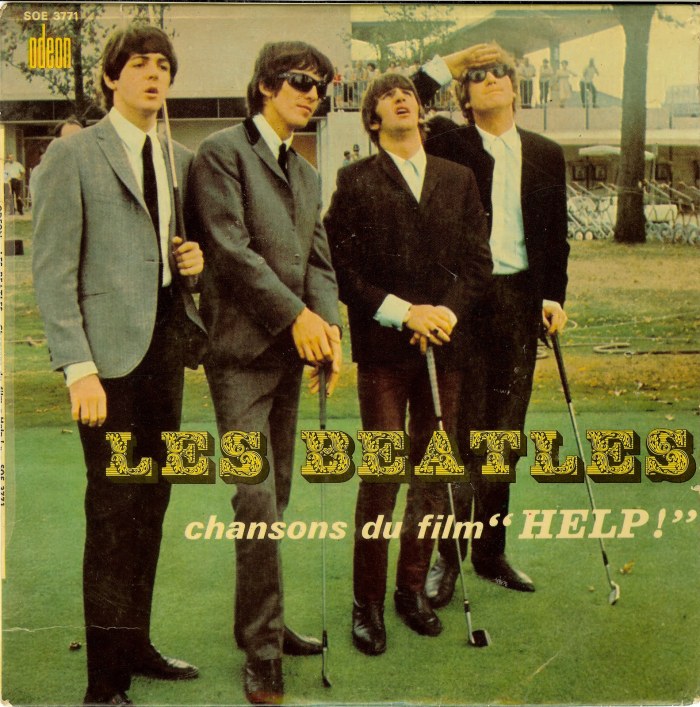
29 chansons du film help french ep beatles picture sleeve

It is significant that John Lennon, reportedly, never came to feel proud of the song and even dismissed it, especially after the split of the band. George Harrison rather liked it better than “Ticket To Ride” and considered it worthy of being the main side of the single. Cynthia Lennon (John’s wife back then and mother of his son Julian, Cynthia Powell as maiden) always thought it was excellent, stating on occasion that it was her favorite Beatles song. Many critics have praised the evocative simplicity of the lyrics, with the mysterious image of the woman in red, the strength of the chorus, the boldness of its complex succession of chords, the fascinating perfection of the three-part vocal harmonies and the melancholic mood of the melody underlined by Harrison’s pedal. Others claim not to know exactly what it is what moves them in it, it simply reaches the depths of the bowels. But perhaps Lennon aspired to something so sublime in that attempt, something so intimate and revealing to his own understanding, probably something that lies at the core of his being, that any achievement would have always seemed undeserving to him. Or perhaps the emotional bondage to a tragic past ceased to have any meaning for him, once he found fulfillment in his maturity, as has been suggested. The truth is that he left for the posterity a great song that, as a certain Michelle commented on one of the sites I’ve visited, “even today, after 50 years, it is like a roundhouse kick to the heart” and its poignant beauty can always flood you and make you cry or give you the chills down your spin, shaking you from head to toes. I am not exaggerating! Come back to listen to it, if you have not already done it recently. You will be grateful to me.

Written by: Lennon-McCartney
Recorded: 16 February 1965
Producer: George Martin
Engineer: Norman Smith

Single (7 inches 45 rpm) – Released:  9 April 1965 (UK), 19 April 1965 (US)

Instrumentation (most likely):

John Lennon: vocals, acoustic rhythm guitar (1964 Ramirez A-1 Segovia)
Paul McCartney: vocal harmonies, bass (1963 Hofner 500/1)
George Harrison: vocal harmonies, lead guitar (1963 Gretsch 6119 Tennessean)
Ringo Starr: drums (hi-hat, cymbals) (1964 Ludwig Super Classic Black Oyster Pearl)

Available at present in the following albums:

Past Masters
Anthology 2 (alternate mix)

The Hypnotist Collector

Bibliography:

MacDonald, Ian  (1997) Revolution In The Head (Revolución en la Mente) @2000, Celeste Ediciones ISBN 84-8211-221-X

Rybaczewski, Dave (21 February 2010) Beatles Music History: The In-Depth Story Behind The Songs of The Beatles. Retrieved 6 June 2016 from http://www.beatlesebooks.com/yes-it-is

Songfacts staff (no date stated) Yes It Is by The Beatles – Album: Beatles VI. Retrieved 6 June 2016 from http://www.songfacts.com/detail.php?id=9759

Sanchez Gutiérrez, Quirino @vidrioso-Mexico (31 December 2010) Canción del Día–Yes It Is. Retrieved 18 June 2016 from http://www.taringa.net/comunidades/thebeatlesfans/1544417/Cancion-del-Dia-Yes-It-is.html

Cabrera, Enrique (1995) The Spanish Beatles Page. Retrieved 19 June 2016 from http://www.upv.es/~ecabrera/index.html

Rock’n’Roll’s Death

image

Coincident with the first news related to the launch of Dylan new album, whose title, “Fallen Angels”, is already more than suggestive, young writer Brent L. Smith published on April 13th a revealing article I deemed worthy of being brought here today to be analyzed and discussed. An excellent friend of mine, who lives in California, led me to that article, so I feel extremely grateful to her for that reason. The essay is referring to the only interview Bob Dylan gave last year, which appeared on the bimonthly magazine of the AARP (American Association of Retired Persons) following the publication of his previous work, the unusual “Shadows in The Night”, which brought together 10 old ballads taken from Frank Sinatra’s songbook. The septuagenarian songwriter clarified in the interview the reasons that led him to record those songs and his genuine intention to release an album like that at the present time. But that was not the issue motivating Smith to refer to the interview as a starting point for his thesis. It was actually the statements that the wily old troubadour made about the reasons that, according to him, caused Rock’n’Roll’s Death, that inspired him. Amazing statements that no one seemed to take seriously and yet the writer in question interpreted it as a “heartbreaking revelation of a silent assassination.” Though that was a too severe conclusion.

Dylan talks about the commercial segregation rock suffered when the civil rights movement was gaining momentum around 1960. From its fused inception, he says, Rock’n’Roll was a racially integrated American invention, blasted in teenage bedrooms as early as 1955. At the very moment the pro civil rights fight looked like it was threatening the establishment, Rock’n’Roll turned out to be conveniently divided, on the sly, by the system powers, between White (British Invasion) and Black (Soul) music. Dylan’s statements reveal the reasons that made possible such segregation. Racial prejudice led to consider Rock miscegenation something extremely threatening and they decided to dismantle it, starting with the “Payola” scandals. Label and distributing companies were bribing DJ’s to systematically spread certain records, so they could achive their purpose leaving Black Music out of the waves, especially the one out of their control and against their interests.

image
Lester Lanin during the Payola scandal hearings

February 1, 1960                                                    Photo Credit: Ed Clark

Evidently, Dylan’s allegations are irrefutable. Quoting Smith, “that was an unnerving moment in music historicity” and, reading his article, we may be aware of “the devastating effects big money can have when attempting to hijack music’s forever unfolding;” But come to believe that anything actually killed Rock’n’Roll is too much defeatist. There has been a lot of talk about Rock’n’Roll’s death since the advent of punk and many artists, beside the Sex Pistols, have addressed the subject in their lyrics, but still being like that, at present, it sounds risky to declare with certainty that Rock is dead.

For several reasons that Smith’s article succesfully analyzes in depth, Rock is considered depraved, scandalous, vulgar and pernicious within the bourgeoisie, being rejected by the good manners and persecuted by the establishment. Smith’s paper delves on the subject wielding arguments taken from different sources going from Norman Mailer writings about the White Negro, the hispters and jazz’s inherent sexuality, to Frank Sinatra and Martin Luther King Jr.’s detrimental statements about Rock’n’Roll. It also highlights John Adams considerations expressed in a letter written in 1779. In the mentioned letter Adams described the depravation of the ambience and the sound of music heard in the taverns and public houses (aka pubs) frequented by black people in the following terms: “The delirium that rages is enough to induce every man of sense and virtue to abandon such an execrable race to their own perdition.”

But, as Smith himself pointed out: “Where some see depravity and vulgarity, others see liberation. Where some hear raging delirium, others hear music.”

image

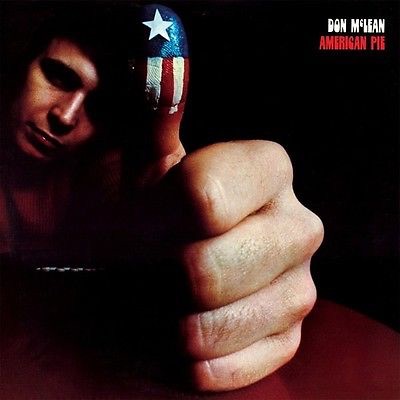
Don Mc Lean’s song, “American Pie”, talks about the evolution of Rock’n’Roll through the decades until 1971, starting with the 50’s and the line mentioning the Day the music died, in clear allusion to the fateful plane crash that took the lives of Buddy Holly, Ritchie Valens and J.P. “Big Bopper” Richardson in one merciless blow. That was in February 1959. Last year of the decade turned out to be grievously harmful to Rock. Besides the fatal incident that killed those three mythical figures, Chuck Berry was arrested in December and convicted “for transporting a minor across state lines for immoral purposes in violation of the Mann Act.” Althought his earlier conviction was thrown out of appeal (as he claimed to have been object of racial prejudices) the prosecution decided to retry Berry. After retrial he was finally condemned to a three years sentence. All of this, added to the “Payola” scandals, the unbridled sexuality inherent to Rock’n’Roll and the depravation seen within it caused the stampede that left Rock in the hands of whites and weakened it to turn it into a language easily assimilated by the system.

Of course, such depravation was only seen by “those who shared Adams’ brand of liberty, with its elitist sense of puritanical morality” – as Smith accurately defines – the same ones who “laid the foundations of American ‘Independence’ and its consequently detrimental value systems still being inherited up to this day.”

It must be noted that, as Dylan suggested when he talks about the civil rights movement, even mentioning the Payola scandals, the problem was not only about racial or moral issues, but also implying political and economical interests, actually the real concerns of the main record labels and distributing companies. Smith conveys the same, in a political context, when he refers to those who “laid the foundations of American ‘Independence’ and its consequently detrimental value systems.”

It is for that reason that, Smith declares, “still there are those that actively reject such bequeathed value systems. And it’s this kind of rejection, deviation, transgression that not only lies at the root of what uninhibited Americana is all about, but it’s become a left-handed American tradition unto itself.”

Anyway, the Rock’n’Roll segregation process was successfuly achieved, as Smith reflects: “Doo-wop was invented in the 1940’s by black youth on street corners, but it shot to the top charts in the late 50’s when Italian Americans adopted it as their own, just as most African American performers moved toward soul music.”

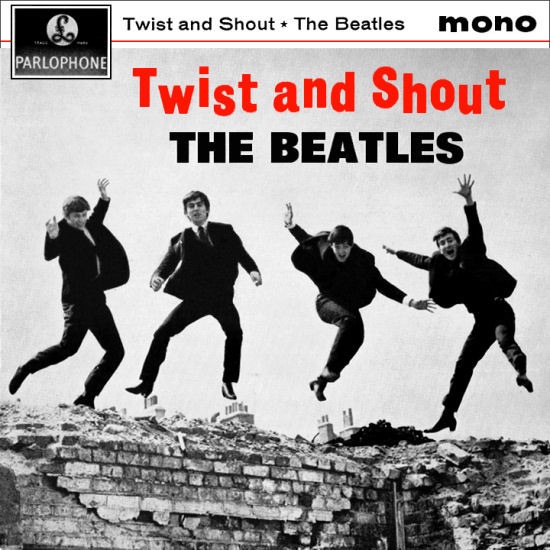
“When ‘Twist And Shout’ comes to America from across the pond in 1964, Rock’n’Roll had already taken one hell of bludgeoning. Who – Smith wonders – was able to hear anything over the inescapable screams of the Beatlemania?”

image

At that point Rock’n’Roll has become just a White musicians thing. No one Black singer, or lead guitarist, is seen in front of a Rock’n’Roll band, since Berry was put out of business. But Jimi Hendrix appears on the rock scene to change things back to what it should have ever been, according to Smith’s theory. As Dylan did before, “Bringing It All Back Home” from the British Isles, Jimi would carry on his Experience to bring Rock’n’Roll back to a racially integrated land.

That’s what Brent L. Smith calls the Hendrix Enigma. In his own words, “R&B-sideman-turned-mesmerizing-rocker Jimi Hendrix not only revolutioned the way the electric guitar was played, but psychedelicized its form in a single performance.” The author of the referred article continues giving a quite emotional narration of the facts at the Monterey Pop Festival in 1967, when Jimi Hendrix astonished the audience, and the world, setting his guitar ablaze in “one of the most powerful moments in American music history.”

image

Not long after the flaming act, young photographer Ed Caraeff “with literally the last shot of his roll of film, snapped one of Rock’s most iconic images. He even had to use his camera to shield his face from the flames Hendrix summoned higher with his fingers.” Smith still adds, “It was one of those moments when cheering is almost vulgar.” To make us feel as if we were there he tells what first hand witness Michelle Philips of The Mamas & The Papas recalls: “I was in the audience and I was appalled. It was not the sexuality of his show that appalled me. It was what he did to his instrument. Here he was throwing lighter fluid on his guitar and setting it on fire. I had never seen anything like that in life.” Then the young writer concludes: “Was it something at once so sacred and so electric, it points to the spiritual – or more accurately, the essential? – After all, it was the first declarative marriage between the Blues and Psychedelia: Rock’n’Roll was given a mystical rebirth.” And becoming definitely religious, Smith sacralizes the event asking himself, “By burning his guitar on effigy, did Hendrix ensure the salvation of unadulterated Rock for anybody willing to embrace it? If the 50’s were the old testament days of Rock, was Hendrix its anointed one here to die for all of our sins?” Reading him one must recognize the relevance of Jimi Hendrix performance, even agree the black guitarist influence has been immeasurable. We must admit the devastating force and significance of his revolutionary act, but I tend to believe there was also a lot of exhibitionism in all that Jimi Hendrix Experience paraphernalia. Anyway, it was certainly the big moment, the Rock manifesto of a return to the roots. As Smith wrote himself, “Whatever Hendrix was, he was the only performer capable of reconciling the broken racially-charged and dichotomized state of Rock’n’Roll.”

Mysteriously, but easily understandably, Smith returns to Dylan and writes, “Without forgetting that Hendrix’s biggest single was the immortal cover of Bob Dylan’s ‘All Along The Watchtower’ I’d like to get back to the still living legend in his own right.” Then he cleverly states, “When Dylan turned out electric in 1965 it was seen as a betrayal to the folk genre, something a lot of fans hated and scorned him for, even to this day.” Actually, “the move from lone troubadour to electric front man was, in fact, his total acknowledgement and loyalty to pure music Americana. Rock’n’Roll was a new art form that emerged with the deepened expansion of the American spirit.” Of course it is true, and Dylan knew that, so, “he was just honoring his roots.”

There’s an excellent song Neil Young once wrote, called “Hey Hey, My My (Out of The Blue)”, which was used as part of the original  soundtrack in Dennis Hopper movie “Out of The Blue.” The film was about a teenager Punk girl, Elvis’ fan, who thinking “it’s better to burn out than to fade away” commits suicide, after murdering her parents, in an attempt to kill Rock’n’Roll forever. But as Neil lyrics, in thrilling contrast with the images in that movie, assert: “Rock’n’Roll is here to stay, hey hey, my my, Rock’n’Roll will never die.” And that’s the only truth.

Smith still writes a quite interesting addendum in which he describes what’s happening in garage and makeshift studios across the country in America – and I might add, all over the world. As he says, “it tells us that despite the turbulent effects of the digiscape on all sectors of our culture in the 21st century, Rock’n’Roll is not only still kicking but it’s thriving and it’s doing so in the illuminated dark, out of the mainstream limelight.” And yes, even “though it may be snatched or bought off the streets and shamelessly adulterated in corporate studios now and again” what we really know is that the current garage rock revival underway “proves its spirit is what persists and what returns to haunt the status quo. It still compells the young at heart to flock to live shows and it’s pulling teenagers out of the sanitized drudgery of strip mall suburbia.”

This all happens, and always will, because, as Dylan wrote, “you can’t kill an idea.” As long as there is someone out there ready to take a guitar, wanting to sing out its heart to express its discontentment about what’s wrong in the world, Rock’n’Roll will still be there, out of the blue… and into the black.

The Hypnotist Collector

Bibliography:

L. Smith, Brent (April 13, 2016) Like It Is: Bob Dylan Explains What Really Killed Rock’n’Roll. Retrieved May 14, 2016 from https://medium.com/cuepoint/like-it-is-bob-dylan-explains-what-really-killed-rock-n-roll-f6a4b6587a1a#.

Morgan, James BBC News – Washington, DC (April 7, 2015) What Do American Pie’s Lyrics mean? Retrieved May 17, 2016 from http://www.bbc.com/news/magazine-32196117

history.com Staff – This Day In History (October 28, 2009)  Chuck Berry Goes On Trial For The Second Time. Retrieved May 17, 2016 from http://www.history.com/this-day-in-history/chuck-berry-goes-on-trial-for-the-second-time

There But for Fortune

I’m returning to my origins trying to tell the experiences and first impressions I had discovering Folk Singers such as Joan Baez, Bob Dylan, Tom Paxton, Gordon Lightfoot  and Phil Ochs. I can’t remember now how I came to get in my hands Joan Baez album titled “Farewell Angelina.”  The B&W picture on the cover was showing a seductive image of a young woman with a sort of pleading expression in her face and insightful sight. She was wearing a plastic raincoat, so one might deduce the photo was taken on a rainy day (Later in 2007 I came to determine the shot took place at Newport Folk Festival on 24th July 1965, Contemporary Songs Afternoon Workshop.)

JoanBaez-FarwellAngelina2

I was just a kid back then, most likely around 14, but maybe already aware of things that matter. No wonder so many things on the mentioned album called my attention. First intriguing subject I noticed was that four of the most beautiful songs on it were attributed to the same author, a certain B. Dylan. Of course I had never heard of him before and I was curious to know who he could be and what more he had ever done. I was thinking he was an old songwriter, a traditional folk singer from the 30’s. I was surprised he was just a youngman of around 20 when “The Freewheelin’ Bob Dylan” came to my hands just a little bit later. I soon became highly interested in such kind of music, searching for everything related to Joan Baez and the artists mentioned on the back cover of that album. Next step was acquiring another LP of the so called ‘Queen Of Folk Music’. The recording was an Hispavox release titled “Lo Mejor de Joan Baez (Best of Joan Baez)” including “It Ain’t Me Babe,” one more song composed by Bob Dylan. Langstone Hughes liner notes refers to the mentioned songwriter as one of the most talented contemporary troubadours. However, the very exciting thing about this album, the most revealing listening experience through the whole LP, was the discovering of a new tune by another unknown artist, written down as P. Ochs on the back cover. It was first track of the B side and it was so beautiful you couldn’t help but stop the record player once done, try and put the needle down in the groove back to the beginning of the first track and listen to it over and over. The name of the song was “There But For Fortune”. The liner notes, oddly, did not even mention that song, nor the origin, neither anything about the composer.

One day one of my best friends came to me telling he had invitations to attend live ‘”Caravana” de Angel Álvarez’, a famous radio show by one of the best DJ’s ever in Spain, most likely the best of his time. My friend had only 3 free tickets so only 3 of us among the usual mates, including himself, had the chance and inclination to attend the program at the Radio SER network studios. So we made the appointment for the day at issue and we met earlier that morning not to miss the show. That was an eventful morning. Angel Alvarez, whose true profession was that of a radio operator on Iberia flights, took advantage of his trips to New York to bring us those magnificent musical jewels, new sounds that made the country wake up and change the pace of our nation. We sat on one of the first few rows. The show began and there he was, with a Long Play on his hands and a gentle deep voice like cotton candy on stormy weather, announcing that he was going to play for us, for the first time in our country, just one track of a remarkable album by Phil Ochs, the outstanding folk singer of the Greenwich Village scene. He warned the attendees that many of us among the audience would already know Joan Baez’s cover of the song, but the heartfelt version by the composer himself would most likely become poignant even for those listeners who knew it first in Joan Baez’s voice. He carefully put the disc on the turntable and dropped the needle on the groove. Listening to it was a revelation. We had a feeling that something was happening and just like new born souls felt touched by the depth of Ochs’ performance. The piece had an emotional meaning for us and it was creating a bond of sympathy between us and the man who wrote it, the same soulful guy who was singing for us through the speakers of the radio set.

Our first thoughts, at the very moment Ochs’s voice was surrounding us, were about the privilege to be there, being the chosen ones allowed to listen to such a gem, and, immediately, about what else we could discover about him.

It was difficult at the time to find information on protest singers or artists fighting pro civil rights, but we managed to get some knowledge regarding Phil Ochs works and facts.

He used to be among the crowd Bob Dylan was in, both of them performing in the Village at Gerde’s Folk City, Gaslight and other clubs in the same area. They soon became good friends, though they later had also some pronounced misunderstanding and disappointments at times. They even felt a certain rivalry. It’s been said that at one point Phil Ochs could have felt peeved by the success and fortune Dylan and others had gained. We have now reasons to believe he was a wounded soul divided between honesty, devotion for the truth or any altruistic cause and eagerness for fame and recognition.

Anyway, the comparisons between them were unavoidable in the early 60’s. Even if Phil Ochs might sometimes turn out disadvantaged in that confrontation, the fact is that he was actually the true voice of a young generation’s protest. While Bob Dylan was a poet able to open our minds to a different world, looking at it with new eyes to find a philosophical truth, Phil Ochs was more a journalist, but one who would provide us awareness of the events with an angry, driving, urgent passion. Actually, Ochs was also a minstrel. His work sheds light on what is wrong in the world and how we could help make it right.

For what we know the singer/songwriter from El Paso was a talented lyricist with sardonic sense of humor and an insisting voice wanting to be heard, as Jac Holzman, founder of Elektra Records, said. Ochs main virtues as a performer were a fantastic sense of rhythm, vibrant guitar picking and a especially haunting diaphanous ringing voice. His deep passion that he would drive through neatness, wit and conviction, could always transcend his technical and vocal skills, though.

“Another Side Of Bob Dylan” release meant a step in a different direction for the musician from Minnesota. Dylan leaves his convictions regarding the fight for the civil rights and becomes more intimate, surrealistic and concerned about soul’s issues. Phil Ochs, instead, remains faithful to his beliefs, defending his ideals, becoming the voice of the oppressed ones. The assassination of three civil right workers in 1964 inspired one of Phil Ochs’ angriest ballads, “Here’s To the State of Mississippi.” As the Vietnam War raged he dedicated himself fierily to his political activism, writing generational anthems like “I Ain’t Marching Anymore,” protesting and leading the crowd in demonstrations against the war.

He had also a keen musical instinct to create insightful ballads that have already become part of our collective memory, mainly the widely praised “Changes,” and the haunting “When I’m Gone,” which, far from setting down his last will, meant a commitment to take advantage of the time left for him, as if he already knew he wouldn’t last long. But things changed all of a sudden. Dylan’s move to electrified rock and The Beatles psychedelic success likely made some negative impact on him. Whatever happened, looks like he had come to a turning point. Maybe he was disillusioned because of his lack of a big hit, a success which was denied for him that other singers of his generation were enjoying. His new releases included compositions of outstanding lyrical beauty, such as “The Flower Lady” and the melancholy “Pleasures of The Harbor,” reportedly inspired by John Wayne’s movie, “The Long Voyage Home,” but the overly orchestrated arrangements were bleak and turned out outdated.

Years later of our discovering of his performing art, one of my brothers bought in the USA an album by Ochs titled “Rehearsals For Retirement”, which I loved from the beginning, especially the title song. That particular track contained a heartfelt statement of intents, a manifesto against the consumer society with the will to leave this world in which someone like him did not seem to fit. I don’t know why I thought the album was a posthumous release, published after his death. Maybe I was misled by Phil Ochs graveyard portrayed in the front cover. My mistaken idea was also reinforced by the requiem of the title song, a stirring melody with pessimistic lyrics about the end that’s looming. However, the “topical singer,” as he liked to call himself, died by his hand in 1976, though the LP was released in 1969. Looks like the reason why for this cover was his deception because of the events at the Yippies’ “Festival of Life,” one of the many demonstrations outside the Democratic convention, in which he was one of the organizers. It happened in Chicago in 1968. He was caught in the standoff between peaceful protesters and the boundless charge of a police brigade, a clash that resulted in a huge mess of lavish bullets, teargas and beatings. Many people were arrested, including Phil Ochs. For someone as sensitive as Phil was that was a devastating experience leading him to use on the cover of his next album a picture of a gravestone engraved with his name professing his death happening in Chicago in 1968.

PhilOchs_RehearsalsForRetirement

DiscSide1

s-l1600_back

ochs66.L
Phil Ochs

After the assassinations of Martin Luther King, Jr. and Robert F. Kennedy, added to the debacle of the police riot, he became depressed and progressively affected by bipolar disorder, compounded by a severe case of alcoholism. Also his political involvement and existential bitterness caused him serious troubles, being arrested In Uruguay at a political rally in 1971 and again in Argentina. While touring South America he met Chilean singer Victor Jara and they became good buddies.

Pinochet’s military coup forced Allende from power in 1973. With president Allende already dead, Jara, along with thousands of other victims suspicious of activism, was brought to a giant stadium where he remained arrested and tortured for 4 days. They kept him on a corridor in the basement under close surveillance. On the 5th day, brought up to the stadium, soldiers beat him brutally and trashed his hands with rifle butts. The putschists guards mocked him telling “Sing now, if you can!” Then he was ordered to sing. Jara stood up with bloodied hands and led thousands of other prisoners in singing the anthem of Allende’s unity party. Then they peppered him down in the basement corridors, along with the director of the State Railway Company. His body was thrown into some bushes near the Metropolitan Cemetery and found 3 days later with 44 bullets on it. News broke Ochs’s heart and clouded his mind. He went nuts, but still was able to regain some willingness and put his soul and understanding to serve another noble cause organizing “An Evening with Salvador Allende,” a Friends of Chile Benefit Concert. He invited Bob Dylan to take part of the event, performing at the Felt Forum in New York. While they were so drunk during the show that they could hardly sing at times, the benefit became a complete success, thanks to Dylan’s involvement. In fact it was also the first time people publicly announced that the CIA was likely behind the Chilean coup, planned and financed by the Nixon administration.

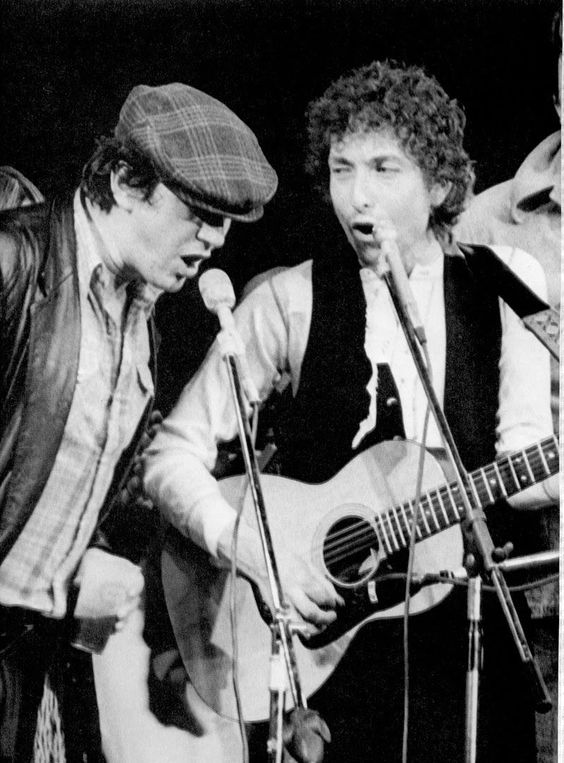
Bob Dylan and Phil Ochs May 9, 1974 Friends of Chile Benefit New York

Phil Ochs & Bob Dylan at Friends of Chile Benefit Concert May 9th, 1974

Unfortunately, while visiting Africa in 1973, he was assaulted by a thief, who strangled him damaging his vocal cords.

He still played a few shows yet, even became part of Bob Dylan’s Rolling Thunder Revue for a short time. Reportedly, he was filmed doing four songs for “Renaldo and Clara” that were never used in the final cut of Dylan’s film.

Returning home his behavior became increasingly erratic. He alarmed friends with paranoid delusions about CIA plots against him [Although that certainly was not going totally misguided, since recordings of his made by the FBI as part of the corresponding investigation file were found later.] There was even a time when his rant came to the point that he invented an alternative identity, calling himself by another name for months. During that time he used to live out on the street, saying he had killed Phil Ochs and had impersonated his identity.

Finally, in 1976, he did it: he killed Phil Ochs. He hanged himself up with a belt in his sister’s house in Far Rockaway, Queens, in New York City. Perhaps he never got to see that “young land with so many reasons why”, but he was able to show us a country ravaged by bombs and ruins of buildings once so tall; And he sowed in us the hope that one day a young land, where we could live in peace, would be shown to us mortals who look at the world with clean eyes… there but for fortune, may go you or I.

The Hypnotist Collector

Bibliography:

Mirriam-Goldberg, Caryn (February 7, 2016) In Praise of Phil Ochs: Everyday Magic, Day 887. Retrieved April 7, 2016 from  https://carynmirriamgoldberg.com/2016/02/07/in-praise-of-phil-ochs-everyday-magic-day-887/

Goldberg, J.J. (April 10, 2016) Remembering Phil Ochs, the Other Great Jewish Folksinger of the ’60s. Retrieved April 13, 2016 from http://forward.com/opinion/338253/remembering-phil-ochs-the-other-great-jewish-folksinger-of-the-60s/

Eder, Bruce (April 2016) Phil Ochs. Artist Biography by Bruce Eder. Retrieved April 19, 2016 from http://www.allmusic.com/artist/phil-ochs-mn0000333634/biography

Wikipedia (last modified April 13, 2016) Víctor Jara.  Retrieved April 19, 2016 from https://es.wikipedia.org/wiki/V%C3%ADctor_Jara

Délano, Manuel (December 6, 2009) La Muerte Lenta De Victor Jara. Retrieved April 20, 2016 from http://cultura.elpais.com/cultura/2009/12/05/actualidad/1259967604_850215.html

Top Ten Songwriters of The English World

By santisstar created 11 Jul 2013 | last updated – 09 Aug 2013 (taken from IMDb)

1. Bob Dylan

Robert Allen Zimmerman was born 24 May 1941 in Duluth, Minnesota; his father Abe worked for the Standard Oil Co. Six years later the family moved to Hibbing, often the coldest place in the US, where he taught himself piano and guitar and formed several high school rock bands. In 1959 he entered the University of Minnesota and began performing as Bob Dylan at clubs in Minneapolis and St. Paul…

2. Paul Simon

Born on October 13, 1941 in Newark New Jersey, Paul Simon is one of the greatest singer/songwriters ever. In 1957, he and high school pal, Art Garfunkel, wrote and recorded the single, “Hey Schoolgirl”, under the name “Tom and Jerry”. After some failures, they broke up. Simon still wrote and recorded music as “Tico and The Triumps” and “Jerry Landis”…

3. Leonard Cohen

Leonard Norman Cohen, (born 21 September 1934) is a Canadian singer, songwriter, poet and novelist. His work has explored religion, politics, isolation, sexuality, and personal relationships. Cohen has been inducted into both the Canadian Music Hall of Fame and the Canadian Songwriters Hall of Fame as well as the American Rock and Roll Hall of Fame. Second only to Bob Dylan (and perhaps Paul Simon) [in terms of influence], he commands the attention of critics and younger musicians more firmly than any other musical figure from the 1960s who is still working at the outset of the 21st century.

4. John Lennon

John Winston (later Ono) Lennon was born on October 9, 1940, in Liverpool, England, to Julia (Stanley) and Alfred Lennon, a merchant seaman. He was of Irish, and some Welsh and English, ancestry. In the mid-1950s, he formed his first band, The Quarrymen (after Quarry Bank High School, which he attended) who, with the addition of Paul McCartney and George Harrison, later became The Beatles…

5. Paul McCartney

Sir Paul McCartney is a key figure in contemporary culture as a singer, composer, poet, writer, artist, humanitarian, entrepreneur, and holder of more than 3 thousand copyrights. He is in the “Guinness Book of World Records” for most records sold, most ‪#‎1s‬ (shared), most covered song, “Yesterday,” largest paid audience for a solo concert (350,000+ people…

6. Phil Ochs

Philip David “Phil” Ochs (December 19, 1940 – April 9, 1976) was an American protest singer (or, as he preferred, a topical singer) and songwriter who was known for his sharp wit, sardonic humor, earnest humanism, political activism, insightful and alliterative lyrics, and distinctive voice. He wrote hundreds of songs and released eight albums. After years of prolific writing in the 1960s, Ochs’s mental stability declined in the 1970s. He eventually succumbed to a number of problems including bipolar disorder and alcoholism, and took his own life in 1976.

7. Joni Mitchell

Joni Mitchell is one of the most highly regarded and influential songwriters of the 20th century. Her melodious tunes support her poetic and often very personal lyrics to make her one of the most authentic artists of her time. As a performer she is widely hailed for her unique style of playing guitar…

8. Kurt Cobain

Kurt Cobain was born on February 20 1967, in Aberdeen, Washington. Kurt and his family lived in Hoquiam for the first few months of his life then later moved back to Aberdeen, where he had a happy childhood until his parents divorced. The divorce left Kurt’s outlook on the world forever scarred. He became withdrawn and anti-social…

9. Lou Reed

He formed the group The Velvet Underground with Welsh multi-instrumentalist John Cale, second guitarist Sterling Morrison, and drummer Maureen Tucker in New York in 1965. The group soon became a part of Andy Warhol’s Factory scene, which housed a great number of the most freaked and experimental artists at the time…

10. Jim Morrison

Jim Morrison was born on December 8, 1943 in Melbourne, Florida, to Clara Virginia (Clarke) and George Stephen Morrison, a U.S. Naval Officer who fought in World War II. Jim eventually became so estranged from his parents that he would later claim that they were dead. Not much is known about his early years…

The Doors

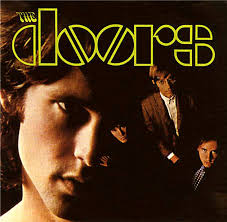
A few days ago I attended last concert to date of Spanish singer Iñigo Coppel at Galileo Galilei equipped with my recording gear. Fortunately I was able to tape the soundboard and next day, as I was listening to it, I paid attention to a new song of his, dedicated to a woman he met at Jim Morrison’s grave while visiting Père Lachaise cemetery in Paris. Apparently she was writing a poem and, with a flower in her hand, she stroked the name on the stone of the legendary artist. That event inspired the song, beautiful and melancholy, indeed. And that gave me the idea to start now this article about The Doors, the eponymous album of the band, first of their discography, recorded in August 1966 and published in January 1967.

the doors

I was a teenager of 16 and that afternoon we celebrated a party with friends at the home of one of our regular colleagues. Someone’s brother had recently traveled to the United States and bought the album in question, which our friend brought to our satisfaction, borrowing it, maybe without permission. Of course the LP was still unavailable in Spain, so it was a treat for all of us to have a chance to listen to and dance to it. As we were listening to “Light My Fire”, bewitched under the spell of Ray Manzarek’s keyboard, someone turned most of the lights off. As the disc was still spinning on the turntable we were feverishly dancing in the gloom. “Crystal Ship” sounded like a requiem, seemingly written for a funeral party, but it was beautiful and contributed to making us fall into a trance. When the last track organ solo started we were already feeling as if we were on a trip to an unknown land. The magnetic, bewildering chords of “The End” caused a mesmerizing effect on us all. As the song progressed we were abducted into a different mind level, as if we had taken drugs or something, which of course was not the case. We felt like we were on acid, though we had not even drank any alcohol, most likely. We didn’t know why but we abandoned ourselves to the mantra of such intoxicating music. And we danced ’til the end like zombies, sharing the same feeling, enjoying together such an unforgettable experience.

I wonder why it happened and it makes me think of mind power and the role of music and arts in general. We were very young, that’s true, and of course we were through the psychedelic era, but still there was a sense of freedom that the sound instilled and the way the words were sung, along with the rhythm and harmony, made it all new and provocative. What I mean is that their music, especially Ray Manzarek organ riffs, beside Jim Morrison bold delivery, allowed us to free our minds and get further into an unknown world of something that was for us forbidden. We felt like drugs could make us cross the barrier between consciousness and the subconscious mind and we realized we could do it without them. That was a release, a liberation of our prejudices, without going further into a sinful world that would have been an overwhelming hurdle for our sense of dignity and the concept of degradation that substance abuse might have meant for us at that early age.

We still didn’t have any idea about Jim Morrison’s rebel attitude, but his particular sense of freedom and his willful transgression of conventional morality that led him to provoke several kind of scandals while performing live, such as the infamous incident at Ed Sullivan show, obviously transcended the phonographic work and reach out to our still tender sensibility. For those of you who never heard of the incident at the Ed Sullivan TV show, here’s a brief summary of the event:

The Doors were told before the performance that they couldn’t use the word “higher” included in the “Light My Fire” verse, on national CBS television,

You know that it would be untrue
You know that I would be a liar
If I was to say to you
Girl, we couldn’t get much higher’

Therefore, they agreed, but Morrison decided it was integral to the song so they concluded they wouldn’t change a word and sang it like that anyway. Those shows were live at that time. After their performance the producers rushed into the dressing room, Sullivan foaming at the mouth, and The Doors were told they could never appear again on national CBS TV. They were banned from the show. Their 1st and last.

Jim Morrison reportedly replied to the producer’s rejection in a defiant tone, “Hey man, we just ‘did’ the Sullivan Show!”

A friend of mine told me that, even being different circumstances, Ed Sullivan reaction reminded her of Pete Seeger with an axe trying to cut the cords at Newport Folk Festival in 1965 in order to avoid the sound (they would call it “noise”) coming out of Dylan and the Butterfield Blues Band electric guitars and instruments. Maybe not quite similar, but one might say it had to do with the same kind of intolerance.

Of course Jim Morrison’s rebel mind was probably something we found seductive and intoxicating. His performances had that urgent desire to take on the world, tearing all of life to pieces.

We didn’t know then anything about him. But we know now he was a kid with a huge imagination and dark ideas. For some reason he had this affinity to the obscure side of life. Anyway, he soon became a wayward young man who grew up influenced by Nietzsche and the existentialist stream of the Beat Generation, something that was probably the sign of the times.

Jim graduated from UCLA film school, where he met Ray Manzarek. Young Morrison was already writing brilliant lyrics inspired by Rimbaud, filled up with imagery derived from Antonin Artaud’s surrealism. His schoolmate Ray thought his lyrics were excellent rock stuff and it didn’t take so long for him to convince Jim that they should make a rock band. John Densmore joined them immediately and Krieger was later added to the lineup.

They soon recorded their debut album achieving national recognition after signing with Elektra Records in 1967.

The album was a fascinating introspection into the psychedelic world. I didn’t know the name of the band was a reference to unlocking the doors of perception through psychedelic drug consumption, but it seems to be true. The idea came from Aldous Huxley’s book “The Doors of Perception” which in turn was inspired by William Blake’s line from “The Marriage of Heaven and Hell,” which read like this: “If the doors of perception were cleansed everything would appear to man as it is, infinite.”

And certainly their music sounded infinite to us. We didn’t know what was happening, didn’t know anything at all. But we were there spellbound, getting deeper into the sign of the times, seduced by their proposal of an open world seen from a different perspective with an open mind. It was like suddenly being aware that there are other worlds but they are in this one. I could never forget the way the album impressed me, how those songs made a deep impact on me and the life we were living at the time.

I think of what the Doors represented in the evolution of music and how they influenced young people like us, how we were moved by their rhythm and harmony with Morrison’s wild and rebellious temperament. They were even embodying a certain freedom of expression despite their commercial appeal. More than introduced to, we were impregnated with this homespun existentialism which we easily assimilated without much awareness of where it would lead us. However it helped us to find a path through suggested readings which we instinctively agreed with. It would be a path we would walk fully aware of where we were going.

The LP was a big success. “Light My Fire” became one of their greatest hits, especially through Jose Feliciano’s cover, which granted the song a huge popularity. But I guess the most relevant event was the inclusion of “The End” as part of “Apocalypse Now” soundtrack, spreading all around their meaningful conceptual work, making them one of the most celebrated bands in rock’s history.

However, as much as his own songwriting, it was Jim Morrison’s controversial figure and bold character, along with the drama surrounding his life and death, that entitled him to be considered one of the most iconic rock stars ever. His alcohol dependence and frequent abuse of heroin and hallucinogens was well known, but his  improvised poetry to a rock beat could always redeem him. He was once arrested for showing his male attributes on stage at a pitiful concert in New Haven, CT. This incident appeared in the Oliver Stone movie, “The Doors”, further reinforcing his myth. His death in Paris under strange circumstances apparently due to an heroin overdose, though still never verified, finally contributed to the legend.

The Hypnotist Collector

Collecting Bob Dylan (The Shaman’s Vault)

I’m bringing here, as an introduction, the first article I wrote for the monographic magazine “Desolation Post”, devoted to Bob Dylan (#4, February 2007):

The Shaman’s Vault                           

We start this dedicated section here to encourage collecting activities and provide information about the sources, antecedents and means to obtain a first selection of essential recordings. So this is meant to orient the fans on how, where and what to look for to extend their collections or to begin in this world plagued of archives, numbers and codes. I’m referring to a world in which the essences of what still remains hidden in the Shaman’s vault reside. When someone finally comes to admire without reserves the works and figure of somebody as illuminated and visionary, unclassifiable and enigmatic as Bob Dylan is, he can hardly avoid to try and monopolize all his work, or at least all that has already been officially released. But if one day you come to get all his official material (hardly everything, but still catalogued and available) and have the fortune to understand the live art of the gifted songwriter, you will want to go further. If you enjoy his talent to recreate his own world every evening on stage and the universe of his old, new and not so new songs, without a doubt you will be led to try to decipher something out of that world. That will make you eager to collect all and each one of the many concerts the minstrel of Minnesota has been offering throughout his entire career. You will want anything to help you discover every day a new version or find some sublime performance that could eventually quench your need for emotions. It could be a harmonica solo, just a singular phrasing, a guitar’s riff, a few captivating chords, anything that fills up the emptiness inside  your soul due to the prolonged absence of a new and mysterious Dylan. A dedicated collector might soon become fascinated, yearning for anything related to such an imitated yet inimitable creator with the unforseeable gift to combine the naked and untamed beauty, and the fury of reason, in the middle of madness. All of this happens because one has come to understand that his songs, as well as each one of his performances, are nothing but roadmaps for the soul, flooding torrents of wealthy emotions that moves you to reconsider your own sense of perception. There’s always something that animates you to look for and search, to catch them all and complete everything that’s been left behind him and what is about to come. Because it’s never enough with some, a few, many, the best achivements or the less known versions, one ends up needing all of them to try and totally include the whole genius.

They say that Bob owns several armored vaults where he keeps all the stuff his crew has been recording all along his artistic trajectory. It would include thousands and thousands of miles of tape with endless footage obtained from the concerts he has already celebrated to date. Could it be true? If so, it would be the dream of every collector dedicated to his work, to obtain all those recordings and keep them in his own vaults to listen to them privately. One would  want to preserve them like gold in cloth between the walls of his private temple. I do not doubt Dylan himself must have a good part of the best work he’s done, live recorded by his acolytes and carefully maintained under lock and key. But what seems to me less probable yet is that the reach of that material covers each and every one of the shows the icon from Duluth has given throughout history. Nevertheless audience recordings of a great part of his work on stage exists. We may certainly find practically everything from 1974 on, more than sufficient stuff of the 60’s (mainly from 63 to 66) and a great number of soundboard recordings.

All these recordings, either taped from the audience or extracted soundboard, will be the subject of our study and our yearnings.

In order to begin with one or several lists of the essential ones, as most of you might already know, having access to the Internet would be enough to obtain the “must have” selection off the famous Craig Pinkerton’s website http://www.bobsboots.com. Here a list can be found including a one-by-one description of those unofficial editions. The complete site is a huge catalog of bootlegs containing the most impressive recordings and remastered works of legendary shows or more remarkable performances of the nomadic artist. Another one of these lists to be considered is the very recommendable one of John Howell. His project enumerates those shows for which a decent recording exists, or even excellent in many cases. They are those that from a personal and subjective point of view deserve to be listened to, at least once, by every good fan. Also interesting are the recommendations by Paul Williams or Clinton Heylin. The most exhaustive and generally trustworthy documentation about the concerts, performances and recording sessions made by the most influential figure of Rock might be found in Olof Björner’s archives. Great collectors of the enormous and amazing live work of our friend Zimmerman  will be mentioned next. Their work should be taken as an origin, information source and present documentation of a great part of the works recorded during the last quarter of the last century and the previous years. We are talking about excellent researchers for the study, compilation, documentation and evaluation of the performing art’s legacy of the little great white wonder, such as Les Kokay, Michael Krogsgaard, Glen Dundas, Jeff Friedman or Bill Pagel (author of the unavoidable site Bob Links). All of them investigators, compilers and most likely authors themselves of the most remarkable live recordings one can find of the mythical periods in Dylan’s history and therefore of Rock.

Kokay published in 2000 his own catalogue of the complete recordings of the 1974 tour, “Bob Dylan/The Band (A Collectors Guide to the 74 Tour)”, updated in 2005, which he compiled and remastered to a great extent. So, thanks to him they have finally arrived to us in a still acceptable condition, some of them (few of course) excellent registries for the time. Nevertheless, in the heading he quotes Clinton Heylin, as a form of recognition to the contribution of this author, with a statement that is not totally wrong but I do not share it, “There are two problems with the 1974 tour: the tapes are crap and Dylan’s performances are crap.” – C. Heylin, Telegraph 32 pag 86. The tapes are in their great majority of a lamentable quality, that is unquestionable, but instead I believe the performances of the furious artist of Columbia are quite convincing. Although he most likely sang and played his guitar, or sat at the piano, in a post-moonshine state when not completely under the influence of the alcohol or any other intoxicating substances, we can tell he was fervent and still focused. For that matter,  I think  there is no doubt that his uninhibited delivery and high degree of emotional load turns out to be now a terrific moving experience. For instance we’ve got “Before The Flood”, the official edition of the tour containing, in my opinion, one of the best live versions ever of the classic “Just Like A Woman”, true fire and clamorous storm of purifying rain just before the flood. It is also obligatory to listen to the complete concert from which some of the tracks on the official disc were extracted (among them the mentioned Just Like A Woman). I’m talking about February 14th, 1974 at The Forum in Los Angeles, late show, which contains another true masterpiece of the performing art from the author of Like A Rolling Stone. An unexpected and subduing “It’s All Over Now, Baby Blue” that leaves the kind listener disturbed as well as full of admiration. The essential bootleg that includes the soundboard recording of this impressive and unique concert is the one titled “Paint The Daytime Black” of Q Record editions (ref: QR 23/24). Another essential disc of this transcendental tour that one should be able to find included in the corresponding Bobsboots list is “Oakland Flood”, first of both shows at the Alameda County Coliseum in Oakland, California on February 11th, 1974. The sound is PA and splendid, although certainly defective sometimes due to irreparable damages on the tape. It contains an extraordinary and vibrant version of the always magnificent and in a certain sense apocalyptic, “Gates of Eden.” Not to be missed. There also exists in addition a compilation of the tour, work by Ronnie Z, who should be easily recognized by his nickname, Barefoot. This compilation, whose title “Sound The Battle Charge” gathers many of the most intense and exciting performances of some of his songs during the period,  was later spread by Stewart (Stew711).  I would especially mention some of them from his album “Planet Waves” (immediately subsequent to the beginning of the tour). I mean songs that he has never done live again since then, like “Wedding Song” for instance, “Something There Is About You” off the mentioned album, and the excellent and stirring “Nobody ‘Cept You” never officially released until 1991 (“Bootleg Series Vol.1-3, Rare and Unreleased”.)  The way Dylan sings in that performance of January 4th in Chicago this dismal, shady and existential,  but highly enthusiastic declaration of love, is something that would shake any sensitive soul.  All of them saw their debut during the first concerts of his return to the stage in January 1974, in advance of the nowadays underrated LP that paradoxically got to be first from the artist to reach Nº1 in the USA top sales lists.

Les Kokay himself also publishes his guide “Songs of the Underground (A Collectors Guide to the Rolling Thunder Revue 1975-1976)” in 2003. In it we found documentation relative to both parts of RTR tour, the concerts and all the available material. Nowadays these recordings have been widely circulating and wouldn’t be difficult for any fan to acquire them. They have been now corrected, even completed and also repaired, since the reproduction or transference to digital disc of some of them ran at different speed than the equipment used for the original recording (Nagra Tape recorders, usually.) Others that were incomplete have been completed through the years mixing different sources.

As for the previous years, tapes from pre-Columbia recordings made by friends and Bob own’s colleagues, the Gleason Tapes or the multi-reproduced Minnesota Hotel Tape, as well as many of the concerts from the 60’s, we will give account in a next chapter. On subsequent issues we will continue through the documented transgression of Folk, his conversion to electrified Rock and his adoption of pop culture, until the dramatic episode of the motorcycle accident. All of this will be main subject of future installments of this section and we will comment on the most remarkable captures, the collectable recordings, corresponding outtakes of the official recording sessions, concerts, titles of bootlegs and everything referring to the existing material in circulation.

The Hipnotist Collector

About me

My name is Luis Borrego and I was born in Madrid. I became a Beatles fan at the age of 13. It all started as a revelation when “Twist and Shout” EP and the album “Beatles For Sale” fell into my hands. They were brought as a gift by a sister of my mother who lived in London. Since then, I have always been interested in rock and Anglo-Saxon popular music. The discovery of the LP “The Freewheelin’ Bob Dylan” would come soon through my good friend JC, whose godmother lived in Biarritz. She bought her godson this awesome find, so impossible to spot in Spain at the time. Next came the single “Like A Rolling Stone” that a school mate lent me in the summer of ’66 along with the single “Gloria” performed by The Shadows Of Night. The last one already occupying one of the top ten spots on UK hits lists. That event changed my life forever. Vinyl records, especially the LP’s of those wonderful years, specifically, releases referred to as Anglo-Saxon popular music, have been for me objects of worship since the first drumbeat and first few sentences of “Like A Rolling Stone” resounded in my ears, altering my sense of perception. Nothing would ever be the same again.

Translating and understanding the lyrics by the Duluth Genius became a goal that I soon left, temporarily, for lack of the necessary basic knowledge of English. In those days, the only foreign language officially studied at school in Spain was French. My devotion to vinyl was forged at a time when the struggle for freedom and music and the message of the minstrels become essential in the life of any university fellow with a minimum of social consciousness, at least in my country. Having the album in your hands, reading the notes on the back cover and the lyrics, when included in the publication, were transcending the sound experience and gave meaning to the songs and the universe of the artist itself, songs expressing concerns, emotions and the feelings of a generation.

From that tumultuous period, though still happy, passionate and full of vitality, Rock evolved and represented for many of us a way of living and understanding the world. The discs were then, like books, bearers of soul and human thought and listening to them, touching them, reading them, and trying to analyze the ultimate meaning of the phonographic work was comforting or at least enlightening. Sometimes shocking. They generated a feeling likely to cause a strange pleasure of extreme intensity or uncontrollable pain emanating from the bottom of our guts as it made us aware of ourselves and the helplessness, powerlessness of human beings. It was almost like trying to capture the “memory of the world” within a plastic disc. However it was already in the 80s, more resolutely from 1985, when I became determined to collect vinyls and complete the official discography of the Beatles and also Bob Dylan, of which I had only purchased until then, 4 or 5 LP’s. Anyhow this would not involve any ignorance of his work which I always followed with interest and diligence, although not so much in depth. Other artists also related to Dylan’s work, and many others of several kinds, both American and British, were joining my arsenal. I became especially interested in British bands of the sixties, Pop and Folk Rock and its derivatives, as well as its roots, Rhythm and Blues, traditional blues and in particular the Mississippi Delta Blues singers. I also tried to include Rock in general and some jazz, though very poorly represented in my archives. At the end of the decade I looked back to the Madrid scene and included some other disks of Spanish bands or artists, such as Gabinete Caligary or Los Pecadores, although ultimately it was the new values that attracted me the most, focused very specifically in El Ultimo De La Fila (Quimi Portet and Manolo García) and its various formations, such as Los Rápidos and Los Burros. Some of Radio Futura and Flamenco singing, particularly Camaron, José Meneses and Manolo Caracol, gather on my shelves and even mythical representatives of the Hispanic couplet, as Concha Piquer, add to the hodgepodge, like the famous singer Carlos Gardel, the most universally popular and significantly outstanding performer of Argentinian Tango. New discoveries, such as Talking Heads, The Cure or R.E.M. and others not so well represented in numbers, such as Pixies, Stone Roses or Silencers, brought new blood to the sample, in my collection. After 1990, already in the digital age, with the birth of the minidisc and other forms of recording and playback, the volume of my vinyl acquisitions declined. However, I still watched for new releases of the most important artists in my personal hierarchy of artistic and musical values.

After 1999 I discovered the extent of the internet and the ability to get my hands on previously inaccessible unusual recordings through exchanges with other collectors who you could contact through Google newsgroups, such as rec.music.beatles or rec.music. dylan.

That is how I came in 2004 to be part of a small collective which we refer to in a private and intimate way as the Dylan Traders Community. Thereafter I became a moderator, then administrator and finally co-founder of the Hungercity page, now defunct. Some of you who frequented that space or any other similar sites, may already know me as Luisbp51, the nickname with which I identified myself in these areas.

So I open a new stage with this blog, in which I intend to publicize the scope of the work of many of these artists, exposing my collection publicly and making available to any interested party the channels to gain certain copies, low coverage recordings and out of print or rarely accessible vinyls. I hope you find it useful and overall you can find here a place where you may have access to certain information concerning your interests as collectors and lovers of rock and popular music.

The Hypnotist Collector