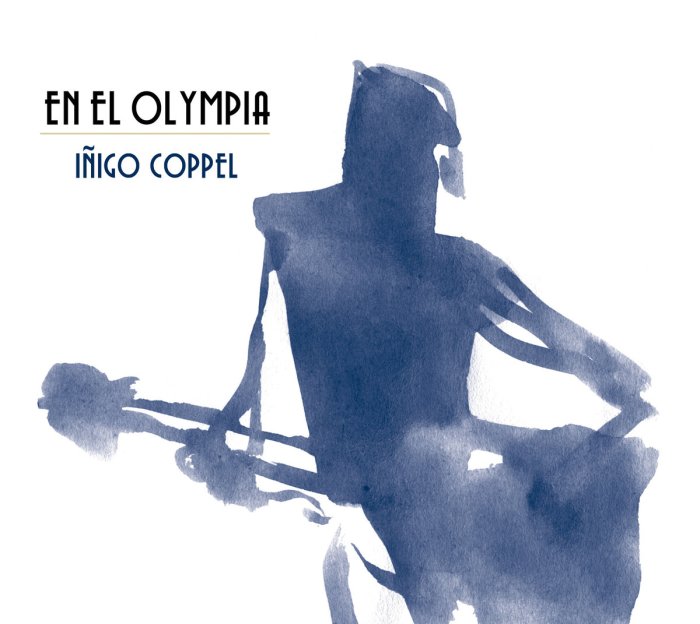
Iñigo Coppel “En El Olympia (At L’Olympia)”

I have already written about Iñigo Coppel previously. He probably has more potential for success than any of the newest singer/songwriters in the current Spanish musical scene. His new album, already recorded, “Los Nobles Salvajes (The Noble Savages)”, which I was referring to in a previous article, is now in the final post-production phase and will be released after the summer. In the meantime, today I want to call my readers attention to his previous work, an excellent album produced by Jose Nortes and recorded live at the Old Artuset Tavern on December 27, 2013.

a3803126257_10

The CD begins with the unusual cut “Iñigo Coppel Viaja a La Edad Media Y el Rock and Roll Salva Su Vida (Iñigo Coppel Goes to the Middle Age and Rock and Roll Saves His Life.)” It is an epic poem that gets you immediately trapped in a surrealistic frantic race where a hapless street singer narrates in first person what happened when, by an inexplicable phenomenon, he travels back in time to a medieval past. I don’t want to make a chronicle of the album or analyze here the songs or value them in any way. I’m just inviting you to listen to a disc which, in my opinion, it’s worth the effort and it is quite possibly that you may end falling in love with it, if you pay close attention to it. Just let yourself go with Iñigo’s overwhelming ability to convey emotions and tell stories with a sarcastic sense of humor. You might also feel the immense sensitivity with which he pours his truth on our souls to get to the core of things with unflinching honesty.

The song called “Tango Del Amante Traicionado (Tango of the Betrayed Lover)” leaves a bitter smile on the listener after the loud laughter caused by this final verse:

“People used to talk about faith!
This is just enough to make one lose his faith!
We live harassed by infamy,
These are times of chaste love and monogamy,
We cannot fall down any lower than that!”

Because, filled with nostalgia, you may think how true that sentence is: “only lovers believe in love.” And, after all, you may also think how pitiful betrayal is, even if you change the approach looking at it from the other side. Here the songwriter, with an incredible sense of humor, makes the poor guy, who was once the accomplice of a first disloyalty, become the true victim.

Then we find that unimaginable ballad, “Serenade for C”. The accurate description of that someone you silently love without understanding how it is possible that such a human being can live with the anguish she does. How can she feel sadness, pain, fear, anxiety and the infinite loneliness that surrounds her… despite herself and her perfect beauty? “Who can believe it?” But you understand, because through the author’s eyes you get to love her. It is just before the third stanza, while the magic violin of Manu Clavijo makes its appearance, when this serenade takes on the meaning and gets to string together all the elements, completing the image captured in the composition.

Photo_008

Coppel’s guitar starts as an angry protest like one of those that Bob Dylan gave to the world in ’63. He certainly gets the same narrative strength, the same musical impact and the same conviction. Only difference is that the issue here is, if the murder of this man, who was executed by the narrator himself, made any sense. “Are you sure he was a fascist? Are you sure there will not be anybody else like him anymore?” The song not only protests against this macabre practice and makes us aware of the fact that they most likely chose the wrong victim, but also reveals that the choice, by the same token, could lead them to murder a half of the humanity.

The next track contains my favorite song on the album. Do not ask me why. Nevertheless, I will try to offer an explanation. “Acaba Conmigo (Just Kill Me)” is a sincere act of contrition and, as such, it is moving. Its incisive succession of chords captivates me. The lacerating tone of the melody, accompanying the recognition of guilt in the afflicted voice of Iñigo penetrates me as the sharpening steel of a razor. Assuming capital punishment as the only way of redemption wreaks havoc on my emotional integrity. And when, willing to pay with his life for the damage done, he exclaims: “Shoot me, what are you waiting for?… Just kill me at once,” I can’t help but tear my soul apart.

Photo_007

As a statement of principles, as an act of faith in the function of the minstrel, Iñigo Coppel then recited this poem which goes straight to the heart. “En El Olympia (At L’Olympia)” tells of a lost faith recovered during the encounter with Gardel and all the great singers he met, when, as the song says, “The paths of life -listen to me, ‘mes amis’- they dragged my wounded soul to L’Olympia in Paris”.

“Laura y las Desventuras Del Joven Coppel (Laura and Young Coppel’s Sorrows)” narrates with a large dose of sarcasm of a first failed love affair which turns out to be a victory, a fulfilled purpose and a reaffirmation as a human being. And it does it with a rock beat of enviable skillfulness.

Again another chilling ballad this “Recuerda El Viento (Remember the Wind)” that the musician from Bilbao sings to a piano, reminding it once was a beautiful oak, that it was once free and noble. That was just until they tore it down to make it that lonesome piano which is now placed on a corner of the stage in a singer-songwriters cafe.

“Oiga, Que Hubieran Estudiado (Hey, They Should Have Studied)” precedes the last track on the disc. This is a unique blues that the author dedicates to all those women who choose the company of guys like him instead of those glamorous achievers and sophisticated musicians. Great tune that, filled with irony, deals with the question of success, the true value of artistic creation and the thorny issue of a shallow motivation to engage in this music thing to make a conquest of the opposite sex.

The final tune, entitled “If I ever die -God forbid-” is, as its name suggests, an artistic testament. That’s only in appearance; it is actually much more than that. It is like an examination of conscience; it becomes actually an account with the past to extract everything learned and to reassert his beliefs. Ultimately it is the confirmation of being on the good road, having come a long way, finally at peace with himself. As he says: “No one can steal from me what I sang, I learned to be on my side, I died quite sane and had a happy life“.

https://coppel.bandcamp.com/album/en-el-olympia

The Hypnotist Collector

Iñigo Coppel “En El Olympia”

Ya he escrito anteriormente acerca de Iñigo Coppel. Probablemente el cantautor de mayor proyección, actualmente, en el panorama musical Español. Su nuevo disco, ya grabado, “Los Nobles Salvajes”, al que me refería en otra ocasión, está ahora en la fase definitiva de pos-producción y verá la luz después del verano. Pero entretanto, hoy quiero llamar la atención de mis lectores sobre su anterior trabajo, un excelente disco producido por José Nortes y grabado en directo en la Taberna del Viejo Artuset el 27 de Diciembre de 2013.

a3803126257_10

El CD comienza con ese tema insólito, “Iñigo Coppel Viaja A La Edad Media Y El Rock And Roll Salva Su Vida”. Un cantar de gesta que enseguida te atrapa en su desenfrenada carrera de corte surrealista donde el desventurado cantautor callejero en el que se transmuta el artista narra en primera persona lo acontecido cuando por un fenómeno inexplicable viaja en el tiempo a un pasado medieval. No quiero hacer una crónica del álbum ni analizar aquí las canciones o valorarlas en ningún sentido. Solo pretendo invitaros a escuchar un disco que en mi opinión no tiene desperdicio y del que es muy posible acabéis enamorados a poco interés que pongáis en escucharlo. Basta con dejarse llevar por la arrolladora habilidad de Iñigo para transmitir emociones y narrar historias con ese humor suyo cargado de sarcasmo o esa inmensa sensibilidad con la que posa su verdad sobre las almas para llegar al fondo de las cosas con una honestidad inquebrantable.

El “Tango del Amante Traicionado” deja una amarga sonrisa en el oyente tras la sonora carcajada que provocan esos versos finales:

“¡La fe! ¡Es pa’ perder la fe!
Vivimos acosados por la infamia,
Son tiempos de amor casto y monogamia,
¡Más bajo ya no se puede caer!”

Porque uno piensa con nostalgia en cuan cierto es eso de que “tan solo los amantes creen en el amor”. Y, al fin y al cabo, en cuan lamentable es la traición, incluso si se le da la vuelta al planteamiento y con admirable sentido del humor se convierte en víctima al pobre cómplice de la primera deslealtad.

Encontramos entonces esa balada inimaginable que es “Serenata para C”. La certera descripción de ese alguien que uno ama en silencio sin comprender como es posible que semejante ser pueda vivir con esa angustia y sentir la tristeza, el dolor, el miedo, la ansiedad y la infinita soledad que la envuelve a pesar de ella misma y su belleza perfecta. “¿Quien lo puede creer?”. Sin embargo lo entiendes, porque a través de la mirada del autor también tú llegas a amarla. Es justo antes de la tercera estrofa, cuando el mágico violín de Manu Clavijo hace su aparición, cuando esta serenata cobra todo el sentido y llegas a hilvanar todos los elementos, completando la imagen capturada en la composición.

Photo_008

La guitarra de Coppel arranca como una airada protesta de aquellas que Bob Dylan entregó al mundo en el año ’63. La misma fuerza narrativa, el mismo impacto musical y la misma convicción. Solo que aquí lo que se cuestiona es si el asesinato de ese hombre, al que hubo de ejecutar el propio narrador, tenía algún sentido. “¿Estáis Seguros de que era un Fascista? ¿Estáis seguros de que no habrá más como él?” La canción no solo denuncia una practica macabra y el hecho de que con toda probabilidad eligieron a la victima equivocada, sino que la elección, por esa misma regla de tres, podría llevarles a asesinar a media humanidad.

La siguiente pista contiene mi canción favorita del disco. No me preguntéis por qué. A pesar de todo, trataré de ofrecer una explicación. “Acaba Conmigo” es un sincero acto de contrición y, como tal, resulta conmovedor. La incisiva sucesión de acordes me cautiva. El tono lacerante de la melodía, acompañando al reconocimiento de la culpa en la afligida voz de Iñigo, penetra en mi como el acero afilado de una navaja de afeitar. La aceptación del castigo asumiendo la pena capital como única forma de redención hace estragos en mi integridad emocional. Y cuando, dispuesto a pagar con su vida por el daño causado, exclama: “Dispárame ¿A qué estás esperando? …acaba conmigo de una vez”, no puedo evitar que se me parta el alma.

Photo_007

Como una declaración de principios, como un acto de fe en la condición de juglar, Iñigo Coppel recita a continuación este poema que llega directamente al corazón. “En El Olympia” nos habla de una fe perdida y recobrada durante ese encuentro con Gardel y todos los grandes cantores, cuando, como dice la canción, “Los caminos de la vida, escuchadme, mes amis, arrastraron mi alma herida hasta el Olympia en Paris”.

“Laura Y Las Desventuras Del Joven Coppel” narra con una gran dosis de socarronería un primer fracaso amoroso que resulta ser una victoria, un propósito cumplido y la reafirmación como ser humano. Y lo hace a ritmo de rock con envidiable maestría.

De nuevo otra estremecedora balada éste “Recuerda El Viento” que el músico Bilbaíno le canta a un piano recordándole que una vez fue un bello roble, que una vez fue libre y noble. Eso hasta que lo derribaron para convertirlo en ese piano que ahora ocupa un rincón del escenario en un bar de cantautores.

“Oiga, Que Hubieran Estudiado” precede a la ultima pista del disco. Se trata de un singular blues que el autor habitualmente dedica a todas esas mujeres que pudiendo estar con esos otros músicos triunfadores, glamurosos y sofisticados, eligen la compañía de tipos como él. Gran tema que aborda con ironía la cuestión del éxito, el verdadero valor de la creación artística y el escabroso asunto de la nada desdeñable motivación que supone la conquista de algún que otro ejemplar del sexo opuesto para dedicarse a esto de la música.

El magnífico tema final, titulado así, “Si Algún Día Yo Muriera -Dios No Lo Quiera-” es, como su propio nombre indica, un testamento artístico. Eso es solo en apariencia, en realidad es mucho más que eso. Es como un examen de conciencia, un rendir cuentas con el pasado para extraer de ahí todo lo aprendido y reafirmarse en sus creencias. En definitiva es la confirmación de estar en el camino, en paz consigo mismo, tras haber recorrido un largo trecho. Cómo él dice: “no me quitan lo cantado, aprendí a estar de mi lado, morí cuerdo y fui feliz”.

https://coppel.bandcamp.com/album/en-el-olympia

El Coleccionista Hipnótico

Stay With Me

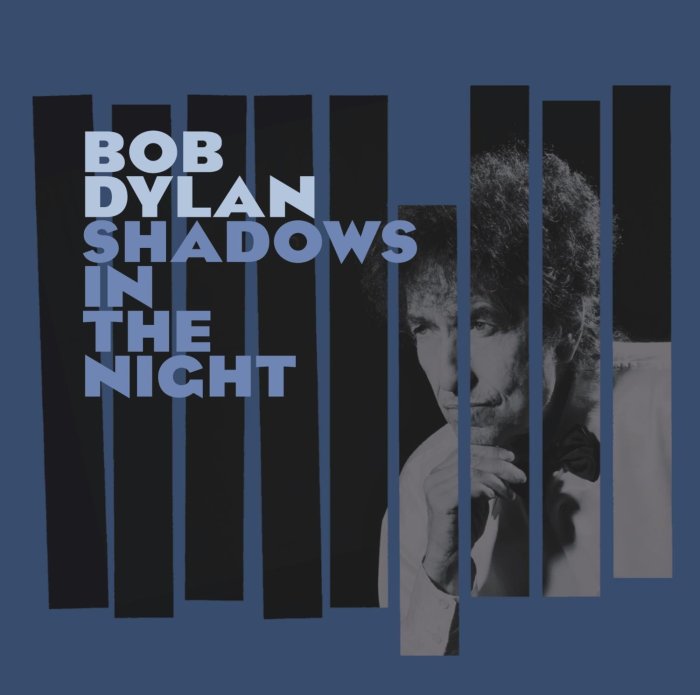
bdShadows_In_The_Night_Front

I was not very diligent when it came to getting myself a copy of the penultimate Bob Dylan album, “Shadows in the Night.” Otherwise I would have run to the Amazon online store to pre-order it as soon as it was available. But the handful of covers of old songs sung by Sinatra did not particularly catch my attention, especially when none of the titles of the selected songs looked familiar to me. In fact I never got to buy it on my own initiative, but it was a gift someone gave me that I could never be grateful enough for.

The first time I heard it I did it lamely while devoting my time to other activities that would surely provide me a more immediate gratification. Or so I thought. One sometimes can be quite banal, even “snobbish.” My first impression was to welcome it strangely, as another daring feat of the famous curmudgeon, determined to demolish his legend. And I thought, “too gloomy, but anyway, it’s all right, he has more than earned the right to do what he pleases.” I said, “No matter, I’ll listen to it later more closely with the due respect it surely deserves. I have to put my five senses in the lyrics and the way he sings them.” And so I did. The next night I sat quietly and carefully listened to savor one by one each of the pieces of such a refined mosaic.

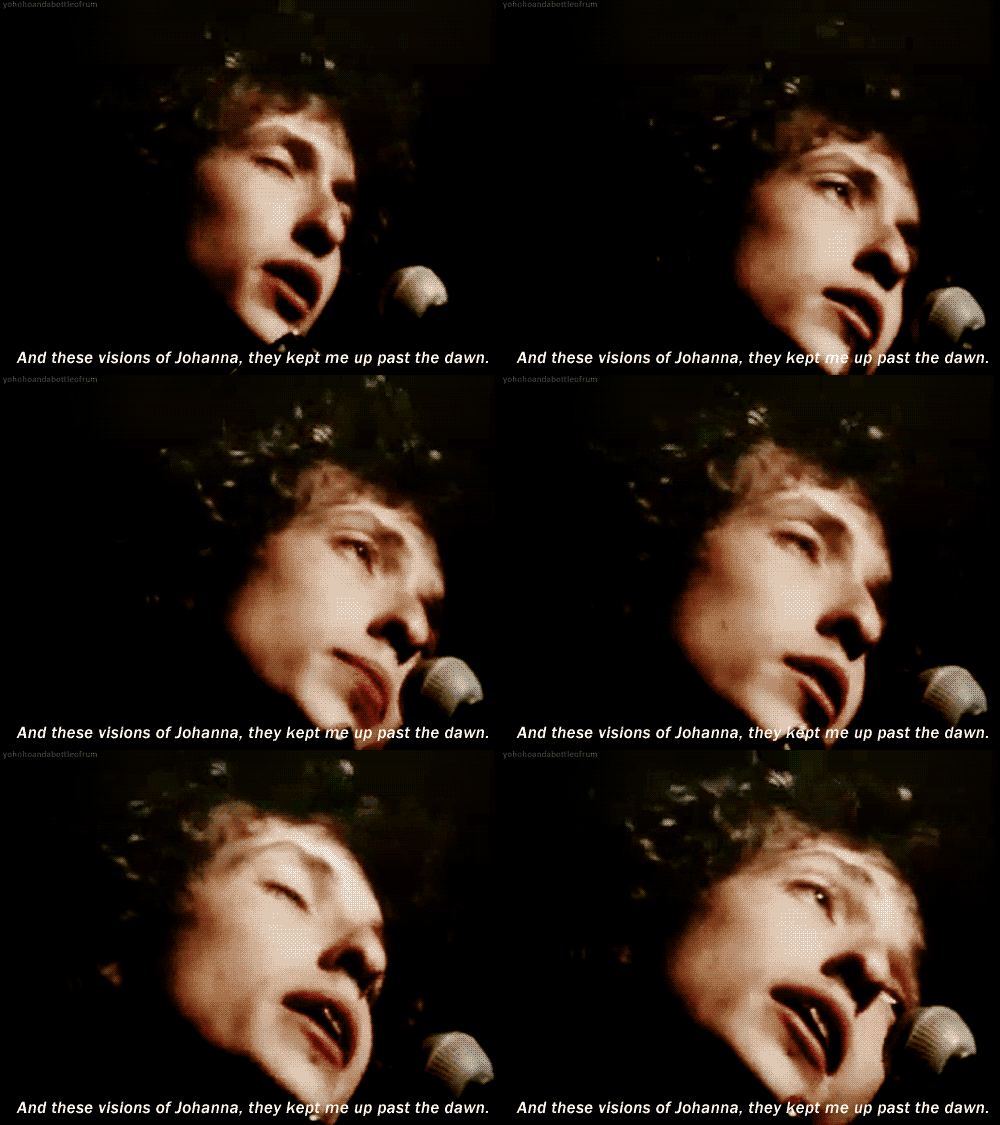
Why did I do it? First of all, as I said before, respect for the artist. Then, because, after so many years, I know that to get the real pleasure that understanding Dylan means, it is not enough just a first listen or a superficial approach. In fact, it’s necessary to penetrate the soul of the performer, chasing his rhymes to the last breath. No wonder the first time I heard “Visions of Johanna” I felt it was an unbearable litany. However, it soon ended up being as essential as “Desolation Row” and “Gates of Eden.” Those were meaningful songs. With them I came to understand that there is a peculiar beauty beyond the confines of reality and no matter how long one may argue about what is real and what is not, none of that does really matter within the place where Bob Dylan invites us.

VisionsOfJohanna_by_T.ScottMcLeod

giphy

Back to the main subject, what really matters is what happened after that. The gentle breeze of “I’m A Fool to Want You” lament was caressing my ears. The song evoked the warm tenderness and wrenching revelation of an unhealthy love that must be eradicated, but impossible to live without. The next cut uncovers the beautiful sadness in the evocative voice already worn out, transmitting the emotion of that bitter end in which the moon went down and the stars were gone, but the sun did not rise at dawn. There was nothing left to say, “The Night We Called It A Day.” All those heartbreak stories, hopeless loves that hurt and are at once unavoidable, sung with the mastering skillfulness of a gifted storyteller with a hoarse and pained voice and the extreme ability of a seasoned performer with the experience of half a century.

All of this was happening when the melancholy sound of the third track came to my ears, opening again my sense of perception as so many times before. I was mesmerized once again, though this time my thoughts ran along very different paths, back to a remote past that I could not even remember. The song, titled “Stay With Me” had made its live debut a few months earlier, played by Dylan in concert on October 26, 2014 at the Dolby Theatre in Hollywood, CA. Naturally I had heard the live version and probably some later performance from the same tour that would have impressed me quite favorably. However, I had not devoted the necessary attention yet to the studio recording filling now the room of my apartment. Something in that interpretation moves me and suggests a more thorough analysis. I have to listen to it again to talk about it. I leave it by now till the end.

bdShadowsInTheNight-Sinatra-covers-photo

Bob Dylan’s album, Shadows In The Night, released on February 3, 2015
A selection of songs made famous by Frank Sinatra

I continue to pay attention to “Autumn Leaves”, full of nostalgia and melancholy. It is a rounded composition that Dylan sings with considerable conviction and an unprecedented mastery never seen this way before in his recording career. We might say it is undoubtedly the most successful performance of the disc, for those experts in vocal technique, along with the previous cut, “Stay With Me”, which we will discuss in depth later. Let’s not forget the title that closes the album, “That Lucky Old Sun”; that wonderful prayer of the poor exhausted worker who envies the sun for doing nothing but wandering around heaven all day. That’s a tune that Dylan sang with some frequency in ’86 and then in Madison ’91, where he did an unforgettable version. He sang it again, but never in a register even vaguely resembling the way he does it here on this record especially designed for music lovers. “Why Try To Change Me Now” is next in quality to these aforementioned cuts, talking about dreams lying on the ground. The old troubadour sings a complaint of a sentimental wanderer unable to be what he’s not. He’s singing it with veiled skepticism and a certain irony drawing on the indolent nature of his autumnal voice. It’s all about the impossibility for an unfortunate dreamer to lead a conventional life. The song refers to someone who accepts himself and accepts his fate, allowing people to speculate and laugh at him. Don’t you remember? I was always your clown. Why try to change me now? “Some Enchanted Evening” does not detract from the rest, but perhaps it is the track that had less impact on me throughout the album, along with “Where Are You”, even if the latter sense reminds me of “Lay Lady Lay” or “If I Threw It All Away.” Though I love the way he is humming that swinging tune when he says: “Who can explain it, who can tell you why? Fools give you reasons wise men never try.”  It almost reminds me of a certain Christmas carol and has its magic.

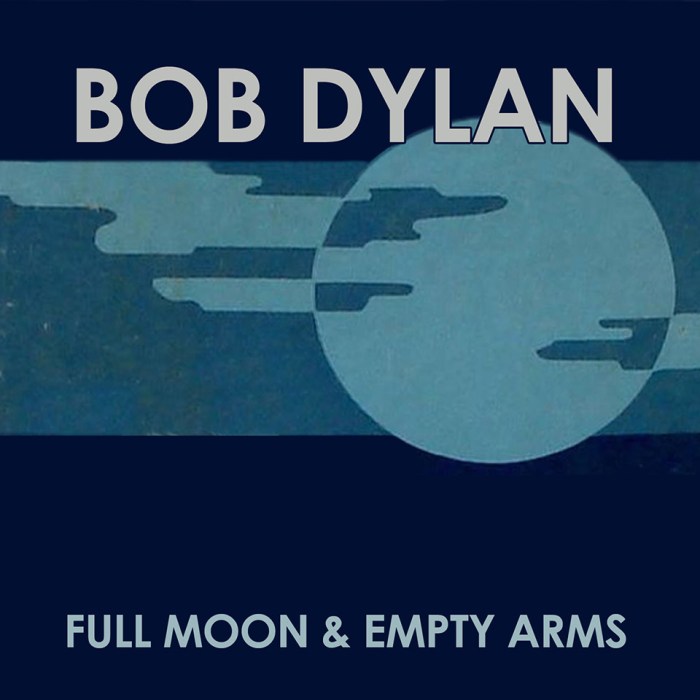
The melody of “Full Moon and Empty Arms” wraps me in its romantic aspiration and leads me into another dimension. It works as a throwback to the 30’s, invoking a time that I never met except in the American movies. Its cadence gives way to the unfounded hope of a dream that, in the disenchanted voice of the outdated ‘crooner’ Dylan has become, sounds too illusory. Softly, the song, much more toned with the appearance of a sigh than with the formulation of a desire, wakes up in me emotions that have much to do with broken dreams. It also opens a loophole to the still remote possibility of a rewarding end:

“Full Moon and Empty Arms
Tonight I’ll use the magic moon to wish upon
And next full moon
If my one wish comes true
My empty arms will be filled with you”

However, in the current Dylan’s voice, as he uttered those words, the way he marks the breaks, how he phrases it in that warm and grave whisper, leaves the listener yielded to discouragement. Most likely there will not be another full moon, and if there is, one tends to believe those arms will still remain empty.

bob-dylan-shadows-in-the-night-FullMoon

The first two times I heard “Where Are You?” it did not say too much to me. It’s a corny song, I thought, and although its performer strives to put all of his faith into the heart of this old tune the result seemed a little loose. What is surprising is that listening to it now several times in a row trying to find adjectives to describe my impressions, I just ended up admitting that there is a certain beauty in it. Has a taste of ripe fruit, reminder of a distant past. It is the sweet, sad scent of nostalgia. I tried to express what the nuances that the veteran artist of Columbia incorporates on his version suggest. But in the end it didn’t matter, because what really transcends is not the quality of his performance, but the patina of time. I mean that old flavor that not only belongs to the song itself but to the very nature of the voice that interprets it.

Next is about the penultimate track. What’ll I do when you’re far away and I am blue? What’ll I do? When I am wondering who is kissing you what’ll I do? I know what you’re going to tell me, could be a song by José Luis Perales. It may appear so. But it’s not like that. Not such a kind of song, at least not in Dylan’s voice. While listening to this stanza:

“What’ll I Do with just a photograph
To tell my troubles to?

When I’m alone
With only dreams of you
That will not come true
What’ll I do?”

We can see that haunting image of the subject drowning his sorrow at the only one photo he possesses of his beloved one. That’s a passage that hardly fits into the idea that I have of the Spanish singer. And I say that without involving any contempt for the work of the songwriter from Castejon (Cuenca). But for me “What’ll I Do” is not among the best cuts of the disc, either. I have already mentioned the most remarkable ones and it only remains to be said, before analyzing my favorite song from the CD, that the finishing touch comes with “That Lucky Old Sun” in a masterful performance. Bob Dylan usually ends his studio albums with a significant track, generally of high quality. And this “Shadows in the Night” is no exception.

bd-w-Frank-and-Bruce

Bruce Springsteen, Frank Sinatra and Bob Dylan

I had seen “The Cardinal” many years ago, but could not remember the argument. I was warned that the main theme on the soundtrack of the film was the tune of that “Stay With Me” which was performed by Dylan at his Hollywood concert. I was also informed that the song belonged to his then new album, “Shadows in the Night”, something I was not aware of yet. Equally, it was also announced to me that the content of the film probably had much to do with the decision of the singular performer to include the song in his last work. For that reason I decided to see the movie again and I’ve seen it once more now to have it fresh in my mind as I write about this piece which seems to me the soul of the disc.

TheCardinal_xlg

The cinematographic work is about faith and loyalty, not only the Catholic faith, but faith in one’s own convictions and loyalty to principles. This is a complex and ambitious film about the power of church and the powers that be, in the socio-political aspect. Nationalism, totalitarianism, racism and discrimination of any kind are severely criticized in the movie. On a personal level it runs between existential doubt, the reaffirmation of faith to overcome weakness and the loyalty. Basically it raises the dilemma of choosing between faith, loyalty to principles, or loyalty to the people who trusted us. And it is in the moments when the question arises that the main theme appears on the soundtrack. The same melody starts again whenever loyalty to a human being becomes the main subject, whether referring to friendship, fraternity or humanitarian devotion.

And indeed the song moves between these two issues, faith and loyalty, which appear to be linked with each other in the plot. A closer look at the lyrics reveals that it is written as a prayer. The doubts about faith, existential concerns and weakness, give way to feelings of loneliness and then weariness and despair ensue and know only one consolation: the continued support and loyalty of those we trust, whether God or anybody else.

Another interesting factor that dominates the film and is seen in the first line of the song is the internal struggle between humility and ambition.

I firmly believe that Bob Dylan knew the film well and effectively choosing “Stay With Me” was conditioned by the theme of the film and the use of that melody made on the soundtrack. Hence the performance of the controversial ‘crooner’ highlights moments of weakness and does not seem to seek shelter in faith and trust on high through humility and prayer, as suggested in the lyrics. But instead, seems to have more confidence in the loyalty of his fans who remained faithful, in spite of everything.

It is revealing the way he pronounces this:

“And I go seeking shelter
And I cry in the wind”

And how very seriously he intones the final stanza:

“Though the road buckles under
Where I walk, I walk alone
Till I find to my wonder
Every path leads to Thee
All that I can do is pray
Stay With Me
Stay With Me”

In the film, when the sister of the future Cardinal receives a slap from her mother for initiating a courtship with an individual of Jewish origin and the mother insults her by calling her ‘slut’, the girl runs upstairs to find shelter in her bedroom. Brother priest comes up to comfort her and tells her as he embraces her:

“Remember when you were a little girl and I hugged you and said: ‘Hold me tight and no matter what happens hang on me and never let me go’?”

TheCardinal-Photo

The music of this ballad sounds again when Mona, the girl, confesses to her brother that she had carnal relations with the Jewish guy. The priest, based on his Catholic faith, rejects any option other than repentance, compelling her to leave her boyfriend forever. Offended and betrayed when she tried to cling to him to save herself, Mona fled in horror without receiving absolution.

That is exactly the same feeling that I perceive in Dylan’s performance. And it is what I think Dylan conveys in his version of this song which, in his hoarse lament, becomes sublime. The fear of not being understood, feeling rejected, betrayed. But more than a prayer, it sounds like a plea when he says: “All I can do is pray”. And it seems to me I hear him say, “Hang on me and never let me go, stay with me, stay with me.”

bdShadows_In_The_Night_Back

The Hipnotist Collector

Quédate Conmigo

bdShadows_In_The_Night_Front

No fui muy diligente a la hora de hacerme con un ejemplar del penúltimo disco de Bob Dylan, el álbum titulado “Shadows In The Night”. En cualquier otro caso habría corrido a visitar la tienda on line de Amazon para encargarlo con antelación en cuanto estuvo disponible. Pero el puñado de versiones de antiguas canciones interpretadas por Sinatra no llamaba especialmente mi atención. Más aún cuando ninguno de los títulos de las canciones seleccionadas me resultaba familiar. De hecho nunca llegué a adquirirlo por propia iniciativa, sino que fue un regalo que me hicieron que nunca agradeceré lo suficiente.

La primera vez que lo escuché lo hice sin demasiada convicción mientras dedicaba mi tiempo a otras actividades que seguramente me proporcionarían una más inmediata gratificación. O eso creía yo. Uno a veces puede resultar de lo más banal, incluso “snob”. Mi primera impresión fue acogerlo con extrañeza, mas bien como otra osadía del afamado cascarrabias, empeñado en demoler su leyenda. Y pensé, “demasiado sombrío, pero en fin, está bien, se ha ganado con creces el derecho de hacer lo que le venga en gana”. Me dije, “no importa, ya lo escucharé más adelante con el debido respeto y con mayor detenimiento, seguro que lo merece. Tendré que poner mis cinco sentidos en la letra de las canciones y en su forma de cantarlas”. Y así lo hice. A la noche siguiente me senté tranquilamente a escucharlo y a saborear una por una cada una de las piezas de tan refinado mosaico.

¿Que por qué lo hice? En primer lugar, como ya he dicho, por respeto al artista, y luego porque, después de tantos años, ya sé que para llegar al verdadero placer de los sentidos que significa entender a Dylan, no basta con la primera escucha o con un acercamiento superficial, hay que penetrar en el alma del intérprete persiguiendo en sus rimas hasta el último aliento. No en vano la primera vez que oí “Visions Of Johanna” me pareció una letanía insufrible y en poco tiempo acabó siendo tan imprescindible como lo fueron “Desolation Row” y “Gates Of Eden”. Canciones llenas de significado. Con ellas llegué a entender que hay una peculiar belleza más allá de los confines de la realidad y que por más que uno discuta sobre lo que es real y lo que no, nada de eso importa dentro de ese lugar al que Bob Dylan nos invita.

VisionsOfJohanna_by_T.ScottMcLeod

giphy

Aunque lo que de verdad importa es lo que ocurrió entonces. La suave brisa del lamento de “I’m A Fool To Want You”, la cálida ternura y la desgarradora revelación de un amor enfermizo que es necesario erradicar, pero sin el que es imposible vivir. La hermosa tristeza en la evocadora voz ya gastada transmitiendo la emoción de ese amargo final en el que descendió la luna y desaparecieron las estrellas, pero el sol no salió al amanecer. No había ya nada que decir, “The Night We Called It A Day (la noche en que lo dejamos)”. Todas esas historias de desengaño, de amores sin remedio que lastiman y son a un tiempo inevitables, cantadas con la maestría de un dotado narrador con la voz ronca y dolida y la extremada habilidad de un avezado intérprete con la experiencia de medio siglo.

Todo eso estaba sucediendo cuando el sonido melancólico de la tercera pista llega a mis oídos, abriendo de nuevo mi sentido de la percepción como tantas otras veces. Solo que esta vez discurría por caminos muy diferentes, de vuelta a un pasado lejano que ni siquiera podría recordar. La canción, titulada “Stay With Me (Quédate Conmigo)”, había hecho su debut en directo pocos meses antes, interpretada por Dylan en el concierto del 26 de Octubre de 2014 en el Dolby Theatre de Hollywood, CA. Naturalmente yo ya había escuchado esa versión en directo y probablemente alguna otra versión posterior de esa misma gira que me habría impresionado muy favorablemente. Sin embargo, no le había dedicado aún la atención requerida a la grabación de estudio que ahora llenaba la sala de mi apartamento. Algo en esa interpretación me conmueve y sugiere un análisis mas exhaustivo. Tengo que escucharlo de nuevo para poder hablar de ello. Lo dejo para el final.

bdShadowsInTheNight-Sinatra-covers-photo

Bob Dylan’s album, Shadows In The Night, released on February 3, 2015
A selection of songs made famous by Frank Sinatra

Continúo atento a “Autumn Leaves”, llena de nostalgia y melancolía. Una composición redonda que Dylan canta con una convicción nada desdeñable comparativamente y una maestría sin precedentes en su carrera discográfica. Sin duda la más lograda interpretación del disco, para aquellos expertos en técnica vocal, junto con el tema anterior, “Stay With Me”, del que luego hablaremos en profundidad. Sin olvidar el título que cierra el álbum, “That Lucky Old Sun”; Esa maravillosa plegaria del pobre trabajador extenuado que envidia al sol por no hacer nada sino dar vueltas por el cielo todo el día. Un tema que Dylan ya cantó con cierta frecuencia en el año 86 y luego en Madison ’91, donde hizo una versión inolvidable. Volvió a cantarla en alguna otra ocasión, pero nunca en un registro ni parecido a como lo hace aquí en este disco especialmente elaborado para melómanos. “Why Try To Change Me Now” les sigue en calidad a estos cortes antes mencionados, hablando de sueños echados por tierra. El viejo trovador entona aquí con mucho escepticismo y una cierta ironía en el carácter indolente de su voz otoñal la queja de un trotamundos sentimental incapaz de ser lo que no es. La imposibilidad para un lamentable soñador de llevar una vida convencional. Alguien que se acepta a si mismo y acepta su destino, permitiendo que la gente haga conjeturas y se burle de él ¿No lo recuerdas? Siempre fui tu payaso ¿Por qué intentar cambiarme ahora? “Some Enchanted Evening” no desmerece del resto, pero tal vez sea el tema del disco que menos impacto ha causado en mi, junto con “Where Are You”, incluso si el sentido último recuerda “Lay Lady Lay” o “If I Threw It All Away”. Y eso que me encanta la forma de canturrear ese bamboleo de la tonadilla cuando dice: “Who can explain it, who can tell you why? Fools give you reasons, wise men never try (¿Quien puede explicarlo, quien sabe por qué? Los locos tienen razones que los sabios no entienden)”. Casi me recuerda a un villancico y tiene su magia.

Como en una vuelta a los años 30 que no conocí salvo en las películas Americanas, la melodia de “Full Moon And Empty Arms” me envuelve en su romántica aspiración y me guía hacia otra dimensión donde su cadencia deja paso a la infundada esperanza de un sueño que, en la voz desencantada del ‘crooner’ trasnochado que Dylan ha llegado a ser, resulta demasiado ilusorio. Suavemente, entonada más con la apariencia de un suspiro que con la de la formulación de un deseo, la canción despierta en mi emociones que tienen mucho que ver con los sueños rotos. También abre un resquicio a la posibilidad todavía remota de un final gratificante:

“Full moon and empty arms
Tonight I’ll use the magic moon to wish upon
And next full moon
If my one wish comes true
My empty arms will be filled with you

(Luna llena y brazos vacíos
Esta noche formularé un deseo a la mágica luz de la luna
Y la próxima luna llena,
Si mi deseo se cumple,
Mis brazos vacíos te estarán abrazando)”

Sin embargo, en la actual voz de Dylan, tal como él pronuncia esas palabras, como marca las pausas, como frasea en ese cálido y grave susurro, deja al oyente rendido al desaliento. Probablemente no habrá otra luna llena y, si la hay, uno tiende a creer que esos brazos seguirán vacíos.

bob-dylan-shadows-in-the-night-FullMoon

Las dos primeras veces que escuché “Where Are You?” no me decía gran cosa. Es una canción cursi, opinaba, y por más que su intérprete se empeñe en poner toda su fe en el meollo de este viejo tema el resultado me parecía un poco flojo. Lo sorprendente es que al escucharla ahora varias veces seguidas tratando de encontrar calificativos con los que describir mis impresiones, acabo por admitir que hay una cierta belleza en ella. Un sabor a fruta madura, a un pasado remoto. El dulce y triste aroma de la nostalgia. Trataba de expresar lo que sugieren los matices que el veterano artista de Columbia incorpora a esta versión suya. Pero al final eso carecía de importancia, porque lo que de verdad trasciende no es la calidad de la interpretación, sino la patina del tiempo. Ese sabor añejo que no solo pertenece a la canción en si misma sino a la propia naturaleza de la voz que la interpreta.

Penúltima pista. ¿Qué haré cuando estés lejos y esté triste? ¿Qué haré? Cuando me pregunte quien te besa ¿qué haré? Ya sé lo que me vais a decir, podría ser una canción de Jose Luis Perales. Puede parecerlo. Pero no es así. No al menos en la voz de Dylan. Aunque atendiendo a esta estrofa:

“What’ll I do with just a photograph
To tell my troubles to?

When I’m alone
With only dreams of you
That won’t come true
What’ll I do?

(¿Qué haré con sólo una fotografía
A la que contarle mis penas?

Cuando esté solo,
Solo con mis sueños
que no se cumplirán
¿Qué haré?)”

Encontramos esa evocadora imagen del sujeto ahogando sus pesares ante la única foto que posee de su amada. Un pasaje que difícilmente encaja en la idea que yo tengo del cantautor Español. Sin que ello suponga menosprecio alguno hacia la obra del compositor de Castejón (Cuenca). Pero tampoco está para mi este “What’ll I Do” entre lo mejor del disco. Lo más destacable ya lo he mencionado y solo resta decir, antes de analizar mi canción favorita, que el broche de oro lo pone “That Lucky Old Sun” con una interpretación magistral. Bob Dylan suele acabar sus álbumes de estudio con un tema significativo, generalmente de gran calidad. Y este “Shadows In The Night” no es la excepción.

bd-w-Frank-and-Bruce

Bruce Springsteen, Frank Sinatra and Bob Dylan

Había visto “El Cardenal” hace ya muchos años, pero no recordaba el argumento. Me advirtieron de que el tema principal en la banda sonora de la película era la melodía de ese “Stay With Me” que Dylan había estrenado en su concierto de Hollywood. También me informaron de que dicha canción pertenecía a su entonces nuevo álbum, “Shadows In The Night”, algo de lo que yo no era consciente todavía. E igualmente me anunciaron que probablemente el contenido del film tenía mucho que ver con la decisión del singular intérprete de incluir ese tema en su último trabajo. Por esa razón decidí ver la película otra vez y he vuelto a verla ahora de nuevo para tenerla fresca en la memoria mientras escribo sobre esta pieza que se me antoja el alma del disco.

TheCardinal_xlg

La obra cinematográfica versa sobre la fe y la lealtad, no exclusivamente la fe católica, sino la fe en las propias convicciones y la fidelidad a unos principios. Se trata de una película compleja y ambiciosa sobre el poder de la iglesia y los poderes fácticos, en el aspecto socio-político. Los nacionalismos, totalitarismos, el racismo y la discriminación de cualquier índole son severamente criticados en la cinta. En el ámbito personal discurre entre la duda existencial, la reafirmación de la fe ante la flaqueza y la lealtad. Básicamente plantea el dilema de la elección entre la fe, la lealtad a unos principios, o la lealtad a las personas que confiaron en nosotros. Y es en los momentos en que esa duda surge cuando hace su aparición el tema principal en la banda sonora. La misma melodía vuelve a escucharse siempre que la lealtad a un ser humano se convierte en protagonista, ya sea referida a la amistad, la fraternidad o la vocación humanitaria.

Y efectivamente la canción se mueve entre esos dos temas, la fe y la lealtad, que en la trama aparecen vinculados entre si. Una mirada atenta a la letra de la canción revela su condición de plegaria. Las dudas ante la fe, la duda existencial, la flaqueza, dan paso al sentimiento de soledad y la debilidad y el desánimo solo conocen un consuelo: el apoyo constante y la lealtad de aquellos en quienes confiamos. Ya sea Dios u otros.

Otro factor interesante que domina la película y se vislumbra en el primer verso de la canción es la lucha interna entre la humildad y la ambición.

Tengo la firme convicción de que Bob Dylan conocía bien la película y que efectivamente la elección de “Stay With Me” estuvo condicionada por la temática del film y el uso que de la melodía se hace en la banda sonora. De ahí que la interpretación del controvertido ‘crooner’ subraye los momentos de flaqueza y no parezca buscar refugio en la fe y la confianza en el altísimo a través de la humildad y la oración, como sugiere la letra, sino que por el contrario parece confiar más en la lealtad de quienes siguen siendo sus incondicionales, a pesar de los pesares.

Es proverbial como pronuncia ese:

“And I go seeking shelter
And I cry in the wind

(Voy buscando refugio
Y exclamo al viento)”

Y como entona muy gravemente esa estrofa final:

“Though the road buckles under
Where I walk, walk alone
Till I find to my wonder
Every path leads to Thee
All that I can do is pray
Stay With Me
Stay With Me

(Aunque el camino se inclina pendiente abajo
Por donde yo camino, camino solo
Hasta que, para mi asombro, descubro
Que todos los caminos conducen a Ti
Y todo lo que puedo hacer es rezar
Quédate conmigo
Quédate conmigo”

En la película, cuando la hermana del futuro Cardenal recibe una bofetada de su madre por haber iniciado un noviazgo con un individuo de origen judío y ésta le insulta llamándole ‘guarra’, la chica corre escaleras arriba a refugiarse en su dormitorio. El hermano sacerdote sube a consolarla y le dice mientras le abraza:

“¿Recuerdas cuando eras niña y te abrazaba y te decía: ‘Abrázame fuerte y pase lo que pase agárrate a mi y no me sueltes’?”

TheCardinal-Photo

La música de esta balada vuelve a sonar cuando Mona, la chica, se confiesa con su hermano de haber tenido relaciones carnales con el muchacho judío. El sacerdote, basándose en su fe católica, rechaza cualquier otra opción que no sea la del arrepentimiento, conminándole a abandonar a su novio para siempre. Ofendida y traicionada cuando intentaba aferrarse a él para salvarse, Mona huye despavorida sin recibir la absolución.

Exactamente esa sensación es la que yo percibo. Eso es lo que yo creo que transmite Dylan en su versión de este tema que él, en su ronco lamento, convierte en sublime. El miedo a no ser comprendido, a sentirse rechazado, traicionado. Más que rezar, parece suplicar cuando dice: “All I can do is pray (lo único que puedo hacer es rezar)”. Y a mi me parece oírle decir: “Agárrate a mi y no me sueltes, quédate conmigo, quédate conmigo”.

bdShadows_In_The_Night_Back

El Coleccionista Hipnótico

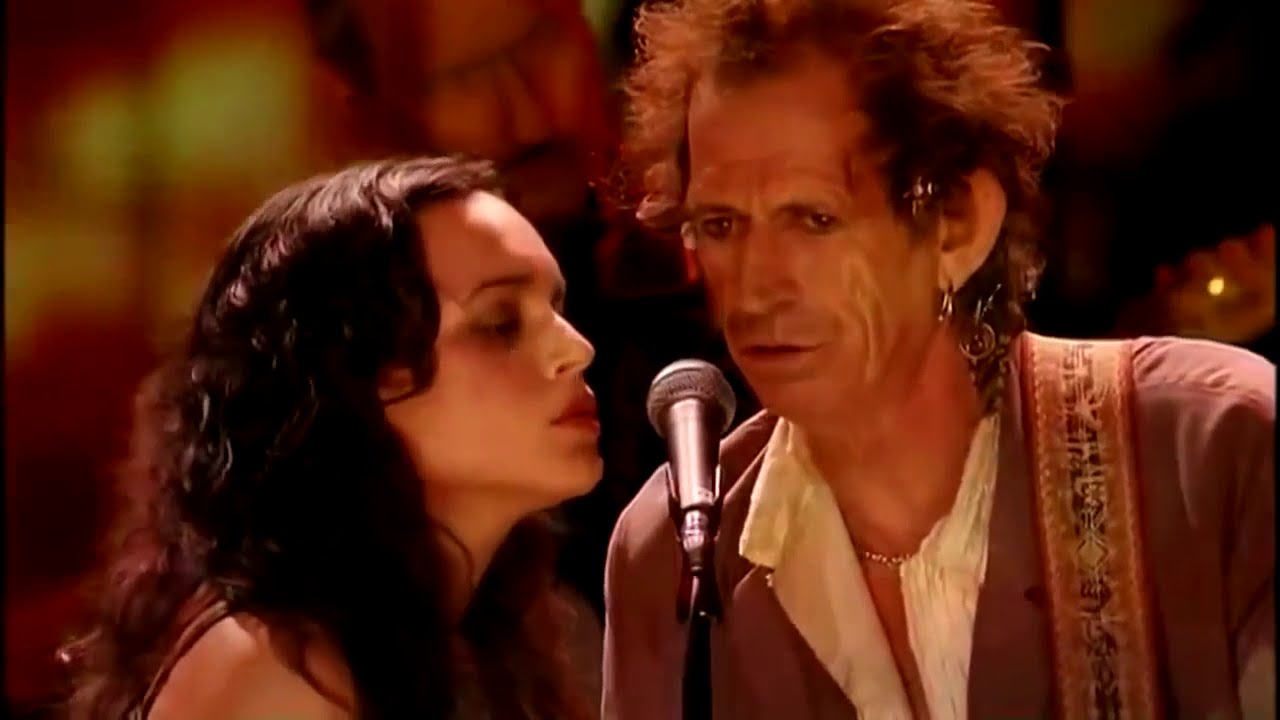
Keith Richards and Norah Jones – Love Hurts, live 2004

Publicado el 23 de Nov. de 2014 /Published on Nov. 23rd, 2014 (Subenlanube upload)

imagenpiratasKeithRichards

Keith Richards como el Capitán Teague, guardián del Código Pirata y padre de Jack Sparrow en Piratas del Caribe 4 / Keith Richards as Captain Teague, keeper of the Pirate Code and father of Jack Sparrow in Pirates of The Caribbean #4


“Love Hurts”, escrita por Felice Bryant y Boudleaux Bryant / written by Felice Bryant and Boudleaux Bryant.

KRichards-w-NorahJonesNorah Jones junto a Keith Richards. Del recital homenaje a Gram Parsons: “Return to Sin City – A Tribute to Gram Parsons” / Norah Jones with Keith Richards. From the Tribute to Gram Parsons show: “Return to Sin City – A Tribute to Gram Parsons”

Here is a different video copy of the same performance, but there’s no Keith Richard’s intro in here, just the song:

Get “Return to Sin City – A Tribute to Gram Parsons” now:
– Amazon https://bit.ly/1TzaCoc

Disclaimer: I don’t own any copyright©. All the content of the video belongs to the original owners. No copyright infringement is intended.

El Coleccionista Hipnótico / The Hypnotist Collector

Clamando En El Desierto (Podría Habértelo Advertido… ¿o Tal Vez No?)

Pongamos que uno introduce “Bob Dylan” en el buscador de Google… y si accidentalmente añade una Z, por esas azarosas cuestiones de la vida, el propio mecanismo de búsqueda inmediatamente sugiere la palabra “zurdo”. Por mera curiosidad uno sigue el consejo que la tecnología moderna pone a su alcance y, de forma insospechada, una interminable lista de enlaces aparece ante nosotros. Todos ellos relativos a la condición de zurdo de Mr. Dylan o mencionando al gran artista de Columbia Records como uno de los zurdos mas famosos de la historia. Aunque resulte inconcebible, el “Hombre más Buscado” de 1,71 m de altura, es citado como tal, entre otros, como pudiera ser el ex-Beatle Paul McCartney, por poner un ejemplo, sin pudor alguno. Sin embargo, cualquiera que le haya visto alguna vez actuar en directo o conozca mínimamente la figura del trovador de Minnesota, sabe que eso no es del todo cierto – al menos en lo que se refiere a su condición de intérprete. Se sabe que Bob Dylan ha sido fotografiado firmando con la izquierda, así que debe ser ambidiestro, pero siempre ha tocado la guitarra con la diestra. Esto viene al caso porque creo hoy necesario, al iniciar la crónica de este debate, partir de la premisa de que hay falsos testimonios que a fuerza de repetirse hasta la saciedad acaban perpetuándose como verdaderos.

Pero ese cúmulo de falsedades en torno a su persona es algo a lo que el cantautor Americano ya está acostumbrado desde siempre. Ya lo decía en su sensacional diatriba titulada “Idiot Wind,” “They are planting stories in the press (Siembran historias en la prensa) …” Otra de las falsas apreciaciones comúnmente aceptadas acerca de Dylan es la de su cacareada discapacidad para cantar. El propio Dylan se quejaba de ello en el discurso de aceptación de su nombramiento como personalidad del año de MusiCares.

720x405-462898102_MUsiCares

Bob Dylan accepts the 2015 MusiCares Person of the Year award on stage at the 2015 MusiCares Person of the Year show at the Los Angeles Convention Center on Friday, Feb. 6, 2015, in Los Angeles. (Photo by Vince Bucci/Invision/AP)

¿Por qué le acusan a él de tener voz de rana o, más recientemente, gastada y rota por el abuso del tabaco y no atacan a otros como Tom Waits o Louis Armstrong? Eso, entre otras cosas, le ha conducido no solo a grabar un álbum interpretando viejas canciones que antes hiciese populares Frank Sinatra, sino a repetir la experiencia por segunda vez y, si los rumores se confirman, incluso acometer una tercera entrega. No cabe duda de que hay una clara intención de recuperar un antiguo estilo inequívocamente Americano cuyas raíces se hunden en el terreno abonado de la más pura tradición Estadounidense. Dylan no se conforma con reafirmarse como “crooner”, sino que parece empeñado en demostrar al mundo que pude cantar los temas más melódicos con esa gutural voz suya, tan afinado como cualquiera y tan sutil y conmovedoramente como el más aventajado de los intérpretes.

Su trabajo en estos 2 últimos discos lo demuestra y así ha sido reconocido, en general, por reporteros y comentaristas. Incluso en ocasiones han llegado a proclamar que nunca antes había cantado tan bien.

Contrariamente a esa resolución de nuestro héroe, ahora resulta que Bob Dylan ha cumplido 75 años y se ha puesto de moda una corriente detractora que incluso aboga por una retirada a tiempo, como si al genio o a la voluntad creadora pudiese ponérsele fecha de caducidad. Precisamente con motivo de su reciente cumpleaños un osado columnista profesional dedicaba su espacio en el New York Daily News al insigne compositor con un infecto artículo titulado “At 75 Years Old, it’s Time For Burnt Out Bob Dylan to Retire (A los 75 Años, ya es hora de espolear a Bob Dylan para que se retire)”.

dfp0923dylanpix

Haciendo caso omiso de la mezquindad y el oportunismo de insignificantes críticos como el del diario Neoyorquino, voy a centrarme en el acalorado y divertido debate que tuve hace un par de semanas con un colega Italiano, reconocido fan de Bob Dylan. Mi amigo se quejaba del aburrimiento que supone en la actualidad asistir a un concierto de su artista favorito, especialmente cuando se empeña en cantar esos temas tan manidos, viejunos y a simple vista alejados de la inquietud creadora que el resto de su obra siempre denotó.

Este bien documentado fan italiano comentaba que muchas de las personas que asisten a los últimos conciertos de Dylan no prestan demasiada atención mientras él canta las canciones de Sinatra, refiriéndose en concreto a una nueva canción estrenada esa noche durante el concierto que se discutía. Muchos entre el público paseaban por el recinto, hacían llamadas telefónicas o se tomaban el bocadillo. Pero mi colega, al comentar el video de Dylan versionando por primera vez en el escenario “I Could Have Told You (Podría Habértelo Advertido)”, explicaba tal comportamiento de una manera bastante condescendiente diciendo “Entiendo por qué sucede eso, le falta energía, carisma, interés, no llama la atención, es bastante aburrida, la verdad … aunque eso no significa que tengan que abandonar su localidad, hacer llamadas telefónicas, o tomarse el bocata”.

Tuve que aclarar que esos no estaban allí para ver a Bob Dylan. Quién sabe la razón por la que habían comprado entradas para asistir a un concierto de Dylan, pero en cualquier caso, no mostraban ningún respeto por el artista. Agregué que no sabía lo que quería decir cuando hablaba de “aburrimiento”, porque sin duda Dylan ponía el alma en ello y hacía una versión bastante agradable, en perfecta sintonía y cargada de emoción. Quizás no sea la más bella versión de las suyas, de entre el lote de viejas canciones de Sinatra y del Tin Pan Alley que ha escogido recientemente, pero de todos modos una interpetación bastante digna, creo yo.

Una mujer estadounidense se sumó a la discusión y replicó: “Es una cuestión de gusto. No encuentro aburrida esta balada en absoluto, y sinceramente, me fascina como la canta Bob y el sentimiento que pone en la canción. Cantó muchas de estas canciones de ‘Sinatra’ en Japón y la audiencia no se comportó de esta manera… lo mismo ocurrió en muchas ciudades Europeas el pasado otoño. Creo que el problema es más una cuestión de cultura o falta de educación en América”. Aunque, personalmente, creo que no son sólo los Americanos, también ocurre en algún que otro país de Europa, como ocurre en España. Lo que me queda claro es que no tiene nada que ver con que Dylan sea aburrido o impresionantemente conmovedor.

Por supuesto, “aburrido” es bastante subjetivo. Cualquier cosa puede resultar aburrida si uno no le presta la atención necesaria para meterse en la temática que transmite la canción. Mi interlocutor se mostraba en desacuerdo ahí… porque la música, la voz de Bob, su fraseo, siempre encontraron una forma de conectar con él, de llamar su atención, de inmediato, es como un gancho, dice, incluso en las canciones menos interesantes… “aburrido” es la palabra clave aquí, según él, y no sólo él, sino también el propio Dylan. Decía: “Obviamente, soy yo la persona que siente de esa forma, pero basta con que escuche otras actuaciones y eso ya no sucede, nunca sucedió y nunca lo hará … si tengo que hacer un esfuerzo para encontrar la chispa , bueno… tal vez la chispa no esté ahí…”

Cuando escucho a alguien declarar que no encuentra la chispa en una determinada interpretación que a mi me encanta no tengo más remedio que decir: “Lo siento por ti, amigo”. Lo pillas o no lo pillas. Es así. Como ya he dicho otras veces, para mí no se trata de lo que hace Dylan, es simplemente la forma en que lo hace. Ese es el quiz de la cuestión cuando se trata de estas versiones que Dylan hace de las canciones de Sinatra. Hay para mí tanta energía, interés, sentimiento y emoción en el corazón y el alma de Dylan ahí, como había en “Idiot Wind” en la versión de “Hard Rain”. La diferencia es sólo el tipo de energía, interés, sentimiento y emoción que muestra ahora. Ya no es aquél que cantaba su rabia a los 4 vientos reclamando el respeto a su individualidad. Ahora, con el paso de los años, trata de recuperar los sentimientos de aquellos días perdidos cuando era solo un niño escuchando la radio en la intimidad de su habitación, oyendo a su madre cantar las canciones que ella solía cantar mientras hacía las labores de la casa en aquél entonces. Sólo trata de recuperar la esencia de sus raíces para todos nosotros, porque lo esencial en esta vida esta precisamente en nuestra memoria de algo así como cuando siendo niños caminábamos por la calle de la mano de nuestra madre.

El crítico fan respondía que en realidad se trata de ambas cosas, lo que hace y cómo lo hace, pero estaba totalmente de acuerdo conmigo en que cómo lo hace es super-relevante. Él nunca había esperado lo mismo de Bob, reconociendo que la evolución es un elemento clave en su obra. Pero nunca compararía cualquiera de sus recientes versiones de añejas baladas con “Idiot Wind”, en ningún caso. ¿Por qué hacerlo si se trata de evolución? Para él, el valor de todo este aluvión de canciones de Sinatra no está históricamente probado en parte alguna, y no sabe si la madre de Dylan solía cantar esas canciones cuando era joven, pero evidentemente, en realidad, eso le importa más bien poco. Decía que cada vez que un artista lanza algo nuevo adquiere una responsabilidad. De hecho, piensa, como muchos de estos detractores, que estas canciones son aburridas para él, incluso si no lo son para Bob, en primer lugar, y, desde su punto de vista, hablando de esta particular versión de “I Could Have Told You (Podría Habértelo Advertido)“, la interpretación es plana, de una canción plana, y no porque Bob Dylan ya no sea el tipo de 35 en Texas, sino porque es plana, y punto. Ni siquiera es, digamos, en la liga de “Autumn Leaves”, u otrosstandards”. Y terminaba su párrafo con una especie de frase respetuosa para aquellos que aún disfrutan de este tema: “Me alegro de que te guste y que a otros les guste también. Para mí es sólo una canción sin interés, cantada con poco interés por el individuo en cuestión...”

A17LA6X4gSL._SL1500HArdRain_

91up9EOtr9L._SL1500-HR_Back_

Para ser honesto, yo comparaba la clase de energía y la motivación, no las actuaciones, cuando hablaba de la sobresaliente versión de “Idiot Wind” de “Hard Rain”, el álbum en directo de 1976, porque siendo diferentes producen un impacto similar en mí. No tengo ni idea de si la madre de Dylan cantaba o no estas canciones, lo que realmente quiero decir es que Dylan las esta rescatando desde el fondo de su memoria, de los viejos tiempos de cuando era un niño y solía escuchar estas y otras muchas canciones en las noches de radio. Me refiero a que realmente significan mucho para él y que lo único que desea, a parte de revivirlas, es que todo el mundo preste atención a estas canciones, porque hay una verdad esencial en ellas que quizás piensa que se ha perdido hoy en día, o al menos se pasa por alto.

No había mucho que decir en contra, por lo que la respuesta de mi colega fue breve: “Tal vez tengas razón, no voy a debatir sobre ese punto de vista / u opción”.

Con algún sarcasmo, le respondo: “Tal vez tengas razón por tu parte y yo tenga razón por la mía, tal vez Bob Dylan y tú ahora estéis demasiadas mañanas y mil millas detrás uno del otro”.

Como cualquier fan inteligente de Dylan me habría dicho, él indicó: “Bueno, su poder todavía me impacta (y no me refiero a cantidad de energía), me gustaría un reinicio, un replanteamiento y una nueva inspiración… o de otro modo, podríamos pensar que, posiblemente, cualquier cosa que haga, nunca podría ser expuesta a crítica alguna”. Mi amigo, para seguir siendo consecuente con sus sensaciones, continua argumentando: “Creo que todavía tiene el poder, la intensidad y la voz para cantar canciones, pero por alguna razón está escogiendo algunas que son aburridas para mí (y para muchos otros, si eso importa) y ha dejado su poder (el del fraseo y la improvisación), tan sublime, en algún anaquel, junto con sus crueles armas… la guerra probablemente ha terminado, quizá logró una cierta paz, bien por él, no tanto por su arte … volver a enviar la misma postal de los 50, noche tras noche, en una xerocopia, no es exactamente el mejor final para el Picasso del Rock, y entendedme bien, no deseo ningún tipo de actuación al estilo Jagger aquí… pero la repetición plana no funciona realmente para mí. Sé que muchos no estarán de acuerdo, pero es lo que hay…”

Sí -le dije- te conozco, y sé lo que querías decir. Muchos todavía están de acuerdo contigo, ¡pero yo estoy encantado de que Dylan siga vivo y siga haciendo lo que él cree que debe hacer! Ya le dijo a todo el mundo ahí fuera en este mundo que no trabajaría en la granja de Maggie nunca más. Se ha mantenido siempre fiel a dicha declaración y realmente le respeto por eso, y me siento comprometido conmigo mismo para tratar de entender y profundizar en el asunto de aquello que transmite, ahora y siempre. Eso no quiere decir que no haya ninguna crítica más, yo le podía criticar por hacer las cosas mal, aunque he llegado a una conclusión, NO PUEDE estar equivocado, porque es auténtico como el hielo, como el fuego. Todo lo que hace, en el momento en que lo hace, está firmado y sellado con la furia a veces, el desprecio, la pasión, la apatía, la nitidez, la pereza, la indolencia, la amargura, la fe o cualquier otro sentimiento noble y auténtico que pueda tener en el mismo momento en que está sobre el escenario. Tratándose de un artista con la agudeza mental y el profundo compromiso con su trabajo que Dylan siempre ha tenido, eso supone un torrente de emociones para mí.

Él sabía dónde mi argumentación estaba siendo débil y, como era de esperar, tenía la respuesta adecuada: “Esa ‘Granja’ no puede ser su propio trabajo, ¿verdad? También me alegro de que sea libre de hacer lo que siente que debe hacer, nunca quise nada diferente, pero por otra parte ¿’que NO PUEDE estar equivocado’? 🙂 A pesar de que sé lo que quieres decir con las palabras que van a continuación, bueno… Creo que apoyar eso no sería útil en absoluto para ningún artista en el mundo, pero eso ya lo sabes tú, incluso sin que yo tenga que señalar lo obvio…”

No, compañero -Me excuso- estaba siendo sarcástico, con  esa palabra en mayúsculas. Era sólo una ’boutade’. Por supuesto que puede estar equivocado, y sí, lo está, al menos desde tu punto de vista, y hay un montón de cosas que podríamos criticar, como no cambiar el repertorio en absoluto durante toda la gira nunca más, salvo honrosas excepciones. En cuanto a esa “Granja” me refería a esas personas que quieren que haga lo que esperan que haga… “Dicen ‘¡Canta!’ Y a mi me aburre.” Y no, no todos los artistas de este mundo siguen siendo fieles a sus propios sentimientos. No todo el mundo es tan autentico… Muchos han reconocido incluso que lo hacen por dinero o están claramente vendidos a las multinacionales o cualesquiera otros intereses económicos. Pero una vez más, con respecto a los “setlists” estáticos, nadie criticó a Paul Simon, a Paul McCartney o a la mayoría de cantantes por hacer exactamente el mismo espectáculo noche tras noche. ¿Por qué debemos esperar que siga haciendo lo que siempre hacía? Y sí, podría elegir un repertorio que incluyese nuevos vibrantes arreglos de las viejas canciones, versiones de canciones increíbles que nunca hizo antes, como lo hizo en la década de los 90, o incluso nuevas canciones que nunca ha cantado aún, tales como “Life Is Hard (La Vida Es Dura)”, del álbum “Together Through Life (Juntos Por La Vida)” o algunas versiones abreviadas de “Tin Angel” o “Titanic” (me refiero a la canción que da título al album “Tempest”)… Pero ¿por qué debería hacer eso con 75 tacos, eternamente en la carretera desde 1988 y siendo la leyenda viviente que ya es por derecho propio?

A modo de ejemplo, Paul Simon ha declarado en su última entrevista que está pensando en retirarse una vez que la presente gira promocionando su nuevo disco haya terminado. Dijo que es tedioso y afirmó que el mundo del espectáculo no tiene ya ningún interés para él. Sin lugar a dudas, continuar todavía en la carretera requiere algo de fortaleza y voluntad a una determinada edad.

Album-art

Pero tratándose de Dylan, creo que tiene mucho que hacer todavía y lo que está haciendo está bien para mí. Aún puede llegarme a las entrañas provocando algunos sentimientos de una emoción sobrecogedora y lo hace cantando de la manera que lo hizo con “That Lucky Old Sun (Ese Afortunado Viejo Sol)” en San Sebastián, el año pasado, o con éste “I Could Have Told You (Podría Habértelo Advertido)” del otro día.

Mi buen oponente me lanzó la siguiente respuesta: “Todos decimos ‘¡Canta!’ – Tú también.” Y aún más: “Todo es posible. O no. Realmente no veo la necesidad de citar otros nombres, como los dos Paul que has mencionado. De hecho estamos intercambiando opiniones en un grupo dedicado a Bob, no en ningún otro lugar, y ¿por qué deberíamos pedirle que haga lo que siempre hacía, digamos que ser un expedicionario ? ¿No era eso lo que dijo en el documental ‘No Direction Home’? Expedicionario ¿verdad? No lo sé. ¿Por qué deberíamos esperar que sea lo que es? No deberíamos, si lo pones de esa manera, pero en realidad no nos sentamos a su mesa a darle consejos. Nosotros, en cambio, participamos en una mesa redonda virtual, discutiendo el arte y la pasión. En realidad se ha enjaulado a sí mismo en este Sinatra y esa práctica xerocopiadora (y no me refiero sólo a los ‘setlists’ sino al fraseo, los acentos, las tensiones, los matices, los colores) ¿Así que, que sentido tiene preguntar eso?” (creo que se refiere a mi pregunta sobre por qué esperar de él -Bob- que haga lo mismo que siempre hizo) “¿Qué sentido tiene estar activo en comunidades (‘en linea’ o no)? ¿Qué ocurre si no dejamos que nuestro pensamiento se exprese sin necesidad de  buscar ‘coartadas (alibis)’ (ya sabes a qué me refiero) en el modelo de otros artistas? Para mí es estimulante cuando -apasionados- intercambiamos opiniones, pero yo no abandonaría la historia registrada (nunca mejor dicho) para evaluar el presente”.

Entonces se preguntó a si mismo: “¿Por qué xerocopiar, que es exactamente lo contrario de lo que su historia artística / creativa nos dice a nosotros y al mundo? Eso no lo sé y me lo planteo… no tiene nada que ver con lo que es o ha sido, no me importa si ha habido otras épocas en las que los ‘setlists’ permanecieron inalterables, podría explicar por qué es diferente, pero es una larga historia, todos sabemos que era diferente… y la paradoja es: ÉL está haciendo precisamente lo que esperamos que haga, ¡ahora más que nunca! …Y no estoy bromeando por desgracia … noche tras noche, durante casi 3 años ya… Podríamos incluso añadir -irónicamente- ‘canta, y me aburro’. Estoy siendo como un dolor de huevos, lo sé…” Y a continuación, se partió de la risa.

A tal punto, sólo pude añadir: “Bueno, creo que no hay argumento que pueda utilizar. Es lo que es. Él hace lo que hace… Lo llames como lo llames. Y no, nunca esperé que hiciese 2 álbumes consecutivos con viejo material de Sinatra o un disco Navideño. Nunca habría podido esperar que se convirtiese en el increíble ‘crooner’ en que se ha convertido. Y yo no quería eso. Pero ahora que lo ha hecho, le agradezco que lo hiciese, porque se ha renovado a sí mismo de una forma inesperada y me ha hecho descubrir canciones y emociones que nunca pensé que podría llegar a descubrir”.

Entonces, mi colega, tratando de refutar mis palabras y hacerme entender que este estilo elegido ahora por Dylan no es nada nuevo para él, añade: “Él ya canturreaba en 1961, y  ya era increíble entonces, tenemos cintas que lo prueban… por no mencionar el canturreo (‘crooning’) en 1969-71” luego sonrió, y añadió para ser amable, aunque irónicamente, supongo: “Me alegro de que encuentres emociones que pensabas que nunca llegarías a sentir. Si funciona para ti, eso es lo que importa”.

Tuve que admitir: “Sí, él canturreaba, pero nunca del modo en que Bing Crosby o Dean Martin solían hacerlo”.

Pero él respondió: “¿De verdad? ¿Y qué pasa con ‘When I Got Troubles’- 1959?, creo que la tienes, ¿no?”

Para mí está muy claro, así que tenía que defender mi punto de vista: “Era un concepto de interpretación diferente, creo… Él nunca había cantado de esa manera antes, hasta que versionó ‘Return to Me’ de Dean Martin… Y parece que ha encontrado una nueva mina que explorar. ¿No te parece que todavía está siendo un expedicionario al hacer estos 2 álbumes, interpretándolos con la calidad con que lo ha hecho y lo está haciendo a diario en directo, con tal carga emocional y tan cuidadosamente afinado? “

El desencantado fan todavía sostiene: “No, creo que la única manera que él tiene de extraer emociones se pierde cuando frasea ajustándose tan fielmente a esas grabaciones originales. Creo que las emociones que puede suscitar en mí se pierden cuando no canta de la forma en que puede hacerlo, con su estilo único, que hace que su voz sea la más emotiva del siglo, en la linea de Billie Holiday y gente de esa dimensión. Sinatra está vacío y no es interesante… Yo no busco el bel canto, que no era tan diferente, compruébalo, quizás no lo recuerdes apropiadamente. ¿O tal vez ‘The Two Sisters (Las Dos Hermanas)’ de 1960? Estoy hablando en serio, no era un concepto de interpretación diferente en absoluto… era una voz diferente, una edad diferente, con más ilusiones tal vez, pero el enfoque era realmente el mismo… podía cantar a la manera irlandesa, folk, blues, ‘country’, baladas, podía entonar, yodel, ya a los 20. Con 19/20 ya cantaba algunas canciones con la voz casi exacta a la que escuchamos en Nashville Skyline. La grabación de Wallace demuestra todo eso”.

Estoy totalmente en desacuerdo con él en eso,  pero tampoco quería hacer una tesis (estoy sonriendo en este momento), por lo que sólo respondo: “No puedo decir nada más sobre eso, amigo. Está más allá de mi entendimiento encontrar los argumentos necesarios, si es que hay alguno. ¿Lo hace de una manera que te aburre? No hay nada que pueda hacer para ayudarte a huir de tal impresión. ¿Crees que su acercamiento a temas como ‘Remember Me’ o ‘When I Got Troubles’ en 1959 (o en las versiones de temas ajenos que hizo en la era de Nashville Skyline) fue el mismo que el que está aplicando ahora a estas canciones? ¡No me lo puedo creer! Pero, de todos modos, no puedo evitarlo, se trata de tu propia percepción. Yo creo que ha ido un paso más allá desde que inició su compromiso con este material antiguo, desde que decidió trabajar como DJ en TTRH (Theme Time Radio Hour). Verdaderamente ha cambiado, porque como él mismo declaró, solía importarle, pero las cosas han cambiado (Things Have Changed)”.

Ahora mi oponente defiende su punto de vista: “No estoy diciendo que sea exactamente lo mismo, estoy afirmando que el ‘crooning’ no es algo que estuviese prohibido para él, que ya había logrado acceder a esa dimensión hace más de medio siglo, lo cual significa que es algo natural en él, pero él empleaba su estilo único en aquél entonces (y eso hasta hace poco), mientras que ahora, este material de Sinatra es muy impersonal y, además, está la reiteración, en ausencia de su “personal voz”, por lo que el flujo vital que la improvisación siempre ha sido para él no va a lograr mejorar nada… pero si enfoque significa edad, si esto significa que ahora puede ‘sentir’ más esos ‘standards’, porque ahora ya alcanzó esa edad, bueno … me pondré en pie y diré NO :D. Eso no añade implícitamente valor a su canto (de ahí la referencia al material de 1958-1960). Alguien me tiene que explicar dónde está ese nuevo paso, y no intelectualmente, sino emocionalmente en cambio… de hecho la improvisación en el canto es la fuerza vital, siempre lo ha sido para él, como un pozo del que extraer agua fresca. No es extraño, musas y todo eso, era el fuego corriendo por sus venas. No es casualidad que la falta de improvisación se solape con una ausencia de emociones, ahora que ejerce el control la maestría de sus habilidades. Puede controlar totalmente su voz y cantar ‘perfectamente’, algo que los críticos siempre pensaron que era imposible para él. Ahora les está demostrando que realmente puede hacerlo, y lo está haciendo cada noche… pero hay un precio a pagar. No estoy diciendo nada extraño, creo…”

No, no estás diciendo nada extraño, pero la respuesta, mi amigo, está soplando en el viento: “Tu mismo has explicado lo que yo no he sabido explicar. Sí, ahora tiene un enfoque muy diferente, ya no está usando su estilo inigualable nunca más. Dylan está tratando de aplicar la misma maestría alcanzada en sus habilidades interpretativas que otros como Bing Crosby, Sinatra, Dean Martin lograron antes, pero lo está haciendo en la penumbra de su visión personal, haciendo completamente suyas esas canciones que una vez fueron tan populares como si fueran del dominio público, y naturalmente su visión personal tiene mucho que ver con su edad actual y la forma en que mira el mundo ahora, con la sabiduría y la experiencia que ha adquirido en los últimos años. Ese es el nuevo enfoque, el paso adicional que dio”.

La respuesta del fan italiano fue: “Eso no funciona muy bien para mí, ni me hace feliz, jaja”.

Y quise aclarar en primer lugar: “Como siempre, Dylan es mucho mejor intérprete y artista cuando se vuelve íntimo, cuando habla de sus propios sentimientos, personalizando su discurso”.

Entonces le respondí: “Jajaja, amigo, esa es una cuestión diferente”.

Añadiendo el siguiente final a nuestro debate: “Pero tienes que estar de acuerdo conmigo, en que él ha conseguido despojar a esas canciones de la etiqueta de ‘temas populares’, en el peor sentido de la palabra. Canciones que probablemente sonaban demasiado cursis y han alcanzado ahora una mayor profundidad en su voz, gracias a su esfuerzo, en lo que tu llamas estilo xerocopiado”.
12142505_1758381277728925_566671802_n

Debo explicar aquí que Dylan pudo haber cantado desde siempre baladas románticas o cualquier tipo de melodías populares. Que sin duda el joven intérprete podía acometer ya en sus comienzos cualquier estilo que quisiera. Pero la forma en que lo hizo, más aún en la etapa de Nashville Skyline, no tenía nada que ver con la autoridad, la gravedad testimonial y la marcada profundidad de las interpretaciones actuales. Dylan trata las canciones de Sinatra como auténticos dramas, hasta el punto de incluso llegar a ser casi melodramático, pero aún así manteniendolos dentro de los límites del nivel de profundidad de su propia visión, un tanto desoladora. Creo sinceramente que estos 2 últimos discos son realmente tan relevantes y comprometidos con el legado de la humanidad como lo era “Tempest”.

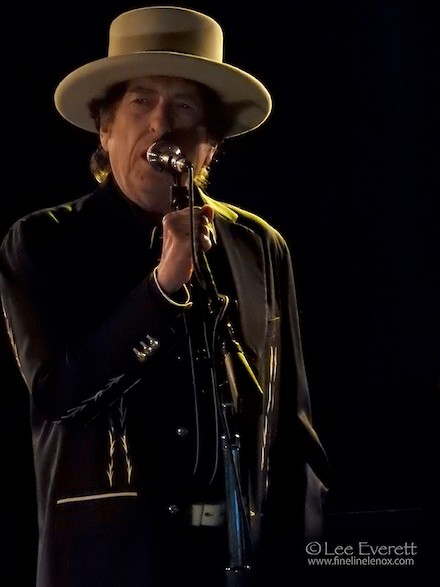
Afortunadamente, no soy el único que encuentra las interpretaciones en directo de este material antiguo profundas, emotivas y sugerentes. En el Informe Rogovoy (Un compendio de noticias culturales y observaciones por Seth Rogovoy) en su crítica del concierto en Tanglewood, Stockbridge, MA  del 2 de Julio de 2016 que él tituló “Detrás de Cada Cosa Hermosa Hay Algún Tipo de Dolor (Behind Every Beautiful Thing, There’s Some Kind of Pain)”, Rogovoy escribió que el espectáculo “era una profunda obra de teatro musical que se basaba menos en su repertorio que en los estados de ánimo que su particular elección de las canciones evocaban.” y unas cuantas líneas más adelante decía, “Pero aquellos que simplemente abrieron sus mentes a lo que estaba ocurriendo en el aquí-y-ahora fueron obsequiados con un concierto tan feroz y atractivo como cualquier fan de Dylan haya podido presenciar jamás”. Más tarde, hablando de los temas pre-rock, como “The Night We Called It A Day”, “Melancholy Mood” y “How Deep Is The Ocean?”, entre otros, declara: “Esas canciones, intercaladas como lo fueron en su mayor parte entre las canciones originales… cantadas con una belleza y delicadeza sorprendentes, sirven más como una cierta ligereza y alivio después de los golpes devastadores, la rabia profética, los relatos de violencia apocalíptica y el trueno musical de canciones tales como ‘Pay In Blood’ y otras… retratando un campo de batalla lleno de cicatrices de una humanidad traicionada, cantado con una voz desolada y desgarrada”.
Dylan-at-TWOOD-Lee-Everett

Bob Dylan Tanglewood, Stockbridge, MA 2 de julio de 2016

Estos dos últimos álbumes de Dylan, no son entonces un mero tributo a Frank Sinatra, sino más bien un homenaje a los hombres que escribieron esas canciones, como dice Rogovoy. El legendario compositor “se aventura a reclamar para estas canciones en su propio nombre, el mérito, en virtud de su condición de canciones escritas por hombres como él, que encontraron la traición en cada promesa, que detrás de cada victoria encontraron el engaño, que saben que ‘Detrás de Todo lo Bello Hay Algún Tipo de Dolor'”. De hecho, si pensamos en los títulos de ambos discos,”Shadows In The Night (Sombras en la Noche)” y “Fallen Angels (Angeles Caídos)”, nos damos cuenta de que ambos tratan sobre el lado oscuro de la vida, la traición, almas perdidas y ángeles de desolación. Y sea lo que sea que signifiquen para el propio Bob Dylan, en ambos le encontramos clamando en el desierto.

El Coleccionista Hipnótico

Bibliografía:

Kuntzman, Gersh – New York Daily News (24 de Mayo de 2016) At 75 Years Old, It’s Time For Burnt Out Bob Dylan to Retire. Consultado el 2 de Julio de 2016 en http://www.nydailynews.com/entertainment/music/75-years-old-time-burnt-bob-dylan-retire-article-1.2647932

Dwyer, Jim – The New York Times (28 de Junio de 2016) Could This Be the End of Paul Simon’s Rhymin’? Consultado el 4 de July de 2016 en http://www.nytimes.com/2016/06/29/nyregion/paul-simon-retirement-stranger-to-stranger.html

Rogovoy, Seth (2 de Julio de 2016) (Concert Review) Behind Every Beautiful Thing There’s Some Kind of Pain: Bob Dylan, Tanglewood, 7.2.16. Consultado el 4 de Julio de 2016 en http://rogovoyreport.com/2016/07/04/bob-dylan-tanglewood-review-seth-rogovoy/

Crying In The Wilderness (I Could Have Told You… or Maybe Not?)

If you enter “Bob Dylan” in the Spanish Google search engine and you accidentally add a Z, for those random questions of life, the search engine itself immediately suggests the Spanish word “zurdo (left-handed).” Out of curiosity one follows the advice modern technology makes available and, unsuspectingly, a long list of entries appears before us. All of them relating to the lefty status of Mr. Dylan or mentioning the great Columbia Recording artist as one of the most famous lefties in history. Might look inconceivable, but the “Wanted Man” of 5,61 ft height is cited as such, among others, as might be the ex-Beatle Paul McCartney, for instance, shamelessly. However, anyone who has ever seen him perform live or minimally familiar with Minnesota Minstrel figure, knows that this is kind of uncertain – at least when it comes to him as a performer. Bob Dylan is known to have been photographed signing with his left hand, so he must be ambidextrous, but he always played guitar with his right hand.  This is relevant today because I believe necessary to start the chronicle of this debate from the premise that there are false assertions that, being constantly repeated ad nauseum, they end perpetuating just as true.

But this accumulation of falsehoods about him is something that the American songwriter is used ever since. As he had already said in his sensational diatribe titled “Idiot Wind,” “They are planting stories in the press …” Another commonly accepted false judgment about Dylan is his vaunted disability to sing. Dylan himself complained about it in the speech he gave accepting his nomination as MusiCares person of the year.

720x405-462898102_MUsiCares

Bob Dylan accepts the 2015 MusiCares Person of the Year award on stage at the 2015 MusiCares Person of the Year show at the Los Angeles Convention Center on Friday, Feb. 6, 2015, in Los Angeles. (Photo by Vince Bucci/Invision/AP)

Why accuse him of having frog voice or, more recently, worn and broken by snuff abuse and not attack others like Tom Waits or Louis Armstrong? This, among other reasons, has not only led him to record an album performing old songs that Frank Sinatra made popular before, but to repeat the experience a second time and, if the rumors are confirmed, even undertake a third installment. There is no doubt that there is a clear intention to recover an old unequivocally American style with roots in the fertile ground of the purest tradition of the United States. Dylan does not conform to reassert itself as “crooner” but seems determined to show the world that he can sing the most melodic songs with that throaty voice of his, as tuned as anyone and so subtle and poignantly as the most gifted interpreters.

His work in these last 2 discs demonstrated so and it has been generally recognized by reporters and commentators. Sometimes they even came to proclaim that he had never sung so well.

Contrary to the resolution of our hero, it turns out that Bob Dylan has become 75 years old and a detractor flood that even advocates for a withdrawal time has become fashionable, as if the genius or creative will could be brought to an expiration date. Precisely because of his recent birthday a daring professional columnist devoted his thread in the New York Daily News to the famous composer with an infectious article entitled “At 75 Years Old, It’s Time For Burnt Out Bob Dylan to Retire.”

dfp0923dylanpix

Ignoring the pettiness and opportunism of shallow critics as this one of the New Yorker newspaper, I will focus on the funny heated debate I had a few weeks ago with an Italian colleague, well recognized as a huge Bob Dylan fan. My friend complained of the boredom which currently means attending a concert of his favorite artist, especially when he insists on singing those so hackneyed, oldies and to the naked eye so far from the creative restlessness the rest of his work always denoted.

This well docummented Italian fan commented that people attending Dylan recent concerts didn’t pay so much attention while he was singing the Sinatra tunes. He referred in particular to the debut of a new song the evening of the discussed concert. Many among the audience were walking around the venue, making phone calls, or eating lunch. But my collegue, commenting the video of Dylan doing for the first time ever on stage the cover “I Could Have Told You,” explained such behavior in a quite condescendent way saying “I see why this happens, this is lacking energy, charisma, interest, it doesn’t call for attention, it’s quite boring for real… even though that doesn’t mean you have to walk around the venue, make phone calls, or eat lunch.”

I had to say those were not there to see Bob Dylan. Who knows the reason why they bought tickets to attend a Dylan concert, but they didn’t show any respect for the artist themselves, anyway. Added that I didn’t know what he meant when talking about “boring” version, ’cause no doubt Dylan was singing his heart out right there and he was doing a pretty nice cover, perfectly in tune, loaded with emotion. Maybe not the most beautiful cover of his, from the batch of old Sinatra and Tin Pan Alley songs he has chosen recently, but quite a dignus performance, I believe.

An American woman entering the discussion replied, “It is a matter of taste. I don’t find this ballad boring at all, and I’m honestly mesmerized by Bob’s singing & the feeling he’s investing in the song. He sang many of these ‘Sinatra’ songs in Japan and his audience didn’t behave this way… same goes for many cities in Europe last fall. I think the problem is more an American culture / rudeness thing.” Though I don’t think it is just the Americans, it happens in some other countries here in Europe, as it happens in Spain. What is clear to me is that it has nothing to do with Dylan being boring or stirringly awesome.

Well, of course, boring is quite subjective. Though anything can be boring to you if you don’t pay the necessary attention to get into the subject the song is conveying. My partner disagreed there… as Bob’s music, voice, phrasing has always had a way to hook his attention, immediately, it’s a hook, he says, even on less interesting songs… “aburrido (boring)” was the word here, according to him, and not just he, but Dylan himself too. He said, “Obviously, I am the person who feels that way, but I just need to listen to other performances and that doesn’t happen, as it never did and never will… if I have to make an effort to get the spark, well… maybe the spark is not there…”

When I hear someone declare himself that he cannot get the spark on a certain performance that I loved I just have to say, “I am sorry for you, my friend.” You get it or you don’t. That’s it. As I said, to me it is never about what Dylan does, it is just the way he does it. This is the point when it comes to these covers Dylan does of the Sinatra songs. There’s to me as much energy, interest, feeling and emotion in Dylan’s heart and soul there, as it was when he was doing “Idiot Wind” in the “Hard Rain” performance. The difference is just the kind of energy, interest, feeling and emotion he displays now. He’s not anymore the one who was singing his rage out claiming for respect to his individuality. He’s already trying, as years gone by, to recover now the feelings of those days when he was a kid listening to the radio in the intimacy of his bedroom, listening to his mother singing the songs she used to sign while doing her homework back then. He’s just trying to recover the essential of his roots for all of us, because the essential in this life it is just in our memories of something like when we walked the streets holding our mother’s hand.

The critic fan would reply that it’s actually both things, what he does and how he does it, but he totally agreed with me, how he does it is super relevant. He had never been looking for the same from Bob, recognizing that evolution is a key element in his work. But he would never compare any of his recent covers to “Idiot Wind” neither. Why doing so if it’s about evolution? For him all this Sinatra galore is not historically proven anywhere, and he doesn’t know if Dylan’s mom used to sing these songs when he was young, but obviously he didn’t really care about. He would say that every time an artist throws something out he/she takes a responsibility. In fact, he thought, as many of these detractors do, that these songs are boring to him, even if they are not to Bob, in the first place, and, from his point of view, talking about this particular version of “I Could Have Told You” the performance is flat, on a flat song, and not because Bob Dylan he’s not 35 in Texas, but because it is flat, period. It is not even in, say, “Autumn Leaves'” league, or other “standards.” Then he was ending his paragraph with a kind of respectful sentence for those who still enjoyed this cover: “Glad you like it and others do too. To me it’s just an uninteresting song, sung with little interest by the man himself…”

A17LA6X4gSL._SL1500HArdRain_

91up9EOtr9L._SL1500-HR_Back_

To be honest, I was comparing the kind of energy and motivation, not the performances, when mentioning “Idiot Wind” outstanding version of 1976 live album “Hard Rain”, ’cause being different they are of similar impact to me. I have no idea if Dylan’s mother was singing or not these songs, what I really mean is that Dylan is bringing them out from the back of his memory, from the old days when he was a kid and he used to listen to these and many other songs in the radio nights. I meant they really mean so much to him and he just wanted everybody else to pay attention to these songs, ’cause they have an essential truth in them that he may have thought is missing nowadays, or at least overlooked.

There was no much to say against, so my colleague answer was short: “Maybe you’re right, I don’t debate on that view/option.”

Using some sarcasm, I replied: “Maybe you are right from your side and I’m right from mine, maybe you and Bob Dylan are now just too many mornings and a thousand miles behind.”

As any intelligent Dylan fan would have told me, he stated: “Oh well, his power still hits me (and I don’t mean AMOUNT of energy), I wish a reset, a rethink and new inspiration… or othwerwise, can we think that everything he does is never possibly to be exposed to any critic?” My friend, still being consequent with his feelings, continued arguing: “I think he still has power and intensity and voice to sing songs, but for some reason he’s picking some that are boring to me (and to many others, if that matters) and he has left his power (of phrasing and improvising,) so sublime, on some shelf, along with his cruel weapons… war is probably over, he got some peace, good for him, less for his art… resending the same 50’s postcard, night after night, on a xerox, is not exactly the best ending for the Picasso of Rock, and bear with me, I don’t wish for any jaggerish performances here… flat repetition doesn’t really work for me. I know many will disagree but it is what it is…”

Yes -I told him- I know you, and I know what you meant. Many still agree with you, but I’m so glad Dylan is still alive and still doing what he feels he should! He just told everybody out there in this world he would never work in Maggie’s Farm no more. He’s being faithful to such statement and I really respect him for that, and feel committed myself to try to understand and get into the subject he conveys, now and forever. That doesn’t mean there won’t be any criticism anymore, I could criticize him for doing the wrong things, though I have come to a conclusion, he CANNOT be wrong, cause he’s true like ice, like fire. Whatever he does, in the moment he does, is signed and sealed with the occasional fury, disdain, passion, listlessness, sharpness, laziness, indolence, bitterness, faith or any other noble and authentic sentiment he may have at the very moment he is on stage. Being from an artist with the insightful mind and deep commitment to his work Dylan ever had, that means a torrent of emotions to me.

He knew where I was being weak and, as expected, he had the right answer: “That ‘Farm’ can’t be his own body of work, right? I’m glad too he is free to do what feels he should, never wanted anything different, but then again ‘he CANNOT be wrong’? 🙂 even though I know what you mean with the words that follow, well… I think that supporting that couldn’t be useful to any artist in the world, but you know that, even without me stating the obvious…”

No, mate -I excused myself- I was being sarcastic, with those capital letters word. It was just a boutade. Of course he can be wrong, and yes, he’s wrong indeed, at least from your point of view, and there is a lot of things we could criticize, such as not changing the setlist at all anymore. As for that “Farm” I was referring to other people wanting him to do what they expect him to do… “They say ‘Sing!’ and I get bored.” And no, not every artist in this world remains faithful to its own feelings. Not everybody is so true… Many have even recognized they do it for the money or are clearly sold themselves to multinationals or any other economical interests. But once again, regarding the static setlists, nobody criticized Paul Simon, Paul McCartney or most performing artists for doing exactly the same show night after night. Why we must expect him to do what he always did? And yes, he might choose a setlist including new vibrant arrangements of the old songs, covers of amazing songs he never did before, as he did in the early 90’s, or even new songs he never performed yet, such as “Life Is Hard”, from “Together Through Life” album or some abreviated versions of “Tin Angel” or “Titanic” (I mean “Tempest” title song)… But why should he do that being 75, endlessly hitting the road since 1988 and already being the Living Legend he is in his own right?

As an example, Paul Simon declared on his last interview that he’s thinking about retirement once the present tour promoting his new album is done. Said that it is tiresome and declared that the showbusiness has no interest for him anymore. No doubt, being still on the road requires some strength and willingness at a certain age.

Album-art

But when it comes to Dylan, I think there’s still a lot he can do and what he’s doing is good for me. He can still get some stirring feelings out of my guts and he does that singing the way he did “That Lucky Old Sun” in San Sebastian, Spain, last year, or this one of “I Could Have Told You” the other day.

My good opponent threw me the following answer: “We all do say ‘Sing!’ – you too.” And more: “Everything is possible. Or not. I don’t really care to call other names, like the two Paul you mentioned, indeed we are exchanging opinions in a Bob group, not anywhere else, and why should we ask him to do what he always did, let’s say being an expeditioner? Wasn’t that what he said in ‘No Direction Home’ docummentary? Expeditioner, right? I don’t know. Why should we expect him to be what he is? We should not, if you put it that way, but we don’t really sit at his table giving him tips. We, instead, participate to a virtual roundtable, discussing art and passion. He actually caged himself in this Sinatra and xeroxing practice (not only the setlists but the phrasing, accents, stresses, nuances, colors.) So what’s the point of asking that?” (I think he refers to my question about why expect him -Bob- to do the same he always did) “What’s the point of being active in communities (online and not)? What if not speaking our minds without, though, looking for ‘alibis’ (you know what I mean) in other artists pattern? To me it is stimulating when we -passionates- exchange opinions, but I wouldn’t abandon his recorded (pun intended) history to evaluate the present.”

Then he asked himself: “Why xeroxing, which is the exact opposite of what his human/artistic/creative history tells us and the world? That, I don’t know and wonder… it has nothing to do with what he is or has been, I don’t care if there have been other phases when the setlists were stuck, I could articulate why it is different, but it’s a long story, we all know it was different… and the paradox is: HE IS doing what we expect him to do, now more than ever! …and I’m not joking unfortunately… night after night, since almost 3 years now… we could even -ironically- add ‘sing, and I get bored.’ I’m being a pain in the ass, I know…” Then he laughed out loud.

At this point I could only say: “Oh well, I think there’s no argument I could use. It is just the way it is. He does what he does… Whatever you may call it. And no, I never expected him to do 2 consecutive albums on old Sinatra stuff or any Christmas recording. I could never expect him to become the amazing crooner he has become. And I didn’t want that. But now that he did, I am grateful he did, ’cause he renewed himself in a very unexpected way and made me discover songs and emotions I never thought I could be aware of.”

Then my colleague tried to rebut my words and make me understand that this style chosen by Dylan is nothing new for him: “He was crooning already in 1961, and he was already amazing, we have tapes to proove it… not to mention the crooning in 1969-71” He smiled, and added, to be kind, though ironically, I guess: “I’m glad you find emotions you thought you could never be aware of, if that works for you, that’s all that matters.”

I had to admit: “Yes, he was crooning, but never the way Bing Crosby or Dean Martin used to do”

But he replies: “Really? what about ‘When I Got Troubles’ – 1959, I think you have it, right?”

To me it is quite clear, so I defend my point of view: “It was a different performing concept, I believe… He did never sing this way before, until he covered Dean Martin ‘Return To Me’… And it looks like he found a new mine to explore. Don’t you think he’s still being an expeditioner when doing these 2 albums, performing them in the quality he’s doing with such emotional load and carefully tuned?”

The disenchanted fan still argues: “No, I think his unique way to dig emotions is getting lost when he phrases that close to those original recordings, I think the emotions he can stir in me get lost when he’s not singing the way he can, with his unique style, which makes his the most emotional voice of the century, in line with such Billie Holiday and people of that dimension. Sinatra is empty and not interesting… I am not looking for a bel canto, it wasn’t that different, check that one, maybe you don’t remember it properly? Or maybe ‘The Two Sisters’, 1960? I’m serious, it wasn’t a different performing concept at all… it was a different voice, a different age, carrying more illusions maybe, but the approach was really that one… he could sing the irish way, folkie, bluesy, country, ballads, he could croon, yodel, already at 20. He sings at 19/20 a few songs with the very exact voice he delivers on Nashville Skyline. The Wallace Tape already proves all that.”

I absolutely disagree with him on that, though I didn’t want to make a thesis (I’m smiling right now), so I just replied: “Can’t say anything else about that, my friend. It is beyond my understanding to find the necessary arguments, if there’s any. He does it in a way that you feel boring? Nothing I could do to help you out of such conviction. You think his approach to songs like ‘Remember Me’ or ‘When I Got Troubles’ in 1959 (or to the covers he did in Nashville Skyline era) was the same as the one he’s applying now to these songs? I can’t believe you! But, anyway, I can’t help, that’s your own perception. I think he has gone a further step since he started his commitment with this old material, since he decided to do a DJ work on TTRH (Theme Time Radio Hour). He has actually changed, cause as he stated, he used to care, but Things Have Changed.”

Now my opponent defends his view: “I’m not saying it is EXACTLY the same, I’m stating that crooning is not something that was forbidden to him, he had already access to that dimension more than half of a century ago, which means he is a natural, BUT he was using his unique style back then (and up ’til recently), while now, this Sinatra stuff is really impersonal and moreover repetition, in absence of his ‘personal voice,’ and so the vital flow that improvising has always been to him won’t achieve any better… but if approach means age, if it means that now he can ‘feel’ more those standards because now that he hit that age, well… I’ll stand and say NO (smile) that doesn’t implicitely adds value to his singing (hence the 1958-60 material reference), someone has to explain me where this further step is, and not intellectually, emotionally instead… indeed the improvising in the singing is vital force, has always been to him, like a well to draw fresh water from. It’s not weird, muses and all that, it was fire running through. It’s not accidentally that no more improvising overlaps with a lack of emotions, as the mastering skills are ruling now. He can totally control his voice and sing ‘perfectly’, which critics always thought it was impossible for him. Now he’s showing them he really can, and he’s doing it every single night… but there’s a price to pay. I’m not saying anything bizarre, I think…”

No, you are not saying anything bizarre, but the answer, my friend, is blowin’ in the wind: “You have already explained yourself what I was unable to explain myself. Yes, he has a quite different approach, he’s NOT using his unique style anymore, he’s trying to apply the mastering skills others like Bing Crosby, Sinatra, Dean Martin achived, but he’s doing so in the gloom of his personal vision, making them songs his own stuff when they were once as popular as if they were public domain, and of course his personal vision has to do with his present age and the way he looks at the world now, with the wisdom and experience he has got over the years. That’s the new approach, the further step he took.”

The Italian fan answer was: “That doesn’t really work for me nor make me happy, haha”

And I wanted to clarify first: “As always, Dylan is much better performer and artist when he becomes intimate, when he talks about his own feelings, personalizing the speech.”

Then I replied to him: “Hahaha, my friend, that’s a different question.”

Adding the following end to our debate: “But you must agree with me, he’s taking away from those songs the pattern of ‘popular’ stuff, in the worse sense of the term, songs that were probably sounding too cheesy and are now getting deeper in his voice and what you call ‘xerocopied’ style.”

12142505_1758381277728925_566671802_n

I should explain here that Dylan may have always sung romantic ballads or any kind of popular melodies, he could certainly undertake any style he wanted, but the way he did, even more in the Nashville Skyline era, had nothing to do with the authority, the testimonial seriousness and insightful depth of the current performances. He treats them, the Sinatra songs, as real dramas, to the point to even become melodramatic, but still keeping them within the limits of the in-depth range of Dylan’s vision. I believe these 2 last albums are actually as relevant and committed to the heritage of the human kind as “Tempest” was.

Fortunately, I am not the only one to find his live performances of this old material profound, emotional and engaging. At the Rogovoy Report (A compendium of cultural news and observations by Seth Rogovoy) in his review of the Tanglewood, Stockbridge, MA show from July 2th, 2016 which he entitled “Behind Every Beautiful Thing There’s Some Kind Of Pain,” Rogovoy wrote that the show “was a profound work of music-theatre that relied less on his setlist and more on the moods his particular song choices evoked.” And a few lines below he stated, “But those who simply opened themselves up to what was happening in the here-and-now were repaid with a concert that was as fierce and engaging as any a Dylan fan has ever likely witnessed.” Later on, talking about the pre-rock stuff, such as “The Night We Called It A Day,” “Melancholy Mood,” and “How Deep Is the Ocean?” among others, he declares “Those songs, interspersed as they were for the most part in between original songs… sung with surprising beauty and delicay, served more as a bit of lightness and relief after the devastating blows, the prophetic raging, the accounts of apocalyptic violence and the musical thunder of tunes including ‘Pay In Blood,’ and more …portraying a scarred battlefield of humanity betrayed, sung in a voice desolated and torn.”

Dylan-at-TWOOD-Lee-Everett

Bob Dylan Tanglewood, Stockbridge, MA July 2th, 2016

These two last Dylan albums, are then not a mere Frank Sinatra tribute but more a tribute to the men who wrote those songs, as Rogovoy says. The legendary songwriter “staking a claim for them as his own, as tunes written by men just like him who found betrayal in every promise, who behind every victory found deceit, who know that ‘behind every beautiful thing there’s some kind of pain’.” In fact, if we think about the titles of both albums, “Shadows In The Night” and “Fallen Angels,” we realize they are both about the obscure side of life, betrayal, lost souls and desolation angels. And whatever they mean for Bob Dylan himself, both of them have him crying in the wilderness.

The Hipnotist Collector

Bibliography:

Kuntzman, Gersh (May 24, 2016) At 75 Years Old, It’s Time For Burnt Out Bob Dylan to Retire. Retrieved July 2, 2016 from  http://www.nydailynews.com/entertainment/music/75-years-old-time-burnt-bob-dylan-retire-article-1.2647932

Dwyer, Jim – The New York Times (June 28, 2016) Could This Be the End of Paul Simon’s Rhymin’? Retrieved July 4, 2016 from http://www.nytimes.com/2016/06/29/nyregion/paul-simon-retirement-stranger-to-stranger.html

Rogovoy, Seth (July 2, 2016) (Concert Review) Behind Every Beautiful Thing There’s Some Kind of Pain: Bob Dylan, Tanglewood, 7.2.16. Retrieved July 4, 2016 from http://rogovoyreport.com/2016/07/04/bob-dylan-tanglewood-review-seth-rogovoy/

Yes It Is

the_beatles-ticket_to_ride_s_4

Not so long ago I ran into a version of “Yes It Is” on Facebook. You know, that Beatles song that was first released in 1965 as the B-side of the “Ticket To Ride” single, anticipating the arrival of the album “Help!” Yes, exactly, that exceptional LP containing the soundtrack of that original and funny film directed by Richard Lester, starring the “Fab Four.” The point is, that I did not expect it, but I thought I had never before heard the version available on YouTube which I was led to by the link provided. It was the track included in “Anthology 2.” Although I thought I had paid enough attention to each and every one of the cuts of the trilogy, this curious version of “Yes It Is” was to me now more innovative and shocking than it was when my collector’s zeal led me to buy the compact discs and even a couple of vinyl volumes of that collection. What happened to those unpredictable and sometimes baffling vocal harmonies, those complex chords plagued with halftones that caused me the vertigo of the senses? Was it that I was perceiving the sound abyss that these arpeggios seemed doomed to if they made a minimal mistake? Difficult to find out which road Lennon had decided to drive the vehicle of his emotions. Nevertheless the nature of the composition allows one not to have too many doubts about the depth of those feelings. Of course, the vocal harmonies were developed thanks to the creative talent of the great producer George Martin, who played his part in the final arrangements. Sad to know he passed away recently. There’s also something to say about the intimate way Lennon introduced the song, just whispering the first verses. The saddest thing was to think that this poignant Lennon creation emerged at the time as B-Side and hardly anyone payed it the attention it deserved. Probably many of us did not even turn the disk around to listen to it when a copy fell into our hands for the first time. My curiosity was evident and I had to dig a little deeper on the gestation of this cut, the recording and singular details of this particular version.

This great little song that the single “Ticket To Ride” hid on its B-Side was a composition Lennon wrote in his house in Kenwood, Surrey. Paul McCartney said later to have been there when they completed the final piece. On Barry Miles book, “Many Years From Now,” Paul commented that it was Lennon’s inspiration that he helped him finish off. He was claiming it was a remarkable ballad, something quite unusual in his colleague’s work despite having written a few ballads of unquestionable beauty. On it Lennon showed his romantic side in stark contradiction to his public image, often more scathing. In a 1980 “Playboy” magazine interview Lennon himself described it as a failed attempt to rewrite “This Boy.” Certainly there are similarities between the two issues, especially in the musical structure, 12/8 time signature, three-part vocal harmonies and the string of chords in the purest Doo-Wop style. However, when both compositions are analyzed thoroughly the comparison proves its author was going a few steps further in this work, leading us to deeper waters in the musical and emotional ground. The score, in the key of E, shows a striking originality and greater complexity in the succession of chords and changes occurring in the tune we are reviewing.

ticket-to-ride-yes-it-is-beatles45d

“Yes It Is” was recorded on February 16, 1965, in Abbey Road studios. The same day in which they finished the recording of “I Need You,” the great Harrison tune. The Beatles completed the rhythm and instrumental part, recording 14 different takes after 2 arduous hours of studio work, between 5 and 7 pm. It was much more than they had ever invested in any other song they recorded that year. Apparently John was excited about George’s use of the tone pedal of his guitar during the recording of “I Need You” and considering that it added some melancholy mood he asked him to please use it in this piece of his. After completing the basic track, Lennon, McCartney and Harrison spent three hours more perfecting their vocal harmonies while recording singing live together. The final recording features some of the more complex and dissonant three-part vocal harmonies of the Beatles.

The version to which I refer was released in the album “The Beatles Anthology 2.” The track actually consisted of two different takes conveniently mixed. The cut – I quote more or less literally Enrique Cabrera’s comment in his excellent site The Spanish Beatles Page – starts with take 2, the Beatles trying to perfect their accompaniment while John Lennon simply mutters the first lines in a startlingly intimate form, as a guide, ending at the bridge singing “die-de-de-die”. That take had been interrupted because John broke a guitar string. The song is completed with take 14 (the original master recorded live in the studio with the three-part vocal harmonies honed to perfection) which in this version has been miraculously re-edited and re-mixed by George Martin (producer) and Geoff Emerick (sound engineer). The result is more than satisfactory. It could be described as prodigious.

“Yes It Is” was released at the time, in 1965, as B-side of “Ticket to Ride” single, both in the UK and the United States. The American copies of the disc mistakenly credited this issue as belonging to the movie “Eight Arms to Hold You”, original title of the film “Help!”, in which it was never included.

s-l1600-BSide

The song then appeared in the “Beatles VI” in the United States, but Capitol Records received no copy of the stereo mix. When included in their make-shift album “Beatles VI”, they created an artificial stereo mix, a “duophonic” copy of the mono mix they had received, adding further reverb in the process.

The+Beatles+Beatles+VI+-+Purple+Label+-+La+333618

It was also included in later compilations such as “Love Songs”, the British version of the album “Rarities”, the “Past Masters Volume One” (which made its first appearance as true stereo) and “Anthology 2” (alternate mix). The original mono mix only appears in the Mono Masters CD as part of the “The Beatles In Mono” box set.

The meaning of the lyrics are dark and yet the lines, full of suggestions, penetrate into the heart, accompanied by the voices and the melancholy tone of the composition:

“Yes It Is”

If you wear red tonight
Remember what I said tonight
For red is the color, that my baby wore
And what is more, it’s true
Yes it is

Scarlet were the clothes she wore
Everybody knows I’ve sure
I could remember all the things we planned
Understand, it’s true
Yes it is, it’s true
Yes it is

I could be happy with you by my side
If I could forget her, but it’s my pride
Yes it is, yes it is
Oh, yes it is, yeah

Please do not wear red tonight
This is what I said tonight
For red is the color, that will make me blue
In spite of you, it’s true
Yes it is, it’s true
Yes it is

I could be happy with you by my side
If I could forget her, but it’s my pride
Yes it is, yes it is
Oh, yes it is, yeah

Please do not wear red tonight
This is what I said tonight
For red is the color, that will make me blue
In spite of you, it’s true
Yes it is, it’s true

Lyrics © Sony/ATV Music Publishing LLC

The general belief was that the lady in red was an old lost love. That is the first thing one tends to think when you hear the song without analyzing the lyrics in depth. Looks like the line saying “but it’s my pride” refers to a failed relationship, as if resentment is preventing him to forget because of wounded pride in the feeling of abandonment. However, Ian MacDonald in his book “Revolution In The Head”, published in 1997, suggests the influence of Edgar Allan Poe by invoking the scarlet color and a hint that the lost lover referred to in the lyrics is dead. In the same paragraph he speaks of romanticism and mentions the feverish and tormented tone of the composition.

RITH

MacDonald does not provide any argument, although it is not difficult to accept his theory if we think of the line saying “I could remember all the things we planned.” It seems to indicate that she will not return, that she’s no longer of this world. Forever vanished is the chance that these plans are met. Because often the greatest anguish when we suffer the untimely death of a loved one is to evoke the amount of unfinished things and incomplete plans that will never happen. We could also admit the weak insinuation that Dave Rybaczewski makes when he argues that no man in his right mind would call his former lost lover “my baby,” unless she had died. Even less a jilted man. MacDonald’s analysis goes way further when pointing out that “the fantastic figure conjured here is probably a transmutation of Lennon’s late mother, Julia redhead.” On this issue I have failed to find any verification, except an unreliable statement randomly found: Someone commented on Songfacts, one of the sites consulted, that if we were true Beatles’ fans and we had read the book “The Beatles Anthology” we would have discovered the song was referring to Julia, John’s mother. The commenter stated she was wearing a red suit when she died run over by a drunken off-duty policemen while waiting at the bus stop. I spent an afternoon rereading the “Anthology” to try to corroborate that assertion and I failed to find anything to confirm it. In his personal biographical pages Lennon chronicled everything related to his mother’s death in detail, but did not mention at all how she was dressed at the moment of the accident. The chapter on the year 1965 includes comments from the Beatles themselves, or their collaborators, about the songs on the album “Help!” And they do not speak of “Yes It Is” in any way. It does not even appear in the index. In any case, the song is so much more haunting if we give the least credit to Ian MacDonald suggestions. It is true that the way Lennon sings these two lines “I could be happy with you by my side If I could forget her, but it’s my pride…” and how he insists in the chorus repeating that “Yes, it is” emphasizing what he does not even dare to mention: “Yes it is, yes it is, Oh, yes it is, yeah,” makes one guess that the truth to which he refers hides a true drama, a tragedy which is impossible for him to escape from. Her memory will haunt him forever. One wonders why he speaks of pride then, if it is about Julia. The only explanation I can think of is that his wounded pride was caused by the neglect he may have felt during the years his mother was separated from him. And even more painful for him to understand that he had to resign himself to definitely losing her, right when he believed to have recovered her forever.

29 chansons du film help french ep beatles picture sleeve

It is significant that John Lennon, reportedly, never came to feel proud of the song and even dismissed it, especially after the split of the band. George Harrison rather liked it better than “Ticket To Ride” and considered it worthy of being the main side of the single. Cynthia Lennon (John’s wife back then and mother of his son Julian, Cynthia Powell as maiden) always thought it was excellent, stating on occasion that it was her favorite Beatles song. Many critics have praised the evocative simplicity of the lyrics, with the mysterious image of the woman in red, the strength of the chorus, the boldness of its complex succession of chords, the fascinating perfection of the three-part vocal harmonies and the melancholic mood of the melody underlined by Harrison’s pedal. Others claim not to know exactly what it is what moves them in it, it simply reaches the depths of the bowels. But perhaps Lennon aspired to something so sublime in that attempt, something so intimate and revealing to his own understanding, probably something that lies at the core of his being, that any achievement would have always seemed undeserving to him. Or perhaps the emotional bondage to a tragic past ceased to have any meaning for him, once he found fulfillment in his maturity, as has been suggested. The truth is that he left for the posterity a great song that, as a certain Michelle commented on one of the sites I’ve visited, “even today, after 50 years, it is like a roundhouse kick to the heart” and its poignant beauty can always flood you and make you cry or give you the chills down your spin, shaking you from head to toes. I am not exaggerating! Come back to listen to it, if you have not already done it recently. You will be grateful to me.

Written by: Lennon-McCartney
Recorded: 16 February 1965
Producer: George Martin
Engineer: Norman Smith

Single (7 inches 45 rpm) – Released:  9 April 1965 (UK), 19 April 1965 (US)

Instrumentation (most likely):

John Lennon: vocals, acoustic rhythm guitar (1964 Ramirez A-1 Segovia)
Paul McCartney: vocal harmonies, bass (1963 Hofner 500/1)
George Harrison: vocal harmonies, lead guitar (1963 Gretsch 6119 Tennessean)
Ringo Starr: drums (hi-hat, cymbals) (1964 Ludwig Super Classic Black Oyster Pearl)

Available at present in the following albums:

Past Masters
Anthology 2 (alternate mix)

The Hypnotist Collector

Bibliography:

MacDonald, Ian  (1997) Revolution In The Head (Revolución en la Mente) @2000, Celeste Ediciones ISBN 84-8211-221-X

Rybaczewski, Dave (21 February 2010) Beatles Music History: The In-Depth Story Behind The Songs of The Beatles. Retrieved 6 June 2016 from http://www.beatlesebooks.com/yes-it-is

Songfacts staff (no date stated) Yes It Is by The Beatles – Album: Beatles VI. Retrieved 6 June 2016 from http://www.songfacts.com/detail.php?id=9759

Sanchez Gutiérrez, Quirino @vidrioso-Mexico (31 December 2010) Canción del Día–Yes It Is. Retrieved 18 June 2016 from http://www.taringa.net/comunidades/thebeatlesfans/1544417/Cancion-del-Dia-Yes-It-is.html

Cabrera, Enrique (1995) The Spanish Beatles Page. Retrieved 19 June 2016 from http://www.upv.es/~ecabrera/index.html

Yes It Is (Si Lo Es)

the_beatles-ticket_to_ride_s_4

No hace mucho me tope en Facebook con una versión de “Yes It Is”. Ya sabéis, esa canción de los Beatles que se publicó inicialmente en 1965 como cara-B del sencillo “Ticket To Ride”, anticipando la llegada del álbum “Help!”. Sí, exactamente, aquél excepcional LP que contenía la banda sonora de la original y divertida película dirigida por Richard Lester y protagonizada por los “Fab Four”. La cuestión es que, no lo esperaba, pero me pareció no haber escuchado nunca antes la versión disponible en YouTube a la que me dirigía el enlace. Se trataba de la pista incluida en el “Anthology 2”. Aunque creía haber prestado la necesaria atención a todos y cada uno de los cortes de esa trilogía, esta curiosa versión de “Yes It Is” me resultaba ahora más novedosa y mucho más impactante que entonces, cuando mi afán coleccionista me llevó a comprar los “compact discs” e incluso un par de volúmenes en vinilo de esa colección ¿Que ocurría con esas imprevisibles y a veces desconcertantes armonías vocales, esos complejos acordes plagados de semitonos que provocaban en mi ese vértigo de los sentidos? ¿Era acaso que percibía el abismo sonoro al que esos arpegios parecían abocados al menor descuido? Difícil averiguar por que vericuetos, Lennon, responsable en su mayor parte de la canción, había decidido llevar el vehículo de sus emociones. Aunque la naturaleza de la composición no admite demasiadas dudas sobre la profundidad de esos sentimientos. Claro que las armonías vocales fueron elaboradas gracias al talento creador del genial productor George Martin, recientemente fallecido, que intervino en los arreglos definitivos ¿Y que decir de la forma íntima en que Lennon introduce la canción apenas susurrando los primeros versos? Lo más triste era pensar que esta incisiva creación de John había surgido en su momento como cara-B y apenas nadie le había dedicado la atención que merecía. Probablemente incluso muchos de nosotros ni siquiera dimos la vuelta al disco para escucharla cuando el ejemplar cayó en nuestras manos por primera vez. Mi perplejidad era manifiesta y tuve que indagar un poco más a fondo sobre la gestación de este corte, la grabación y los pormenores de ésta singular versión en concreto.

Este pequeño gran tema que el sencillo “Ticket To Ride” escondía en su cara-B era una composición que Lennon escribió en su casa de Kenwood, Surrey. Paul McCartney declaró mas tarde haber estado allí cuando dieron con la pieza definitiva, pero reconociendo la autoría de John y afirmando que era una balada notable, algo bastante inusual en el trabajo de su colega a pesar de haber escrito unas cuantas de belleza incuestionable. En ella mostraba Lennon su lado romántico en franca contradicción con su imagen pública, a menudo más mordaz. El propio Lennon la describía después en una entrevista concedida a la revista “Playboy” en 1980 como un intento fallido de reescribir “This Boy”. Ciertamente existen similitudes entre ambos temas, sobre todo en la estructura musical, el compás 12/8, las armonías vocales a tres voces y la ristra de acordes al más puro estilo Doo-Wop. Sin embargo, cuando se analizan ambas composiciones minuciosamente la comparación prueba que su autor iba unos cuantos pasos más allá en este trabajo, llevándonos hacia más profundas aguas en el terreno musical y emocional. La partitura, en clave de Mi, muestra una sorprendente originalidad y una mayor complejidad en la sucesión de acordes y en los cambios que se producen en la pieza que nos ocupa.

ticket-to-ride-yes-it-is-beatles45d

“Yes It is” se grabó el 16 de Febrero de 1965, en los estudios de Abbey Road. El mismo dia en el que habían llevado a cabo la grabación de “I Need You”, el gran tema de Harrison. Los Beatles completaron el ritmo y la instrumentación grabando 14 tomas diferentes durante 2 arduas horas de trabajo en el estudio, entre las 5 y las 7 de la tarde. Mas tomas de las que habían dedicado a cualquier otra canción de las que registraron ese año. Al parecer a John le entusiasmó el uso que George había hecho del pedal del volumen de su guitarra durante la grabación de “I Need You” y considerando que añadía cierta melancolía al clima le pidió que lo emplease también en esta pieza suya. Tras dar la pista básica por concluida, Lennon, McCartney y Harrison dedicaron tres horas más a perfeccionar las armonías vocales grabando los ensayos en directo. La grabación final cuenta con algunas de las armonías corales a tres voces mas complejas y disonantes de los Beatles.

La versión a la que me refiero fue publicada en el álbum “The Beatles Anthology 2”. La pista constaba en realidad de dos tomas diferentes convenientemente mezcladas. El corte – cito más o menos literalmente el comentario de Enrique Cabrera en su excelente página The Spanish Beatles Page – arranca con la toma 2, en la que los Beatles tratan de perfeccionar el acompañamiento mientras John Lennon simplemente murmura los primeros versos de forma sobrecogedoramente íntima, a modo de guía, hasta llegar incluso a tararearla. Esa toma había quedado interrumpida durante el puente porque a John se le rompió una cuerda de la guitarra. La canción se completa con la toma 14 (el master original grabado en directo en el estudio con las armonías vocales a tres voces afinadas a la perfección) que en esta versión ha sido milagrosamente re-editada y re-mezclada por George Martin (productor) y Geoff Emerick (ingeniero de sonido). El resultado es más que satisfactorio. Se podría calificar de prodigioso.

“Yes It Is” se publicó en su momento como cara-B del sencillo “Ticket to Ride” tanto en el Reino Unido como en los Estados Unidos. Las copias Americanas del disco acreditaban erróneamente este tema como perteneciente a la película “Eight Arms to Hold You (Ocho Brazos para Abrazarte)”, título original del film “Help!”, en el que nunca fue incluido.

s-l1600-BSide

La canción apareció luego en el “Beatles VI” en los Estados Unidos, pero Capitol Records no recibió ninguna copia de la mezcla estéreo, así que cuando la incluyeron en su reconstruído album “Beatles VI”, crearon una mezcla estéreo artificial, una copia “duofónica” de la mezcla mono que habían recibido, añadiendo además excesiva reverberación en el proceso.

The+Beatles+Beatles+VI+-+Purple+Label+-+La+333618

También fue incluida en recopilatorios posteriores como “Love Songs”, la versión Británica del álbum “Rarities”, el “Past Masters Volume One” (en el que hizo su primera aparición como auténtico estéreo) y en el “Anthology 2” (alternate mix). La mezcla mono original solo aparece en el Mono Masters CD como parte de la caja titulada “The Beatles In Mono”.

El significado de la letra es oscuro y sin embargo los versos, cargados de sugerencias, penetran en el corazón, acompañados de las voces y el tono melancólico de la composición:

“Yes It Is”

If you wear red tonight
Remember what I said tonight
For red is the color that my baby wore
And what is more, it’s true
Yes it is

Scarlet were the clothes she wore
Everybody knows I’ve sure
I could remember all the things we planned
Understand, it’s true
Yes it is, it’s true
Yes it is

I could be happy with you by my side
If I could forget her, but it’s my pride
Yes it is, yes it is
Oh, yes it is, yeah

Please don’t wear red tonight
This is what I said tonight
For red is the color that will make me blue
In spite of you, it’s true
Yes it is, it’s true
Yes it is

I could be happy with you by my side
If I could forget her, but it’s my pride
Yes it is, yes it is
Oh, yes it is, yeah

Please don’t wear red tonight
This is what I said tonight
For red is the color that will make me blue
In spite of you, it’s true
Yes it is, it’s true

=======================

“Si lo es”

Si vistes de rojo esta noche,
Recuerda lo que te dije,
Porque rojo es el color que mi chica vestía
Y lo que es más, es verdad,
Sí, lo es.

Escarlata el vestido que ella llevaba
Todo el mundo lo sabe, estoy seguro
Recordaría todo lo que habíamos planeado
Comprendelo, es verdad,
Si lo es, es verdad
Si lo es.

Sería feliz contigo a mi lado,
Si pudiese olvidarla, pero se trata de mi orgullo
Si lo es, si lo es,
¡Oh, si lo es, siiii!

Por favor no vistas de rojo esta noche
Eso es lo que digo esta noche
Porque rojo es el color que me entristece
A pesar de ti, es verdad,
Si lo es, es verdad
Si lo es.

Sería feliz contigo a mi lado,
Si pudiese olvidarla, pero se trata de mi orgullo
Si lo es, si lo es,
¡Oh, si lo es, siiii!

Por favor no vistas de rojo esta noche
Eso es lo que digo esta noche
Porque rojo es el color que me entristece
A pesar de ti, es verdad,
Si lo es, es verdad
Si lo es, es verdad

Lyrics © Sony/ATV Music Publishing LLC

La creencia general había sido que la chica de rojo era un antiguo amor perdido. Eso es lo primero que tiende uno a pensar cuando escucha la canción sin analizar la letra en profundidad. Se diría que el verso “pero se trata de mi orgullo” alude a una relación fallida, como si el resentimiento le impidiese olvidarla a causa del orgullo herido por el sentimiento de abandono. Sin embargo, Ian MacDonald en su libro “Revolution In The Head (Revolución En La Mente)”, publicado en 1997, sugiere la influencia de Edgar Alan Poe al invocar el color escarlata y la existencia de una insinuación de que la amante perdida a la que se refiere en la canción esta muerta. En el mismo párrafo habla de romanticismo y menciona el tono febril y atormentado de la composición.

RITH

MacDonald no aporta argumento alguno, aunque no resulta difícil aceptar su teoría si pensamos en el verso que dice “recordaría todo lo que habíamos planeado”. Parece indicar que ella no volverá, que ya no es de este mundo. Se esfumó para siempre la oportunidad de que esos planes se cumplan. Porque a menudo el mayor tormento cuando sufrimos la muerte prematura de un ser querido consiste en evocar la cantidad de cosas inacabadas y planes incompletos que ya nunca podrán llevarse a cabo. También cabría admitir la débil insinuación que Dave Rybaczewski hace cuando argumenta que ningún hombre en su sano juicio llamaría a su anterior amante “mi chica” a menos que ella hubiese fallecido. Menos aún un hombre despechado. El análisis de MacDonald va mucho mas lejos cuando apunta que “la figura fantástica que aquí se conjura es probablemente una transmutación de la difunta madre de Lennon, la pelirroja Julia”. Sobre esta cuestión no he conseguido hallar justificación alguna, salvo una declaración poco fiable encontrada al azar: Alguien comentaba en Songfacts, otra de las páginas consultadas, que si fuésemos auténticos fans de los Beatles y hubiésemos leído el libro “The Beatles Anthology” habríamos descubierto que la canción se refería a Julia, la madre de John, que llevaba un traje rojo cuando murió atropellada por un policía borracho fuera de servicio, mientras esperaba en la parada del autobús. Me pasé una tarde releyendo el “Anthology” para tratar de corroborar esa afirmación y no logré encontrar nada que lo confirme. En la sección correspondiente a su biografía personal Lennon narraba todo lo relativo a la muerte de su madre de forma pormenorizada, pero no mencionaba en absoluto como iba vestida en el momento del accidente. El capítulo dedicado al año 1965 incluye comentarios de los propios Beatles, o de sus colaboradores, acerca de las canciones del álbum “Help!” y no hablan de “Yes It Is” en modo alguno. Ni siquiera aparece en el índice. En cualquier caso, la canción resulta así mucho más conmovedora, si concedemos el menor crédito a las sugerencias de Ian MacDonald. Y es cierto que la forma en que Lennon canta esos dos versos “Sería feliz contigo a mi lado, Si pudiese olvidarla, pero se trata de mi orgullo…” y cómo insiste en el estribillo repitiendo ese “Sí, lo es”, poniendo el énfasis en lo que ni siquiera se atreve a mencionar: “Si lo es, Si lo es, Oh, si lo es, siii”, induce a sospechar que esa verdad a la que hace referencia encierra un auténtico drama, una tragedia de la que le es imposible escapar. Su recuerdo le perseguirá siempre. Cabe preguntarse por qué habla de orgullo entonces, si se refiere a Julia, y la única explicación que se me ocurre es la de su orgullo herido por el abandono que pudo haber sentido durante los años en que su madre estuvo algo más alejada de él. Una herida aún más dolorosa al comprender que debía resignarse a perderla definitivamente justo en el momento en que creía haberla recuperado para siempre.

29 chansons du film help french ep beatles picture sleeve

Es significativo el hecho de que según los informes John Lennon nunca llegara a sentirse orgulloso de la canción e incluso la minusvalorase, especialmente tras la separación del grupo. George Harrison la prefirió a “Ticket To Ride” y la consideró merecedora de ser la cara principal del “single” y a Cynthia Lennon (la mujer de John entonces y madre de su hijo Julian, Cynthia Powell de soltera) siempre le pareció excelente, manifestando en alguna ocasión que se trataba de su canción favorita de los Beatles. Numerosos críticos han elogiado la sugerente simplicidad de la letra, con la misteriosa imagen de la mujer de rojo, la fuerza del estribillo, la osadía de su compleja sucesión de acordes, la fascinante perfección de los coros y el tono melancólico de la melodía subrayado por el pedal de Harrison. Otros declaran no saber exactamente que es lo que les conmueve en ella; Sencillamente, llega a lo mas hondo de las entrañas. Pero tal vez Lennon aspiraba a algo tan sublime en ese intento, algo tan íntimo y revelador para su propio entendimiento, probablemente algo que radicaba en la esencia de su propio ser, que cualquier logro le habría parecido siempre desafortunado. O quizás la esclavitud emocional respecto a un pasado trágico dejara de tener algún significado para él, una vez encontrada la plenitud en su madurez, como se ha sugerido. Lo cierto es que nos dejó para la posteridad un magnífico tema que, como comentaba una tal Michelle en una de las páginas que he visitado, “aún hoy, después de 50 años, actúa como una patada de kárate en el corazón” y su conmovedora belleza puede inundarte y hacer que se te salten las lágrimas o provocar escalofríos sacudiéndote de la cabeza a los pies ¡No exagero! Volved a escucharla si no lo habéis hecho ya recientemente. Me lo agradeceréis.

the_beatles-ticket_to_ride_s_23

Escrita por: Lennon-McCartney
Grabada el: 16 de Febrero de 1965
Productor: George Martin
Ingeniero de sonido: Norman Smith

Sencillo (7 pulgadas 45 rpm) – Publicado: 9 de Abril de 1965 (UK), 19 de Abril de 1965 (USA)

Instrumentación (probablemente):

John Lennon: voz, guitarra rítmica acústica (1964 Ramirez A-1 Segovia)
Paul McCartney: armonías vocales, bajo (1963 Hofner 500/1)
George Harrison: armonías vocales, guitarra líder (1963 Gretsch 6119 Tennessean)
Ringo Starr: batería (platillos) (1964 Ludwig Super Classic Black Oyster Pearl)

Disponible en la actualidad en los siguientes álbums:

Past Masters
Anthology 2 (alternate mix)

El Coleccionista Hipnótico

Bibliografía:

Ian MacDonald (1997) Revolution In The Head (Revolución en la Mente) @2000, Celeste Ediciones ISBN 84-8211-221-X

Dave Rybaczewski (21 de Febrero de 2010) Beatles Music History: The In-Depth Story Behind The Songs of The Beatles. Consultado el 6 de Junio de 2016 en http://www.beatlesebooks.com/yes-it-is

Songfacts staff (sin fecha declarada) Yes It Is by The Beatles – Album: Beatles VI. Consultado el 6 de Junio de 2016 en http://www.songfacts.com/detail.php?id=9759

Quirino Sanchez Gutierrez @vidrioso-Mexico (31 de Diciembre de 2010) Canción del Día–Yes It Is. Consultado el 18 de Junio de 2016 en http://www.taringa.net/comunidades/thebeatlesfans/1544417/Cancion-del-Dia-Yes-It-is.html

Enrique Cabrera (1995) The Spanish Beatles Page. Consultado el  19 de Junio de 2016 en http://www.upv.es/~ecabrera/indice.html